Centre sanctions 6.18 lakh pucca houses for UP, extends MSP procurement to July 8
Synopsis
In a single Lucknow meeting, the Centre cleared over 6.18 lakh permanent rural homes for UP's poorest families and bought farmers critical extra time to sell wheat, gram and masoor at guaranteed prices — all while flagging an El Nino threat that could define the state's kharif season. The convergence of housing, farm income, and climate planning in one sitting signals how much political weight UP carries in Delhi's rural calculus.
Key Takeaways
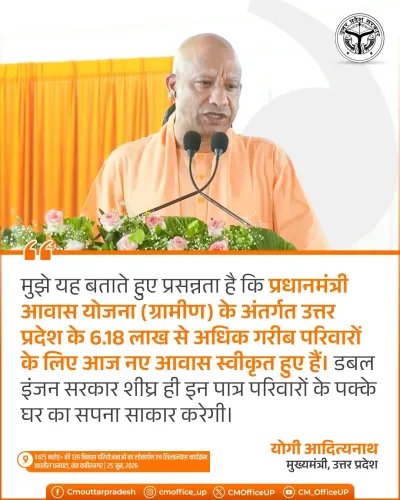
The Centre has sanctioned 6,18,482 pucca houses for rural Uttar Pradesh under PMAY-G for the phase 2024–25 to 2028–29 .
MSP procurement for wheat , gram , and masoor has been extended until 8 July 2026 to prevent distress sales.
Uttar Pradesh contributes approximately 38% of India's total wheat production, making the MSP extension nationally significant.
Signs of El Nino and below-normal rainfall have prompted district-wise contingency plans for short-duration, low-water crops.
A joint scientific agricultural roadmap for UP — covering irrigation, seeds, and marketing — is being finalised by the Centre and state government.
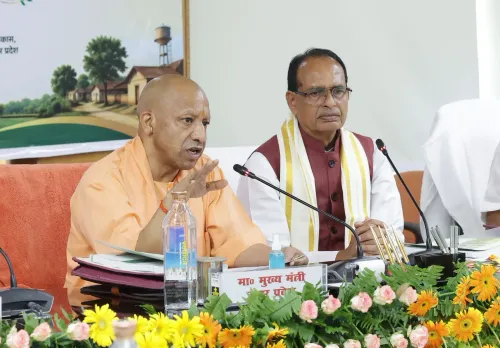
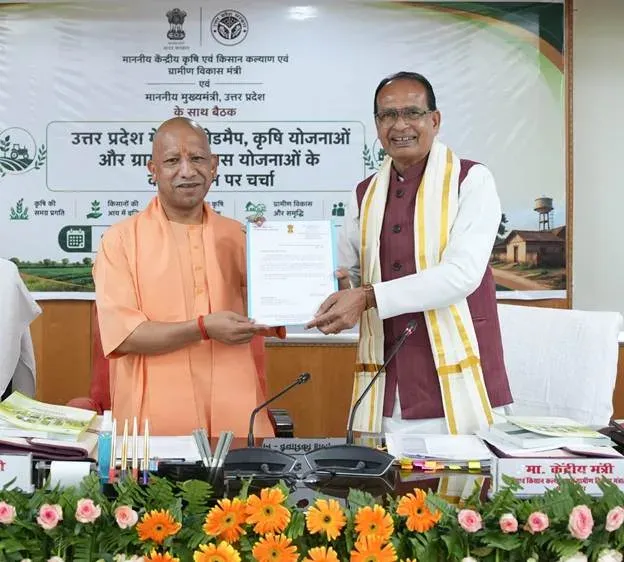
Union Minister Shivraj Singh Chouhan met Chief Minister Yogi Adityanath and state Agriculture Minister Surya Pratap Shahi in Lucknow on 25 June 2026 .
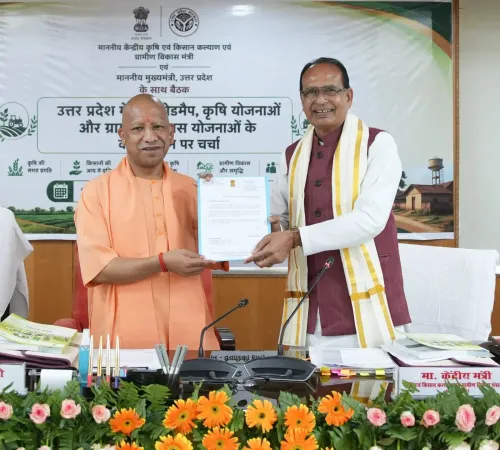
Union Agriculture and Rural Development Minister Shivraj Singh Chouhan on Thursday, 25 June 2026, formally handed over approval letters to Uttar Pradesh Chief Minister Yogi Adityanath in Lucknow, sanctioning 6,18,482 pucca houses for rural poor under the new phase of Pradhan Mantri Awaas Yojana-Gramin (PMAY-G) and extending minimum support price (MSP) procurement for key rabi crops until 8 July 2026. The twin approvals mark a significant Centre-state push on rural welfare and farm income protection in India's most populous state.
PMAY-G Housing Allocation for Uttar Pradesh
The 6,18,482 houses allocated to Uttar Pradesh form part of the new PMAY-G phase covering 2024–25 to 2028–29, under which the Centre has committed to constructing an additional two crore pucca houses nationwide. Minister Chouhan confirmed that a survey of rural households in the state has been completed and eligible families currently living in kutcha houses have been identified.
'Out of these, 6,18,482 houses have been allocated to Uttar Pradesh, opening the way for providing permanent housing to lakhs of poor rural families in a phased manner,' Chouhan said. He assured full financial and technical support from the Centre, stressing timely construction, quality control, and inclusion of every eligible beneficiary under Prime Minister Narendra Modi's 'Housing for All' mission.
MSP Procurement Extended to Protect Farmers
In a separate but simultaneous relief for the farm sector, Chouhan handed over a formal approval letter extending MSP procurement for wheat, gram, and masoor until 8 July 2026 — granted in direct response to a request from the Uttar Pradesh government. The extension is designed to ensure that no farmer is forced into distress sales due to practical hurdles such as weather disruptions, delayed mandi arrivals, weighing bottlenecks, or congestion at procurement centres.
'The decision is expected to benefit lakhs of wheat, gram and masoor growers in Uttar Pradesh and help prevent distress sales at below-MSP prices,' Chouhan said. He noted that Uttar Pradesh alone contributes approximately 38 per cent of India's total wheat production, underscoring the national significance of the state's agricultural output.
El Nino Warning and Climate Contingency Planning
Chouhan flagged that signs of El Nino are visible this year, with rainfall already below normal and a further shortfall likely. Climate change, rising temperatures, and declining groundwater levels were identified as serious structural challenges for farming in the state. In response, the meeting between the Union Minister, Chief Minister Adityanath, and state Agriculture Minister Surya Pratap Shahi agreed to prepare district-wise contingency plans promoting short-duration and low-water-requirement crops.
Alternative crop lists will be drawn up based on local water availability, soil conditions, and existing cropping patterns. A scientific roadmap for Uttar Pradesh — integrating crop patterns, irrigation, water conservation, seeds, technology, and marketing strategies — is being jointly finalised by the Centre and the state government.
Advisory and Support Mechanism
A coordinated advisory framework is being readied to deliver timely guidance, seeds, and technical support through Krishi Vigyan Kendras, the state agriculture department, and local administration. 'The Union government's priority is that fields should not remain vacant, farmers' income should be protected, and the country's food security should not be affected,' Chouhan said. The draft scientific roadmap was discussed in detail during the Lucknow meeting and will be formally adopted once jointly cleared by both governments.
With UP's farm sector facing a potentially difficult kharif season and lakhs of rural families awaiting permanent housing, the pace of implementation on both fronts will be closely watched in the months ahead.
Point of View
Or whether the MSP extension merely defers, rather than resolves, the structural problem of mandi congestion and procurement inefficiency that the minister himself cited.
NationPress
24 Sept 2026
Frequently Asked Questions
How many pucca houses has the Centre sanctioned for Uttar Pradesh under PMAY-G?
The Centre has sanctioned 6,18,482 pucca houses for rural Uttar Pradesh under the new phase of Pradhan Mantri Awaas Yojana-Gramin (PMAY-G) covering 2024–25 to 2028–29. These form part of a nationwide target to build an additional two crore pucca houses during this phase.
Until when has MSP procurement been extended for rabi crops in Uttar Pradesh?
MSP procurement for wheat, gram, and masoor in Uttar Pradesh has been extended until 8 July 2026. The extension was granted in response to a request from the state government to protect farmers from distress sales caused by weather delays, mandi congestion, and weighing issues.
Why is Uttar Pradesh's wheat production significant at the national level?
Uttar Pradesh contributes approximately 38% of India's total wheat production, making it the country's leading agricultural state for the crop. Any disruption to procurement or farm income in UP therefore has direct implications for national food security.
What is the El Nino concern flagged at the Lucknow meeting?
Union Minister Shivraj Singh Chouhan noted that signs of El Nino are visible this year, with rainfall already below normal and a further shortfall expected. In response, the Centre and Uttar Pradesh agreed to prepare district-wise contingency plans promoting short-duration and low-water-requirement crops for the kharif season.
What is the scientific agricultural roadmap being planned for Uttar Pradesh?
A joint scientific roadmap is being finalised by the Centre and the Uttar Pradesh government to integrate crop patterns, irrigation, water conservation, seeds, technology, and marketing strategies. It will be supported by advisory services delivered through Krishi Vigyan Kendras, the state agriculture department, and local administration.