Shivraj wraps 2-day free cancer camp in Vidisha, eyes Tata Memorial unit
Synopsis
Union Agriculture Minister Shivraj Singh Chouhan wrapped a two-day free cancer screening camp in Vidisha, Madhya Pradesh, where 2,558 people were screened by doctors from Tata Memorial, AIIMS Bhopal and Medical College Vidisha. He announced plans for a Tata Memorial-backed Cancer Care Unit in the district.
Key Takeaways
2,558 people from Vidisha, Raisen and other districts registered for and underwent free cancer screening over two days.
Specialist doctors from Tata Memorial Hospital , AIIMS Bhopal and Medical College Vidisha assessed each patient for chemotherapy, radiotherapy, biopsy or surgery needs.
Follow-up treatment for eligible patients will be facilitated through the Ayushman Bharat Pradhan Mantri Jan Arogya Yojana .
Chouhan announced that work will begin on establishing a Tata Memorial Hospital-supported Cancer Care Unit in Vidisha to reduce the need for patients to travel for diagnosis and treatment.
The camp was described as a cross-sector effort involving medical institutions, civil society, local administration, police and volunteers.
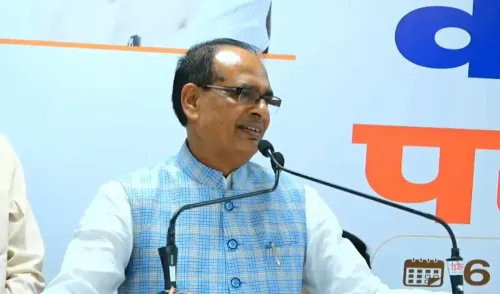
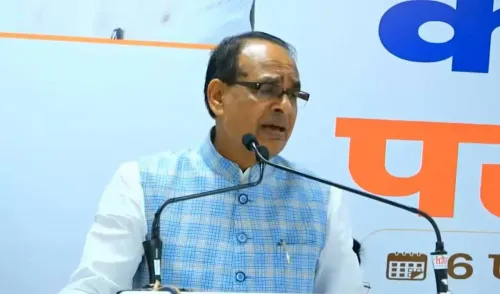
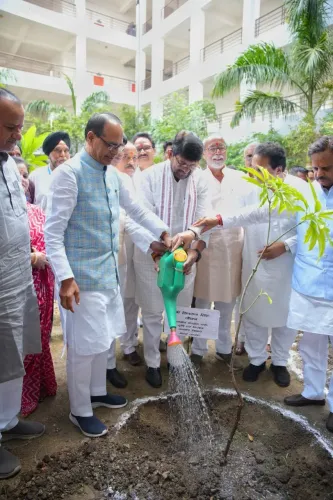
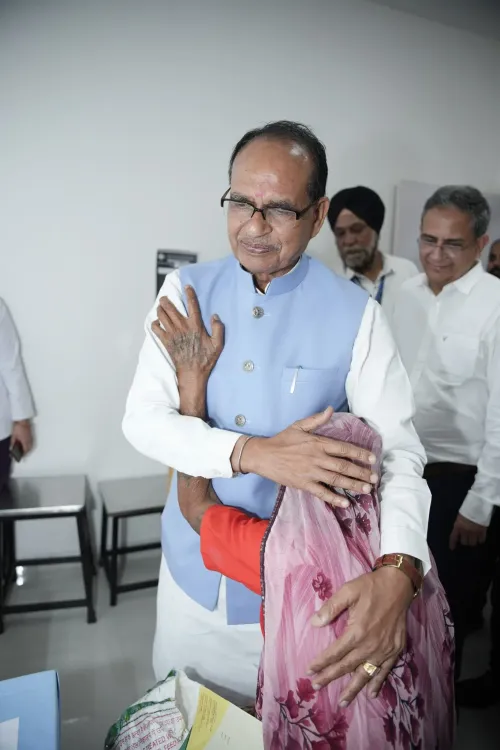
Union Agriculture Minister Shivraj Singh Chouhan on Sunday, 7 June 2026 concluded a two-day free cancer screening and counselling camp in Vidisha, Madhya Pradesh, announcing that 2,558 people from across the region had registered and undergone screening, and that work would begin on establishing a Tata Memorial Hospital-supported Cancer Care Unit in the district.
Context
Chouhan described the event as 'ek aisa mahayagya' — a grand collective endeavour — of service, compassion and humanity that 'lit a new lamp of hope in the lives of thousands of families.' Participants came from Vidisha, Raisen and several other districts of Madhya Pradesh over the two days of the camp.
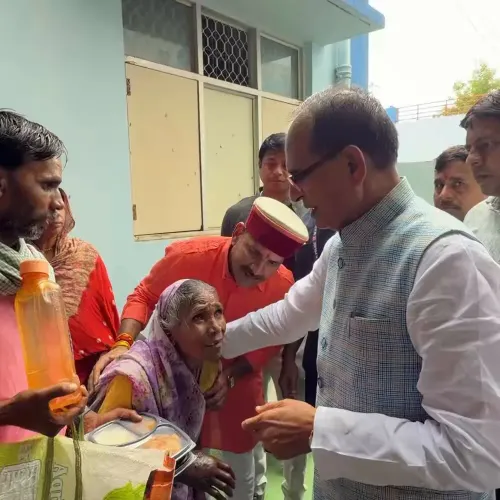
Reflecting on his interactions with patients, Chouhan wrote that he saw pain in the eyes of many who came for screening, heard their suffering and felt their families' anxieties. 'At that very moment,' he added, 'the conviction deepened that if society stands together, no person remains alone in their struggle.'
Policy Backdrop
A team of specialist doctors from Tata Memorial Hospital, Mumbai — India's premier cancer institute — joined physicians from AIIMS Bhopal and Medical College Vidisha for the camp. The team is individually assessing each screened patient to determine whether they require chemotherapy, radiotherapy, biopsy or surgery.
Chouhan stated that follow-up treatment for those in need would be channelled through the Ayushman Bharat Pradhan Mantri Jan Arogya Yojana and other available routes. Launched in 2018, Ayushman Bharat provides secondary and tertiary care coverage to economically vulnerable families, making it a critical bridge between free screening and affordable treatment.
The proposed Cancer Care Unit in Vidisha, to be established in collaboration with Tata Memorial Hospital, is intended to spare patients in the region from travelling long distances for diagnosis and treatment. The announcement aligns with a broader national and state-level policy direction of decentralising oncology services beyond metropolitan centres — a thrust visible in Madhya Pradesh since the mid-2010s and reinforced by the National Programme for Prevention and Control of Cancer, Diabetes, Cardiovascular Diseases and Stroke (NPCDCS), which has promoted district-level screening infrastructure since 2010.
Stakeholders and Impact
The minister explicitly thanked every category of contributor: specialist doctors from Tata Memorial, clinicians and nursing staff from AIIMS Bhopal and Medical College Vidisha, medical students, administrative officers, police personnel, elected representatives, civil society organisations, volunteers and security staff. He called their collective effort 'unforgettable' and said it proved that 'service is the highest duty.'
For rural and semi-urban families in the Vidisha-Raisen belt, where access to oncology specialists has historically required travel to Bhopal or beyond, the camp represented a rare opportunity for early detection. Early diagnosis is widely recognised as the most effective lever for improving cancer survival rates and reducing catastrophic out-of-pocket health expenditure — a burden that falls disproportionately on lower-income households.
What's Next
The immediate priority is completing individual treatment assessments for the 2,558 registered patients and ensuring their referral pathways under Ayushman Bharat are activated. Chouhan has committed that every eligible person will receive 'the best possible treatment.'
The longer-term watch point is the proposed Tata Memorial-supported Cancer Care Unit in Vidisha — a facility that, if established, would mark a significant upgrade in district-level oncology infrastructure for central Madhya Pradesh. Details on site selection, equipment procurement, staffing and formal integration with Ayushman Bharat-empanelled hospitals are yet to be announced. Chouhan closed with a message that Vidisha had demonstrated 'when resolve is selfless, the spirit is of service, and the purpose is human welfare, all of society stands united as one family.'
Point of View
Now extended to a national platform. The Tata Memorial collaboration signals an attempt to leverage central government institutional networks to deliver visible healthcare outcomes at the district level, a model that could be replicated across BJP-governed states ahead of electoral cycles. The Ayushman Bharat linkage also reinforces the Centre's effort to make the scheme synonymous with tangible health access rather than just insurance coverage. If the proposed Cancer Care Unit materialises, it would represent one of the more substantive pieces of oncology infrastructure to reach a non-metro district in Madhya Pradesh in recent years.
NationPress
24 Sept 2026
Frequently Asked Questions
What happened at the Vidisha cancer screening camp organised by Shivraj Singh Chouhan?
A two-day free cancer screening and counselling camp concluded in Vidisha on 7 June 2026, where 2,558 people from Vidisha, Raisen and neighbouring districts were screened by specialist doctors from Tata Memorial Hospital, AIIMS Bhopal and Medical College Vidisha.
Will a Tata Memorial Hospital unit be set up in Vidisha?
Union Minister Shivraj Singh Chouhan announced that work will begin on establishing a Tata Memorial Hospital-supported Cancer Care Unit in Vidisha so that residents do not have to travel long distances for diagnosis and treatment. Formal details on timelines and funding have not yet been disclosed.
How will patients screened at the Vidisha camp receive follow-up treatment?
Chouhan stated that follow-up treatment for patients who need it will be arranged through the Ayushman Bharat Pradhan Mantri Jan Arogya Yojana and other available government mechanisms, with the goal of ensuring every eligible person receives quality care.
Which hospitals sent doctors to the Vidisha free cancer camp?
Doctors and medical staff came from Tata Memorial Hospital (Mumbai), AIIMS Bhopal and Medical College Vidisha. Nursing staff, medical students, administrative officers and volunteers also participated in the camp.
What is the Ayushman Bharat scheme mentioned in connection with the Vidisha cancer camp?
Ayushman Bharat Pradhan Mantri Jan Arogya Yojana, launched in 2018, is a national health insurance scheme that provides secondary and tertiary care coverage to economically vulnerable families. It was cited by Chouhan as the primary route to fund follow-up cancer treatment for patients identified at the Vidisha camp.