Shivraj Singh Chouhan Reviews DSR Paddy Tech in Patna
Synopsis
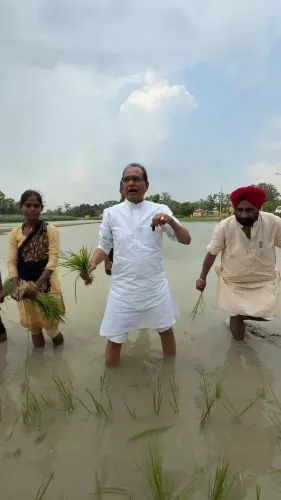
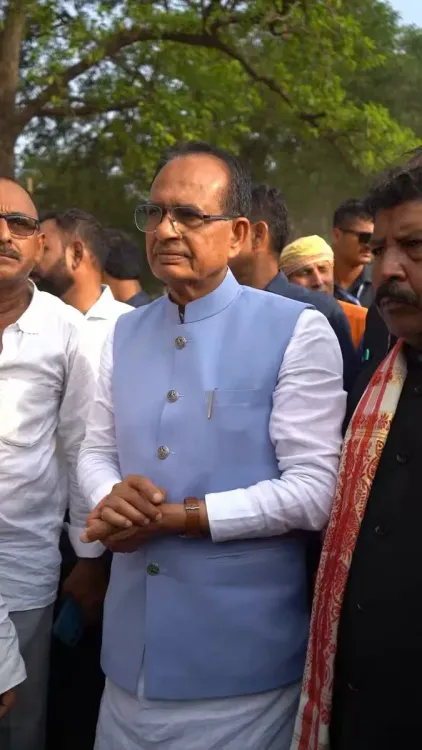
Union Agriculture Minister Shivraj Singh Chouhan visited gram Naubatpur in Patna on 17 June 2026 to observe a Direct Seeded Rice (DSR) demonstration under the Khet Bachao Abhiyan, highlighting water savings, lower input costs, and a 10–15 day earlier harvest compared to conventional transplanting.
Key Takeaways
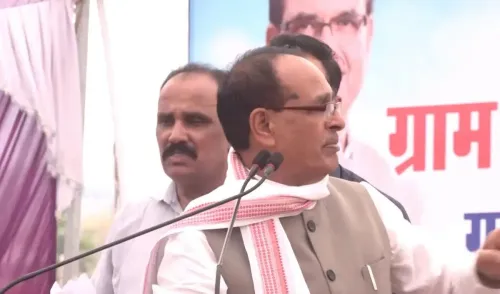
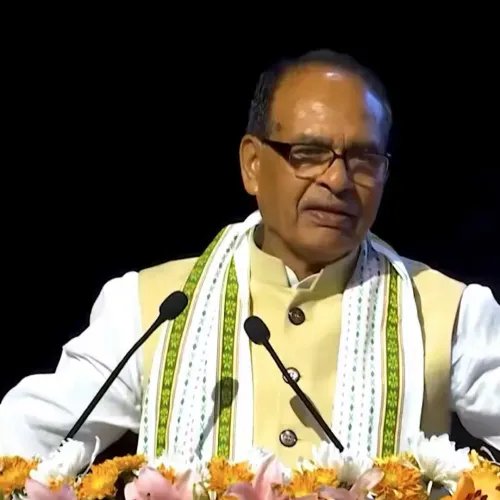
Union Agriculture Minister Shivraj Singh Chouhan observed a Direct Seeded Rice (DSR) demonstration at gram Naubatpur, Patna on 17 June 2026 .
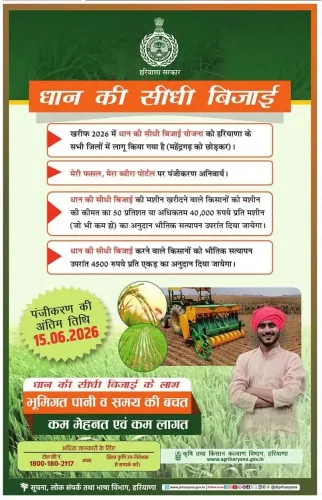
DSR eliminates the need for flooded nurseries and transplanting, reducing water consumption significantly compared to conventional paddy cultivation.
The method cuts field preparation and transplanting costs and enables harvest 10 to 15 days earlier than transplanted paddy.
With proper water and weed management, DSR yields are comparable to those from traditional transplanting methods.
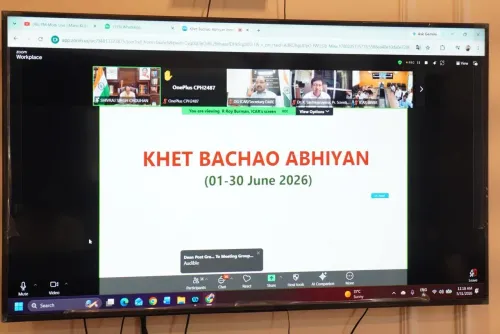
The visit was part of the Khet Bachao Abhiyan , a central government campaign to promote sustainable and climate-resilient farming practices.
Bihar is an emerging focus state for DSR expansion as groundwater depletion and labour shortages challenge conventional paddy cultivation in eastern India.
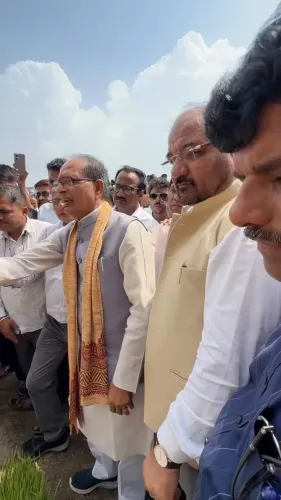
Union Agriculture Minister Shivraj Singh Chouhan on Wednesday, 17 June 2026, observed a live demonstration of Direct Seeded Rice (DSR) technology at gram Naubatpur in Patna, Bihar, during the Khet Bachao Abhiyan (Farmland Conservation Campaign). The visit underscored the central government's push to scale water-saving paddy cultivation methods across eastern India ahead of the Kharif 2026 sowing season.
Context
Posting on X, Minister Chouhan described his observations at the field event, noting that DSR reduces the additional water required for nursery preparation and transplanting. He highlighted that the method also cuts input costs related to field preparation and transplanting labour, and that crops mature 10 to 15 days earlier than with conventional transplanting — allowing timely sowing of the subsequent crop. He added that with proper water and weed management, yields under DSR can match those achieved through traditional transplanting.
The minister's post, written in Hindi, stated: 'सीधी बुआई के लिए खेत तैयार करने एवं रोपाई में होने वाले खर्च की बचत होती है' ('There is a saving in the cost of field preparation and transplanting for direct sowing'), reflecting the campaign's dual focus on economic and ecological benefits for farmers.
Policy Backdrop
India has promoted Direct Seeded Rice since the early 2010s under the National Mission for Sustainable Agriculture (NMSA), initially piloting the technology in water-stressed states such as Punjab and Haryana. The method eliminates the need to raise seedlings in flooded nurseries and then transplant them — a process that is both labour-intensive and water-heavy — by instead sowing pre-germinated or dry seeds directly into prepared fields.
Eastern states including Bihar have become a growing focus for DSR expansion as groundwater tables decline and monsoon patterns grow more erratic across the rice-wheat belt. The Khet Bachao Abhiyan serves as a field-level outreach mechanism under which demonstrations, farmer interactions, and awareness drives are organised to accelerate adoption of such climate-resilient practices.
Stakeholders and Impact
Paddy farmers in Bihar stand to benefit most directly from DSR adoption. The state has a large smallholder farming population heavily dependent on monsoon-fed paddy cultivation, and the twin pressures of rising input costs and labour migration have made transplanting increasingly difficult to sustain. An earlier harvest window of 10–15 days is particularly significant in Bihar, where it could improve the planting schedule for the subsequent rabi (winter) crop and reduce post-harvest field preparation pressure.
The Bihar Agriculture Department is a key institutional stakeholder, as state-level machinery is essential for translating central demonstrations into district-wide rollout programmes. Wider adoption could also ease pressure on the state's groundwater resources, which face depletion from flood-irrigation-based transplanting prevalent in traditional paddy cultivation.
What's Next
Attention will now turn to whether the Kharif 2026 season sees formal DSR rollout targets announced for Bihar, and whether financial incentives — such as those previously offered in Punjab and Haryana — are extended to eastern states under revised National Food Security Mission guidelines. Minister Chouhan's field visit signals intent at the highest level of the agriculture ministry, but the pace of farmer uptake will depend on the availability of DSR-compatible seed drills, herbicide supply chains, and extension worker training at the block level. If Bihar's demonstration sites yield results comparable to transplanted paddy, the state could emerge as a model for DSR scaling across the eastern Gangetic plain.
Point of View
Where paddy acreage is vast but adoption of modern techniques remains low. The timing — ahead of the Kharif 2026 sowing window — is not incidental; it signals an intent to create visible political and policy momentum for a technology that has struggled to move beyond pilot projects. For Chouhan, who built his political identity around farmer welfare during his long tenure in Madhya Pradesh, such field-level engagement also reinforces a hands-on ministerial image. The critical test, however, remains institutional: whether the central demonstration translates into state-backed incentive structures and extension support that can drive mass adoption among Bihar's smallholder farmers.
NationPress
19 Sept 2026
Frequently Asked Questions
What is Direct Seeded Rice (DSR) technology?
Direct Seeded Rice (DSR) is a paddy cultivation method where pre-germinated or dry seeds are sown directly into prepared fields, eliminating the need for flooded nurseries and manual transplanting. It saves water, reduces labour costs, and allows crops to mature 10 to 15 days earlier than conventionally transplanted paddy.
Where did Shivraj Singh Chouhan observe the DSR demonstration?
Minister Shivraj Singh Chouhan observed the DSR demonstration at gram Naubatpur in Patna district, Bihar, on 17 June 2026, during an event organised under the Khet Bachao Abhiyan.
What is the Khet Bachao Abhiyan?
Khet Bachao Abhiyan, or the Farmland Conservation Campaign, is a central government initiative that organises field demonstrations and awareness drives to promote sustainable and climate-resilient farming practices, including water-saving techniques like DSR.
Does DSR give the same yield as traditional paddy transplanting?
According to the Union Agriculture Ministry, DSR can achieve yields comparable to traditional transplanting methods provided proper water management and weed control practices are followed throughout the crop cycle.
Why is Bihar being targeted for DSR expansion?
Bihar has a large smallholder paddy farming base facing rising input costs, labour shortages due to migration, and groundwater depletion from flood-irrigation-based transplanting. DSR offers a more resource-efficient alternative suited to these conditions, making the state a priority for eastern India expansion.