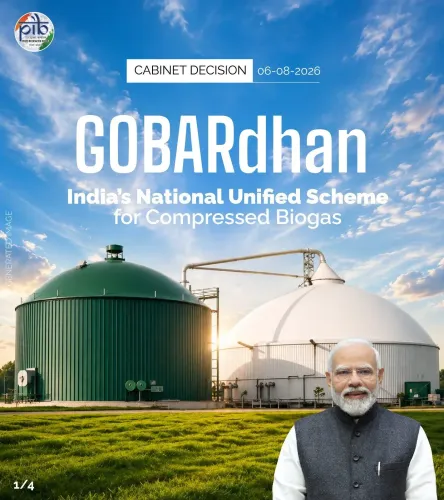
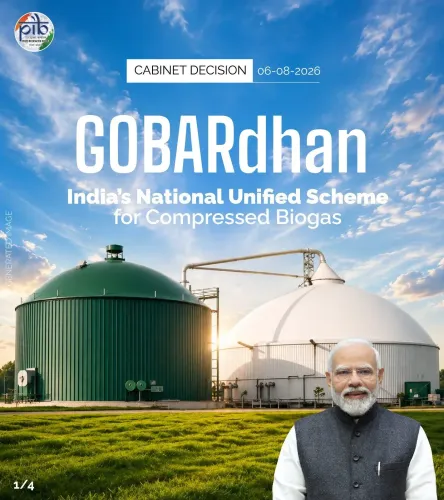
Shivraj Singh Chouhan: Cabinet Clears ₹23,731 Cr GOBAR-DHAN Biogas Scheme
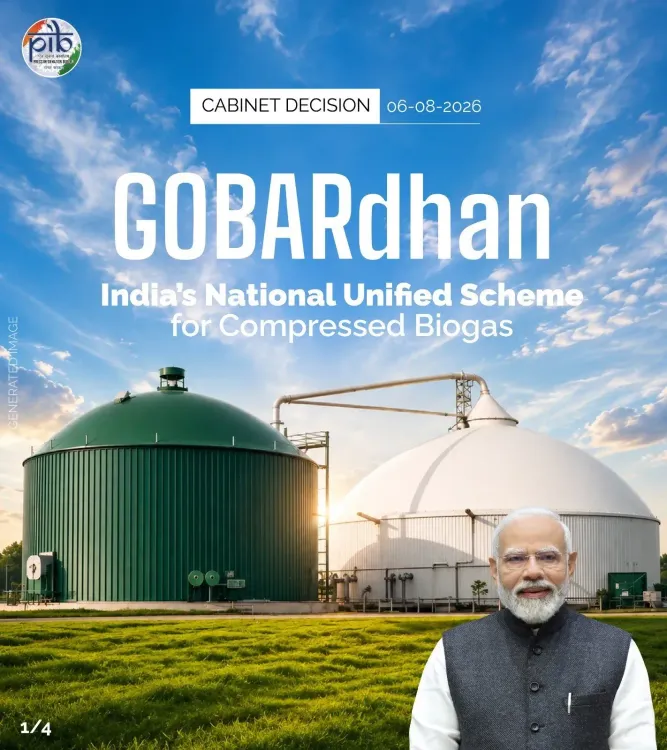
Synopsis
The Union Cabinet on 6 August 2026 approved the ₹23,731 crore GOBAR-DHAN scheme to scale domestic compressed biogas production roughly tenfold, with assured purchase, price stability, capital support, and a CBG Ecosystem Challenge Fund aimed at farmers and rural entrepreneurs.
Key Takeaways
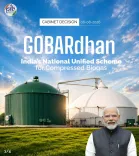
The Union Cabinet approved the National Circular Bio-Economy Scheme 'GOBAR-DHAN' on 6 August 2026 with a total outlay of ₹23,731 crore .
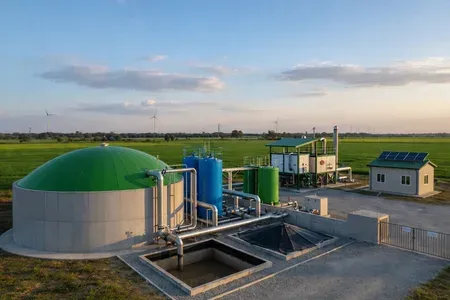
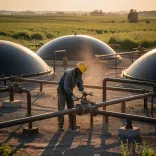
The scheme targets a tenfold increase in domestic Compressed Biogas (CBG) production, converting organic and farm waste into clean fuel.
Key provisions include assured purchase , price stability , capital support , pipeline infrastructure development , credit guarantee assistance , and a CBG Ecosystem Challenge Fund .
GOBAR-DHAN was originally launched in 2018 under the Swachh Bharat Mission (Gramin) ; the 2026 approval marks a major structural and financial scale-up.
Primary beneficiaries are small farmers and rural entrepreneurs , who can monetise cattle dung and crop waste as CBG feedstock.
The scheme advances India's energy security by building a domestic substitute for imported natural gas within the city gas distribution network.
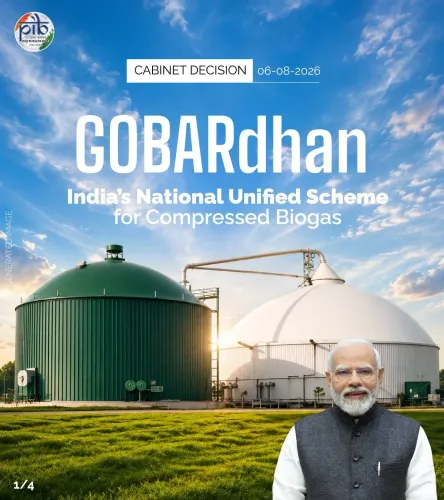
A single cabinet decision on Thursday, 6 August 2026 could reshape how rural India powers itself — and what farmers earn from waste. Union Agriculture Minister Shivraj Singh Chouhan announced that the Union Cabinet, chaired by Prime Minister Narendra Modi, has approved the National Circular Bio-Economy Scheme 'GOBAR-DHAN' with a total outlay of ₹23,731 crore, targeting a near-tenfold increase in domestic Compressed Biogas (CBG) production.
From Cattle Dung to Clean Fuel: What the Scheme Does
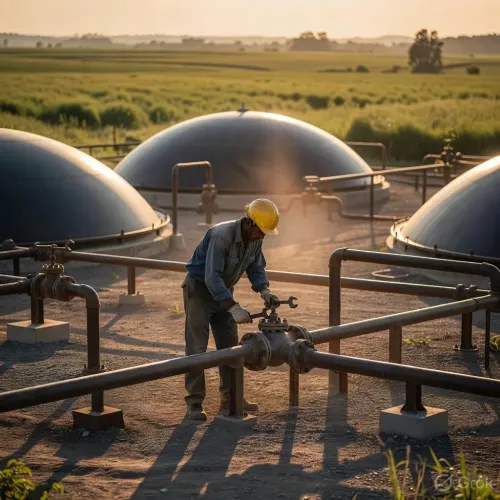
The scheme's ambition is circular in the truest sense: organic waste — cattle dung, crop residue, municipal solid waste — goes in, and clean compressed biogas comes out. Chouhan, posting in Hindi, described it as 'waste-to-wealth' (वेस्ट-टू-वेल्थ) — a phrase that captures the dual promise of environmental gain and rural income. The approved framework bundles together assured purchase mechanisms, price stability provisions, capital support, pipeline infrastructure development, credit guarantee assistance, and a dedicated CBG Ecosystem Challenge Fund. Together, these are designed to de-risk private investment and give rural entrepreneurs a real entry point into the biogas value chain.
GOBAR-DHAN's Journey from Swachh Bharat to Energy Security
The scheme is not a new name on a blank slate. GOBAR-DHAN — an acronym for Galvanising Organic Bio-Agro Resources — was first launched in 2018 under the Swachh Bharat Mission (Gramin), initially focused on rural sanitation and converting dung into biogas and bio-fertiliser. What the 2026 cabinet approval represents is a structural upgrade: scaling a village-level sanitation initiative into a nationally funded energy security instrument with assured offtake and market architecture. India has been expanding CBG capacity through the SATAT initiative (Sustainable Alternative Towards Affordable Transportation), which invited private players to set up CBG plants and supply fuel to city gas distribution networks. The new scheme is designed to accelerate that pipeline dramatically.
Why Farmers and Rural Entrepreneurs Are at the Centre
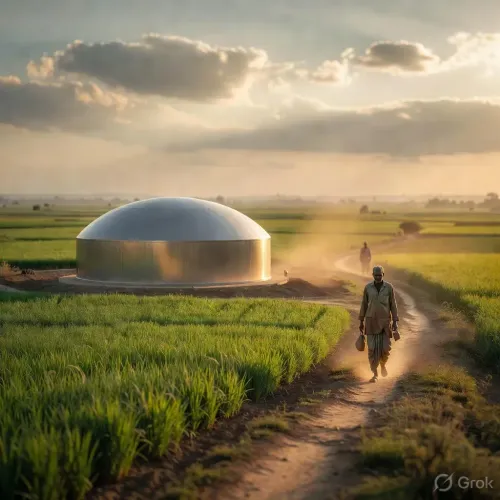
The political framing matters here. Chouhan — a former four-term Chief Minister of Madhya Pradesh with deep roots in agrarian constituencies — has consistently positioned the scheme as a farmer-income story, not just an energy story. Cattle dung, crop stubble, and food waste that currently cost farmers money to dispose of become feedstock with a market price. Small farmers and rural entrepreneurs are the named primary beneficiaries, and the credit guarantee and capital support provisions are specifically aimed at lowering the barrier for first-generation plant operators who lack collateral. The assured-purchase clause is the linchpin: without a guaranteed buyer at a stable price, private investment in biogas plants has historically stalled at the pilot stage.
India's Bigger Bet on Domestic Gas and Circular Economy
The approval lands at a moment when India is actively trying to reduce its dependence on imported liquefied natural gas. CBG, if produced at scale, is chemically identical to compressed natural gas and can flow through the same city gas networks — making it a direct domestic substitute. A tenfold increase in CBG production, if realised, would represent a meaningful dent in that import bill while simultaneously addressing farm waste, rural employment, and greenhouse gas emissions from decomposing organic matter. The scheme's 'circular bio-economy' framing also aligns India's energy policy with its international climate commitments.
The real test now moves from cabinet room to ground: how quickly plant sanctions flow, how robustly the assured-purchase mechanism is operationalised, and whether state governments build the pipeline infrastructure to connect rural producers to urban gas grids. The numbers are ambitious. The architecture is in place. Execution is everything.
Point of View
Anchoring the announcement in farmer income and rural entrepreneurship rather than purely in energy economics is a deliberate political choice: it keeps agrarian voters at the centre of what is, structurally, an industrial infrastructure investment. The assured-purchase and price-stability clauses are the scheme's most consequential design features, because CBG's commercial track record in India has been hampered precisely by offtake uncertainty. Whether this approval translates into operational plants at scale will depend heavily on state-level implementation speed and the robustness of the gas grid linkages — both of which have historically been the weak links in India's biogas ambitions.
NationPress
6 Aug 2026
Frequently Asked Questions
What is the GOBAR-DHAN scheme approved by the cabinet in 2026?
GOBAR-DHAN (National Circular Bio-Economy Scheme) is a ₹23,731 crore central government scheme approved on 6 August 2026 to scale up domestic Compressed Biogas (CBG) production roughly tenfold by converting cattle dung, crop residue, and other organic waste into clean fuel and bio-fertiliser.
How does GOBAR-DHAN benefit farmers?
The scheme allows small farmers to monetise cattle dung and agricultural waste as CBG feedstock, providing an additional income stream. Provisions for assured purchase, price stability, and credit guarantee support are specifically designed to make participation viable for farmers and first-generation rural entrepreneurs.
What is Compressed Biogas (CBG) and how is it used?
Compressed Biogas is biogas — produced by anaerobic digestion of organic waste — that is purified and compressed to the same quality as Compressed Natural Gas (CNG). It can be used as vehicle fuel and supplied through city gas distribution networks, making it a domestic substitute for imported natural gas.
What was the original GOBAR-DHAN scheme launched in 2018?
The original GOBAR-DHAN initiative was launched in 2018 under the Swachh Bharat Mission (Gramin) to promote rural sanitation by converting cattle dung and farm waste into biogas and bio-fertiliser at the village level. The 2026 cabinet approval scales this into a nationally funded energy security scheme with a ₹23,731 crore outlay.
What is the CBG Ecosystem Challenge Fund mentioned in the GOBAR-DHAN scheme?
The CBG Ecosystem Challenge Fund is one of several new provisions under the approved scheme designed to stimulate innovation and private investment in the compressed biogas sector. Specific operational details are expected to be released in scheme guidelines following the cabinet approval.