GOBARdhan scheme: Cabinet clears ₹23,731 crore biogas push for farmers
Synopsis
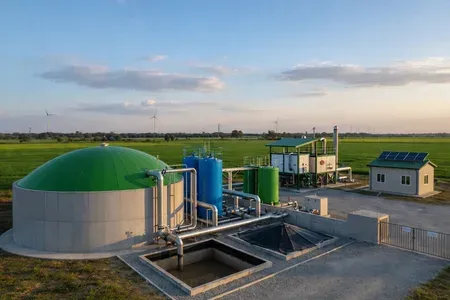
The Cabinet has committed ₹23,731 crore to GOBARdhan — a decade-long biogas scheme that promises to multiply India's compressed biogas output nearly 10 times, lock in a guaranteed market for producers through CGD blending mandates, and give farmers a direct income link to cattle dung and crop waste. The administered price floor and credit guarantee together make this the most structurally backed biogas push India has seen.
Key Takeaways
The Union Cabinet approved the GOBARdhan National Circular Bioenergy Scheme with an outlay of ₹23,731 crore , running from FY27 to FY36 .
The scheme targets a nearly 10-fold increase in domestic Compressed Biogas (CBG) production.
A CBG Offtake Assurance framework mandates CGD procurement at 3% (FY27) , 4% (FY28) , and 5% from FY29 in CNG and PNG segments.
An administered CBG price of ₹2,110 per MMBTU with a minimum 10-year horizon provides revenue certainty for producers.
Greenfield CBG projects are eligible for capital assistance of up to ₹2 crore per TPD of installed capacity.
A dedicated Credit Guarantee mechanism and CBG Ecosystem Challenge Fund will support MSME projects and district-level rollout.
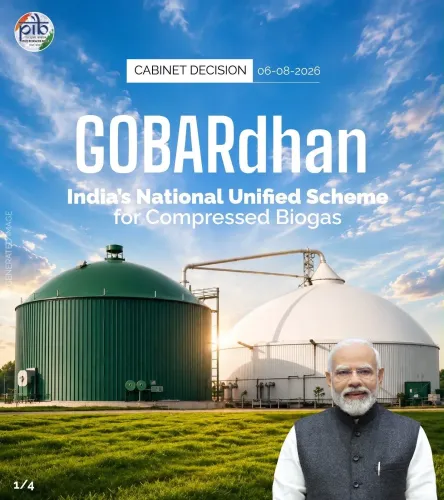
The Union Cabinet, chaired by Prime Minister Narendra Modi, on Thursday approved the GOBARdhan National Circular Bioenergy Scheme with a total outlay of ₹23,731 crore, marking a significant federal commitment to scaling India's compressed biogas sector and strengthening rural farm incomes. The scheme, to be implemented from FY27 to FY36, aims to increase domestic Compressed Biogas (CBG) production nearly 10-fold and catalyse large-scale private investment in a circular bioeconomy.
What the Scheme Covers
GOBARdhan establishes a dedicated CBG Offtake Assurance framework, converting the blending obligation into a long-term demand signal for industry. City Gas Distribution (CGD) entities will be required to procure CBG in line with a notified trajectory: 3% in FY27, 4% in FY28, and 5% from FY29 onwards in the CNG (Transport) and PNG (Domestic) segments. Officials stated that consistent implementation across CGD networks will improve project bankability and encourage sustained private investment.
Pricing and Capital Support
The scheme introduces a stable administered CBG price of ₹2,110 per MMBTU (Metric Million British Thermal Unit), backed by a government pricing framework designed to offer long-term revenue visibility while protecting consumer affordability. According to an official statement, the pricing framework carries a minimum 10-year horizon, providing producers with 'durable revenue certainty, commercially attractive returns and a stronger business case for investment and capacity expansion.'
Eligible greenfield CBG projects will receive capital assistance of up to ₹2 crore per ton per day (TPD) of installed CBG capacity, covering not just core plant machinery but also feedstock aggregation, organic manure processing, and value-addition assets. Brownfield projects expanding production capacity are also eligible.
Infrastructure and Credit Access
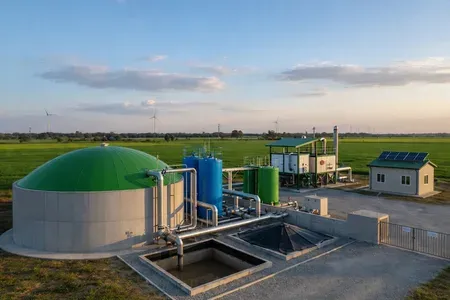
GOBARdhan supports both cluster-based and standalone pipeline infrastructure connecting CBG plants with trunk pipelines and CGD networks. Greater pipeline connectivity is expected to reduce evacuation costs, expand market reach, and improve utilisation of domestically produced CBG.
A dedicated Credit Guarantee mechanism will strengthen lender confidence and broaden institutional credit access for MSME-based CBG projects. By sharing a portion of lending risk, the mechanism aims to reduce collateral requirements and accelerate project development. A CBG Ecosystem Challenge Fund has also been established to drive district-level implementation and strengthen local value chains.
Administered by Petroleum Ministry
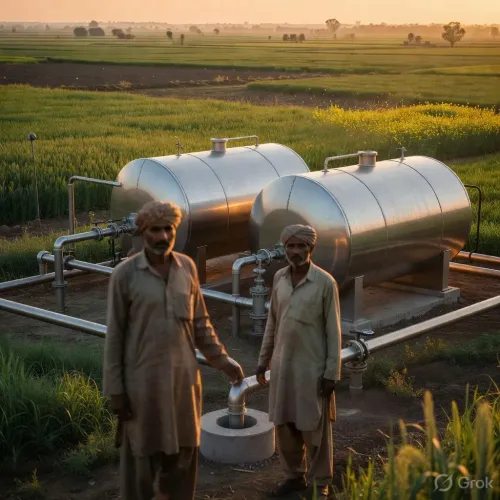
The scheme will be administered by the Ministry of Petroleum and Natural Gas and is designed as a single integrated platform spanning the entire CBG value chain — from feedstock aggregation to gas evacuation. This comes amid India's broader push to reduce dependence on fossil fuel imports and meet clean energy transition targets. Notably, GOBARdhan directly links agricultural waste — primarily cattle dung and crop residue — to energy production, offering farmers an additional revenue stream. With sectoral guidelines now in place, the pace of private project commissioning through FY27 will be the first real test of the scheme's execution.
Point of View
Addressing the three classic failure points of renewable energy schemes in India: uncertain offtake, volatile returns, and thin credit access for smaller players. The real risk, however, lies in CGD entities actually meeting the blending trajectory; past clean energy mandates in India have frequently slipped without enforcement teeth. With ₹23,731 crore on the table and a 10-year administered price, the government has put up credible capital — but the FY27 compliance data from CGD networks will reveal whether this is a structural shift or another headline scheme.
NationPress
20 Sept 2026
Frequently Asked Questions
What is the GOBARdhan National Circular Bioenergy Scheme?
GOBARdhan is a ₹23,731 crore government scheme approved by the Union Cabinet to scale India's compressed biogas sector over a decade from FY27 to FY36. It aims to increase domestic CBG production nearly 10-fold, mobilise private investment, and create income opportunities for farmers through agricultural waste utilisation.
How does the CBG Offtake Assurance framework work?
The framework requires City Gas Distribution entities to procure CBG in line with a mandatory blending trajectory — 3% in FY27, 4% in FY28, and 5% from FY29 onwards — in the CNG (Transport) and PNG (Domestic) segments. This converts the blending obligation into a predictable, long-term demand signal for CBG producers.
What is the administered CBG price under GOBARdhan?
The scheme sets a stable administered price of ₹2,110 per MMBTU, backed by a government pricing framework with a minimum 10-year horizon. This is designed to give producers long-term revenue certainty while keeping consumer prices in check.
Who benefits from GOBARdhan and how?
Farmers benefit by monetising agricultural waste — including cattle dung and crop residue — as feedstock for CBG plants, creating an additional income stream. MSME-based project developers benefit from capital assistance of up to ₹2 crore per TPD for greenfield plants, a credit guarantee mechanism, and pipeline connectivity support.
Which ministry will administer GOBARdhan?
The scheme will be administered by the Ministry of Petroleum and Natural Gas as a single integrated platform covering the entire CBG value chain, from feedstock aggregation to gas evacuation and market linkage.