Shivraj Singh Chouhan Pays Tribute to Revolutionary Damodar Hari Chapekar
Synopsis
Union Agriculture Minister Shivraj Singh Chouhan on June 24, 2026, honoured revolutionary martyr Damodar Hari Chapekar on his birth anniversary, calling his sacrifice for India's freedom 'unforgettable.' Chapekar, one of the Chapekar brothers from Pune, was executed by British colonial authorities after the 1897 assassination of plague commissioner W.C. Rand.
Key Takeaways
Union Agriculture Minister Shivraj Singh Chouhan posted a tribute to Damodar Hari Chapekar on his birth anniversary on June 24, 2026 .
Chouhan described Chapekar as a 'brave son of Mother India' and called his sacrifice for the motherland 'unforgettable.' Damodar Hari Chapekar was one of the Chapekar brothers from Pune , known for the 1897 assassination of British plague commissioner W.C.
Chapekar was subsequently arrested and executed by colonial authorities, becoming a celebrated martyr of India's anti-colonial resistance.
Such tributes form part of a consistent pattern among senior Indian political leaders of publicly honouring revolutionary figures on significant anniversaries.
Union Agriculture Minister Shivraj Singh Chouhan on Wednesday, June 24, 2026, paid tribute to freedom fighter Damodar Hari Chapekar on his birth anniversary, honouring the 19th-century revolutionary's sacrifice in the struggle against British colonial rule.
Context
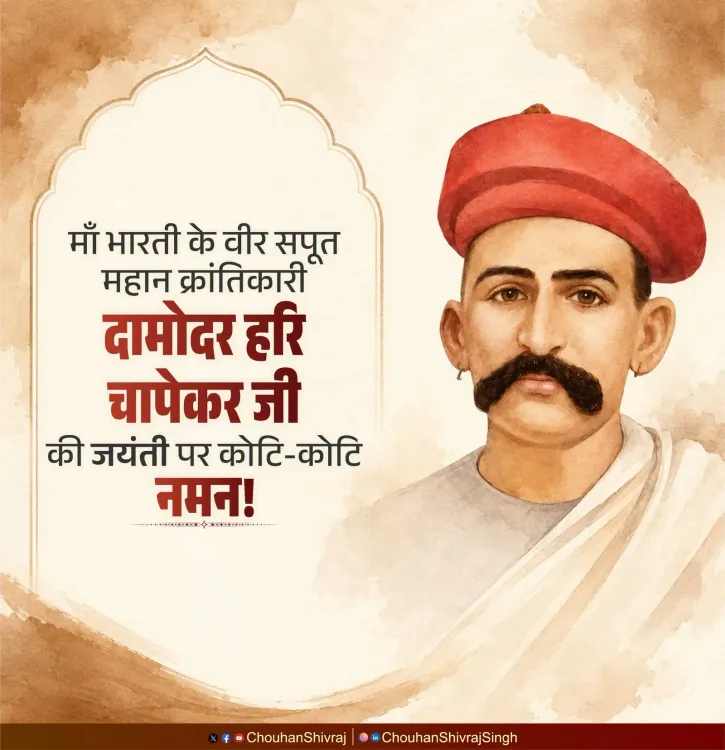
In his post, Chouhan wrote: 'माँ भारती के वीर सपूत, महान क्रांतिकारी, अमर शहीद दामोदर हरि चापेकर जी की जयंती पर कोटि-कोटि नमन करता हूँ!' — translating to: 'I bow in reverence a crore times on the birth anniversary of the brave son of Mother India, the great revolutionary, the immortal martyr Damodar Hari Chapekar.' He added that Chapekar's struggle and sacrifice for the freedom of the motherland 'shall always remain unforgettable.'
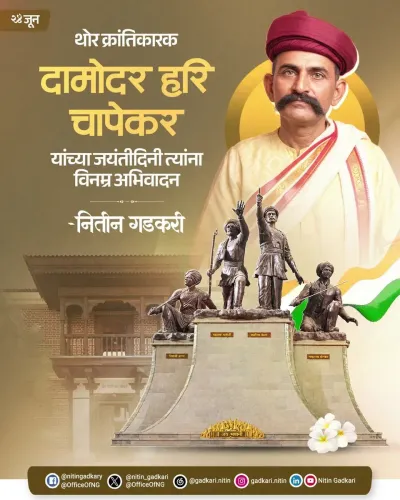
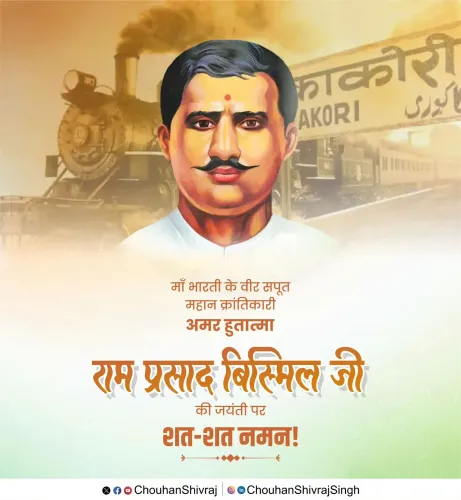
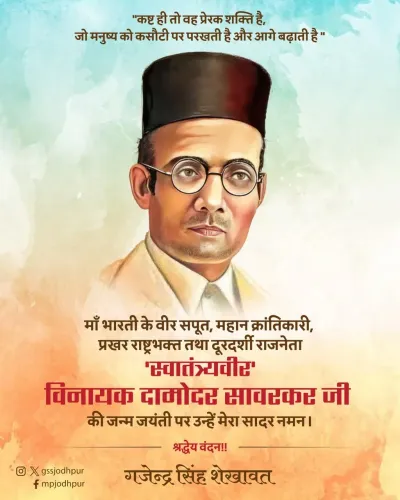
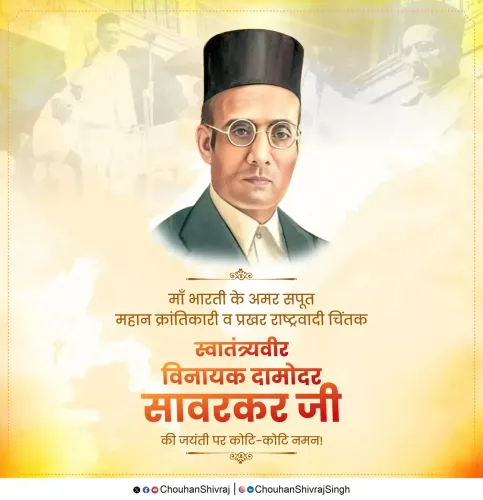
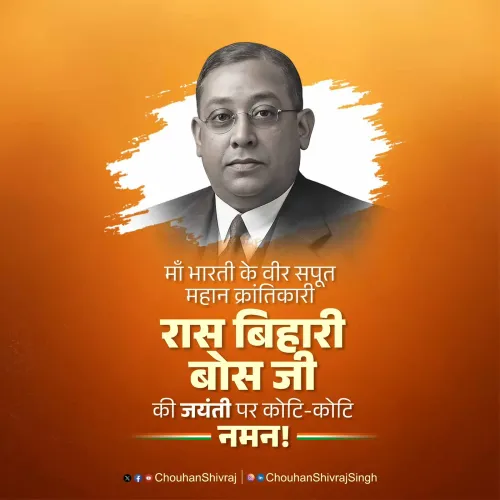
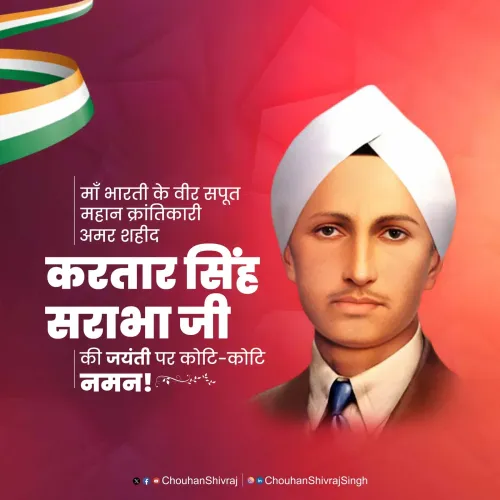
The tribute was accompanied by an image and posted on Chouhan's official X account, reaching his large follower base on the occasion of the anniversary.
Who Was Damodar Hari Chapekar?
Damodar Hari Chapekar was one of the celebrated Chapekar brothers from Pune, Maharashtra, who became prominent figures in India's early armed resistance against British colonial authority. In 1897, he participated in the assassination of W.C. Rand, the British plague commissioner in Pune, an act carried out in protest against the harsh and coercive measures imposed on the local population during a plague epidemic.
The act led to Chapekar's arrest, trial, and eventual execution by colonial authorities, cementing his place in the pantheon of anti-colonial martyrs. His actions are widely regarded as among the earliest instances of organised armed resistance against British rule in the subcontinent.
Policy Backdrop
Indian political leaders across parties routinely issue public tributes to 19th-century revolutionaries on their birth and death anniversaries, particularly through social media platforms. These statements form part of a broader pattern of invoking anti-colonial resistance figures to highlight themes of patriotism, sacrifice, and national identity.
For senior leaders like Chouhan — a four-term former Chief Minister of Madhya Pradesh and a prominent figure in the Bharatiya Janata Party (BJP) — such tributes also carry cultural resonance, connecting the party's ideological roots to the legacy of revolutionary nationalism that predates Independence.
Stakeholders and Impact
The tribute is directed at nationalist citizens and those who hold the memory of India's freedom struggle in high regard. Maharashtra, and Pune in particular, maintains a strong cultural connection to the Chapekar brothers, and such acknowledgements from senior central government ministers carry symbolic weight in the region.
Anniversary tributes of this nature, while not linked to specific legislative or budgetary measures, contribute to public discourse on the recognition of lesser-celebrated revolutionary figures alongside more widely commemorated icons of the independence movement.
What's Next
Similar anniversary tributes to other 19th and early 20th-century revolutionary figures are expected from ministers and state governments in the coming months, as India's political calendar regularly marks dates associated with the freedom struggle. The consistent public acknowledgement of figures like Damodar Hari Chapekar reflects an ongoing effort to broaden the official memory of India's path to Independence beyond its most prominent names.
Point of View
Where senior leaders use social media anniversaries to invoke the legacy of pre-Independence revolutionaries. For the BJP, figures like the Chapekar brothers — who represent armed, assertive resistance to colonial rule — hold particular ideological resonance, connecting the party's cultural nationalism to a strand of the freedom struggle that sits outside the dominant Nehruvian narrative. The timing and consistency of such tributes across the political spectrum also reflect a broader competition to claim ownership of India's revolutionary heritage. While these posts carry no direct policy weight, they serve as important signals of ideological positioning to core voter bases.
NationPress
24 Jun 2026
Frequently Asked Questions
Who was Damodar Hari Chapekar?
Damodar Hari Chapekar was one of the Chapekar brothers from Pune, Maharashtra. He participated in the 1897 assassination of British plague commissioner W.C. Rand in protest against coercive colonial measures during a plague epidemic, and was subsequently executed by British authorities, becoming a celebrated martyr of India's freedom struggle.
Why did Shivraj Singh Chouhan pay tribute to Damodar Hari Chapekar?
Chouhan paid tribute on the occasion of Chapekar's birth anniversary on June 24, 2026, honouring his sacrifice and struggle for India's independence from British colonial rule.
What did Shivraj Singh Chouhan say about Damodar Hari Chapekar?
Chouhan said he bows in reverence 'a crore times' on Chapekar's birth anniversary and stated that his struggle and sacrifice for the freedom of the motherland 'shall always remain unforgettable.'
What is the significance of the 1897 Rand assassination?
The 1897 assassination of W.C. Rand, the British plague commissioner in Pune, by Damodar Hari Chapekar is considered one of the earliest instances of organised armed resistance against British rule in India, carried out in response to harsh anti-plague measures imposed on the local population.
Who are the Chapekar brothers?
The Chapekar brothers — including Damodar Hari Chapekar — were a group of revolutionary siblings from Pune, Maharashtra, who became prominent figures in early armed resistance against British colonial authority in the late 19th century.