Shivraj visits Kolkata botanical garden, urges tree conservation

Synopsis
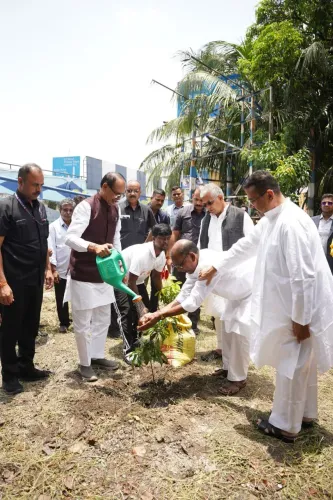
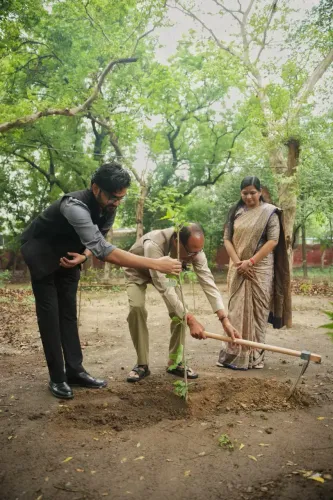
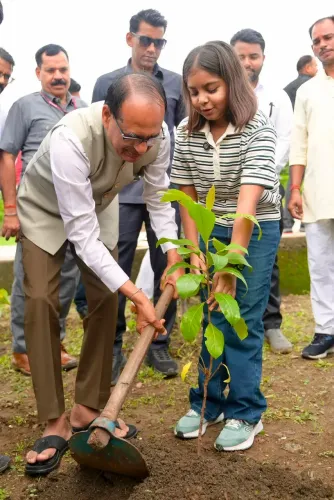
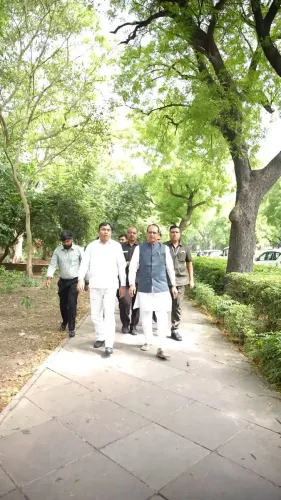
Union Agriculture Minister Shivraj Singh Chouhan visited Kolkata's Acharya Jagadish Chandra Bose Botanical Garden on 14 July 2026, marvelled at the 270-year-old Great Banyan Tree, planted a red sandalwood sapling, and called on all Indians to protect old trees and plant new ones for future generations.
Key Takeaways
Union Agriculture Minister Shivraj Singh Chouhan visited the Acharya Jagadish Chandra Bose Botanical Garden in Kolkata on 14 July 2026 .
He viewed the Great Banyan Tree , a living heritage specimen estimated at approximately 270 years old .
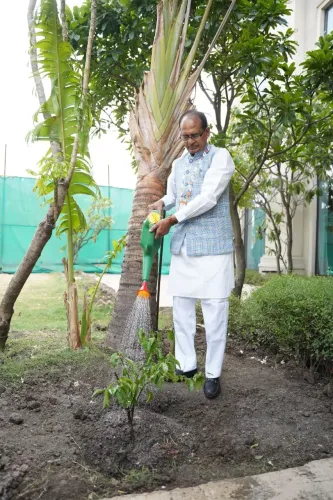
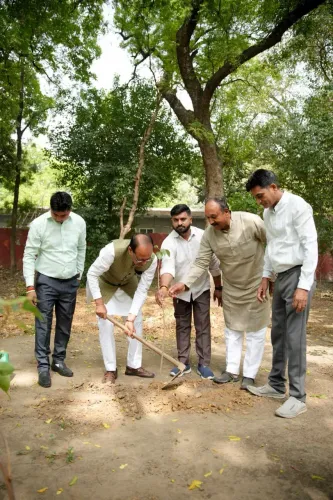
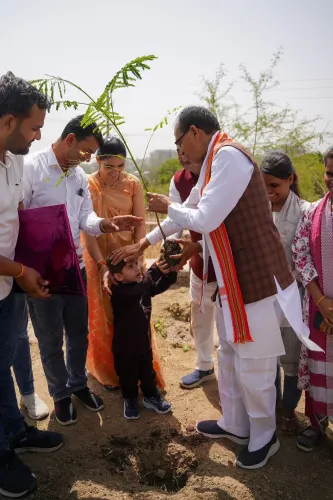
Chouhan planted a red sandalwood ( lal chandan ) sapling as a pledge for environmental conservation and biodiversity.
He paid respects at the statue of scientist Acharya Jagadish Chandra Bose and thanked the garden's caretakers for preserving the heritage tree.
The minister issued a public appeal: protect old trees, plant new ones, and warned that declining forests threaten the very existence of life on Earth.
The visit connects to national policy frameworks including Van Mahotsav , the National Mission for a Green India , and the Biological Diversity Act, 2002 .
Union Agriculture Minister Shivraj Singh Chouhan visited the Acharya Jagadish Chandra Bose Botanical Garden in Kolkata and issued a public appeal on 14 July 2026 to protect old trees and plant new ones, calling trees the very foundation of life on Earth.
Context
Posting in Hindi on X, Chouhan described the botanical garden as 'truly extraordinary' (वाकई अद्भुत), saying the visit filled his heart with fresh energy. He was particularly moved by the Great Banyan Tree, a living heritage specimen estimated at roughly 270 years old, calling it a timeless symbol of nature's continuity. The minister also paid his respects at the statue of the garden's namesake, the pioneering scientist Acharya Jagadish Chandra Bose, and planted a sapling of red sandalwood (lal chandan) to mark his commitment to environmental conservation.
In his post, Chouhan urged citizens: 'Protect old trees and keep planting new ones, because trees are life. If trees survive, the Earth will stay green, the environment will improve, and this planet will remain useful for generations to come.'
Policy backdrop
The Acharya Jagadish Chandra Bose Botanical Garden is one of India's oldest botanical institutions, established in 1787 in Kolkata and maintained by the Botanical Survey of India. The Great Banyan Tree within its grounds is recognised as a living national monument, its vast aerial-root canopy stretching across several acres. The garden is named after Jagadish Chandra Bose (1858–1937), the Indian scientist whose landmark experiments demonstrated that plants respond to external stimuli — an insight that laid early foundations for plant physiology.
Chouhan's visit and appeal align with a long thread of national afforestation policy. Van Mahotsav, India's annual tree-plantation festival, was launched in 1950 to drive large-scale greening. The National Mission for a Green India, approved in 2014 under the National Action Plan on Climate Change, set targets for expanding forest and tree cover across degraded landscapes. The Biological Diversity Act, 2002, provides a statutory framework for conserving heritage trees and botanical resources such as the Great Banyan.
Stakeholders and impact
Chouhan thanked the garden's administrators and caretakers 'from the heart' for preserving the Great Banyan Tree, acknowledging the sustained institutional effort behind such heritage conservation. His red-sandalwood sapling planting carries symbolic weight: red sandalwood (Pterocarpus santalinus) is an endangered species native to southern India, listed under protected categories, making its cultivation a statement on biodiversity beyond routine greening drives.
The appeal is directed at the general public and, implicitly, at state governments that hold primary responsibility for forest cover targets. Environmentalists and conservationists are the natural constituency for such messaging, but the minister's reach as a senior BJP leader and former four-term Chief Minister of Madhya Pradesh gives the call a wider political resonance, potentially amplifying state-level tree-plantation campaigns ahead of the monsoon planting season.
What's next
State governments are expected to roll out plantation drives under ongoing phases of the Green India Mission, with the monsoon window — typically July to September — being the primary season for large-scale sapling planting. Parliamentary discussions on dedicated heritage-tree protection legislation have been a recurring demand from conservation groups, and ministerial-level attention to sites like the Great Banyan Tree could lend momentum to such proposals. Chouhan's reminder that 'if forests end, if trees diminish, a question mark will hang over the very existence of life' signals that environmental messaging is being woven into the Agriculture Ministry's public communication, connecting soil health, biodiversity, and climate resilience under a single narrative.
Point of View
Moving beyond routine plantation statistics. By planting an endangered red sandalwood sapling rather than a generic species, the minister signals awareness of biodiversity loss as distinct from mere tree-count targets. The appeal fits a broader pattern in which senior BJP leaders use heritage sites to frame environmental stewardship as a civilisational value, reinforcing the government's climate commitments ahead of international review cycles. Whether the optics translate into measurable policy acceleration — particularly on heritage-tree legislation and Green India Mission funding — remains the critical test.
NationPress
14 Jul 2026
Frequently Asked Questions
What is the Great Banyan Tree in Kolkata?
The Great Banyan Tree is a heritage banyan specimen estimated at over 250–270 years old, located inside the Acharya Jagadish Chandra Bose Botanical Garden in Kolkata. It is maintained by the Botanical Survey of India and is recognised for its extraordinarily wide aerial-root canopy, making it one of the largest trees in the world by canopy area.
Why did Shivraj Singh Chouhan visit the Acharya Jagadish Chandra Bose Botanical Garden?
Chouhan visited the garden on 14 July 2026 to view its rare plant collections and the Great Banyan Tree. He planted a red sandalwood sapling, paid respects at the statue of scientist Jagadish Chandra Bose, and used the occasion to make a public appeal for tree conservation and environmental protection.
What is red sandalwood and why is it significant?
Red sandalwood ( Pterocarpus santalinus ) is an endangered tree species native to the Eastern Ghats of southern India. It is listed under protected categories due to over-exploitation, making its cultivation a meaningful gesture toward biodiversity conservation rather than routine greening.
What is India's National Mission for a Green India?
The National Mission for a Green India is one of the eight missions under India's National Action Plan on Climate Change, approved in 2014. It aims to increase forest and tree cover across degraded lands and enhance ecosystem services, with state governments responsible for implementing plantation targets during the monsoon season.
Who was Acharya Jagadish Chandra Bose?
Jagadish Chandra Bose (1858–1937) was a pioneering Indian scientist and botanist whose experiments demonstrated that plants respond to stimuli such as heat, cold, and light — findings that laid early foundations for plant physiology. The Kolkata botanical garden was renamed in his honour to recognise his contributions to plant science.