CM Siddaramaiah accepts Karnataka OBC survey report

Synopsis
Karnataka Chief Minister Siddaramaiah on 27 May 2026 accepted the Social and Educational Survey report of the State Backward Classes Commission — a document he first commissioned in his 2013-18 term but which went unaccepted for nearly a decade. He has ordered a re-enumeration and says the report will guide social justice implementation.
Key Takeaways
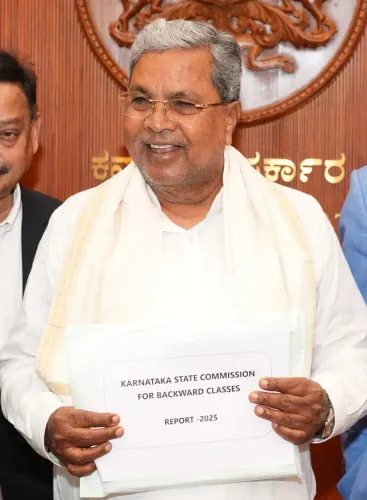
Siddaramaiah formally accepted the Social and Educational Survey report of the Karnataka Backward Classes Commission on 27 May 2026 .
The survey was first ordered during his first term (2013-2018) ; successive governments after 2018 refused to accept the completed report for nearly a decade.
After returning as CM in 2023 , he ordered a fresh re-enumeration to update the data more scientifically before acceptance.
Ponnanna (legal advisor), Commission Chairperson Madhusudhan R Naik , Cabinet colleagues, and other experts were present at the acceptance ceremony.
The report is intended to serve as a policy guide for social justice implementation , potentially informing revised OBC reservation percentages and new welfare schemes.
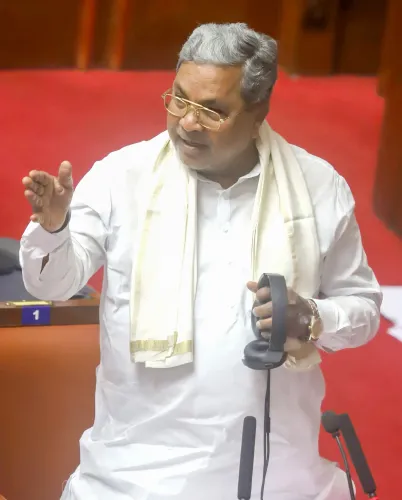
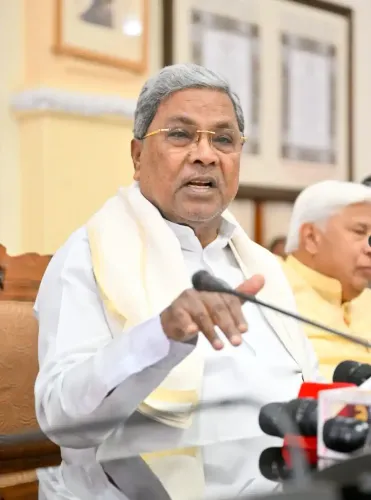
Karnataka Chief Minister Siddaramaiah formally accepted the long-pending Social and Educational Survey report of the Karnataka State Backward Classes Commission on Wednesday, 27 May 2026, describing the moment as one of great satisfaction. The report, whose origins trace back to his first term in office, had remained unaccepted for nearly a decade under successive state governments.
Context
In his post, Siddaramaiah recalled that during his first stint as Chief Minister — which ran from 2013 to 2018 — he had directed the State Backward Classes Commission to conduct a comprehensive 'Social and Educational Survey' (Samajika mattu Shaikashanika Samiksha) covering every community in Karnataka. The aim was to gather complete data on the social and educational conditions of each community to inform welfare and reservation policy.
He noted that governments which came to power after 2018 repeatedly hesitated to accept the completed report, leaving it unacknowledged for close to a decade. 'The survey became nearly a decade old without being accepted,' he wrote, reflecting on the prolonged delay.
Policy Backdrop
After returning to office in 2023 for a second term, Siddaramaiah ordered a fresh re-enumeration to collect data more scientifically, acknowledging that the original survey's findings had aged. The revised exercise was conducted under the supervision of the Karnataka Backward Classes Commission. The acceptance of the report on 27 May 2026 marks the conclusion of a process that began over a decade ago.
Karnataka's effort mirrors similar community surveys undertaken in other Indian states, most notably Bihar, where empirical caste data has been used to recalibrate reservation and welfare frameworks. Such surveys are politically significant because they can form the evidentiary basis for revising Other Backward Classes (OBC) reservation percentages and designing targeted welfare schemes.
Stakeholders and Impact
Present at the formal acceptance were several Cabinet colleagues of Siddaramaiah, his legal advisor A.S. Ponnanna, Karnataka Backward Classes Commission Chairperson Madhusudhan R Naik, commission office-bearers, members, and other domain experts. Their presence underscored the cross-departmental significance the government attaches to the report.
The survey's findings are expected to be of direct consequence to backward classes communities and OBC welfare organisations across Karnataka, who have long sought updated data to strengthen claims for enhanced representation and social support. Any revision to reservation lists or introduction of new welfare schemes based on the report would affect a substantial portion of the state's population.
What's Next
Siddaramaiah expressed hope that the report would 'serve as a guide for the implementation of social justice in the days ahead.' The government is now expected to deliberate at the Cabinet level on translating the survey's findings into concrete policy — potentially including revised reservation percentages or new welfare programmes. Any such changes are likely to face close judicial scrutiny, given the constitutional limits on reservation and the precedent set by earlier legal challenges to similar exercises in other states.
Point of View
Reinforcing the Congress narrative of commitment to backward-class welfare. The re-enumeration order signals an awareness that outdated data weakens policy credibility and legal defensibility. Coming at a time when caste surveys have become a national flashpoint, Karnataka's move aligns with the broader opposition push to expand the empirical basis for OBC policy — a debate that is fast moving from state legislatures toward the Supreme Court. Whether the report translates into durable policy or becomes a pre-election instrument will depend on the Cabinet's appetite for the inevitable legal and political contest that follows any revision to reservation lists.
NationPress
10 Oct 2026
Frequently Asked Questions
What is the Karnataka Social and Educational Survey?
It is a comprehensive statewide enumeration of the social and educational conditions of every community in Karnataka, ordered by the State Backward Classes Commission to generate empirical data for OBC welfare and reservation policy.
Why was the survey report not accepted for so long?
Governments that came to power in Karnataka after 2018 repeatedly deferred formal acceptance of the completed report, leaving it unacknowledged for nearly a decade, according to Chief Minister Siddaramaiah.
What did Siddaramaiah do differently in his second term regarding the survey?
After returning as Chief Minister in 2023, Siddaramaiah ordered a fresh re-enumeration to collect data more scientifically before formally accepting the updated report on 27 May 2026.
Who is Madhusudhan R Naik?
Madhusudhan R Naik is the Chairperson of the Karnataka State Backward Classes Commission, who oversaw the survey process and was present at the formal acceptance of the report.
What happens after the survey report is accepted?
The Karnataka Cabinet is expected to deliberate on using the report's findings to revise OBC reservation percentages or introduce new welfare schemes, though any such changes are likely to face judicial scrutiny.