Sikkim air quality 2026: All monitored zones stay 'Good' in 8-month data

Synopsis
While Delhi enforces emergency pollution controls ahead of Diwali, Sikkim's data tells a strikingly different story: not a single monitoring station breached AQI 100 across eight months of 2026. With Pelling recording AQI as low as 19, Sikkim's clean-air advantage is structural — and the contrast with the national capital has rarely looked sharper.
Key Takeaways
All 8 air quality monitoring stations in Sikkim recorded AQI below 100 between January and August 2026 , per SPCB data.
The highest reading in the state was AQI 81 at Rangpo, East Sikkim , in February — still within the 'Satisfactory' band.
Pelling, West Sikkim posted the lowest readings: AQI 19 in July and 20 in August.
Chungthang, North Sikkim maintained AQI between 28 and 31 throughout the period.
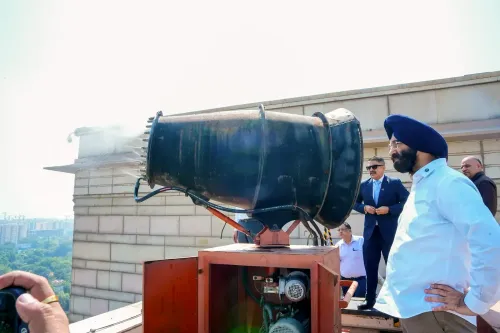
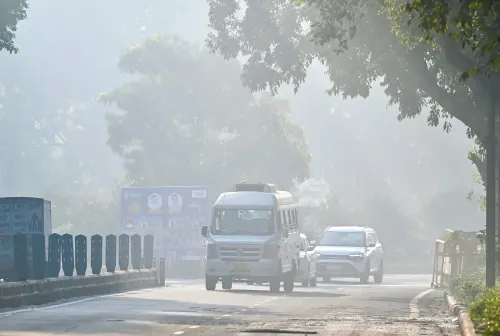
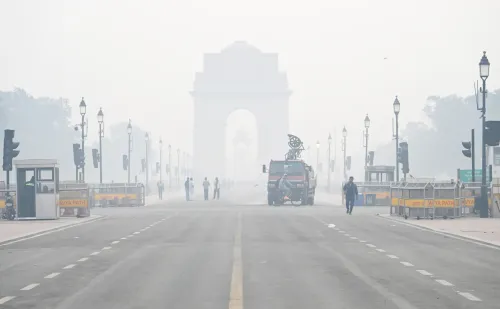
By contrast, Delhi's air slipped into the 'Very Poor' category on 2 November , triggering GRAP Stage 2 measures ahead of Diwali on 8 November .
Sikkim has consolidated its standing as one of India's cleanest states, with every monitored location recording air quality in the 'Good' or 'Satisfactory' category across the first eight months of 2026, according to data released by the State Pollution Control Board (SPCB) on 4 November 2026. Crucially, no station in the Himalayan state logged an Air Quality Index (AQI) above 100 during the entire January–August monitoring window.
Key Findings from the SPCB Data
The dataset draws from eight air quality monitoring stations spread across Sikkim's four districts. The highest single reading recorded in this period was an AQI of 81 at Rangpo in East Sikkim in February — a figure that, while comparatively elevated for the state, still falls within the 'Satisfactory' band and comfortably below the 'Moderate' threshold of 100.
At the other end of the spectrum, Pelling in West Sikkim posted strikingly clean readings of just AQI 19 in July and 20 in August, placing it firmly in the 'Good' category. Chungthang in North Sikkim maintained similarly low indices, ranging between 28 and 31 throughout the monitoring period.
District-by-District Picture
Across South Sikkim, both Ravangla and Namchi largely registered 'Good' air quality, with pollution levels dipping particularly low during the monsoon months. Mangan in North Sikkim showed a comparable trend.
The three stations in East Sikkim — Rangpo, Singtam, and Deorali — recorded relatively higher readings, mostly ranging between the 40s and 60s. Even so, all three remained below the 'Moderate' classification under India's National Air Quality Index framework. Senior officials attributed the marginally elevated East Sikkim readings to greater road traffic and commercial activity in that corridor compared with the state's high-altitude zones.
The Stark Contrast with Delhi
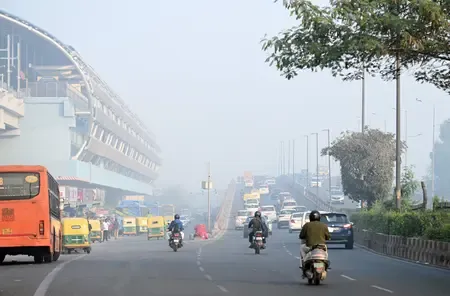
The Sikkim data arrives against a sharply different backdrop in the national capital. Delhi's air quality slipped into the 'Very Poor' category on 2 November for the first time this season, prompting the Commission for Air Quality Management to enforce Stage 2 of the Graded Response Action Plan (GRAP). With Diwali scheduled for 8 November, authorities have flagged the risk of a further deterioration in the capital's air.
Under the National AQI scale, readings between 0 and 50 are classified as 'Good', indicating minimal health impact, while prolonged exposure in the 'Very Poor' band — AQI 301–400 — is associated with serious respiratory health consequences. Sikkim's highest recorded reading of 81 is less than a quarter of the threshold that triggered emergency measures in Delhi.
Why Sikkim's Air Stays Clean
Experts point to a combination of geography, low industrial density, and high forest cover as structural advantages for Sikkim. The state's mountainous terrain facilitates natural ventilation, while the near-absence of heavy industry limits particulate emissions. Monsoon rainfall — particularly effective in July and August — further suppresses dust and pollutant build-up, explaining the consistently lowest readings during those months.
This is not a new trend: Sikkim has featured among India's cleanest air environments in prior SPCB reports as well, suggesting that the 2026 data reflects sustained ambient conditions rather than a temporary improvement. Going forward, the SPCB is expected to publish the September–December data early next year, which will cover the post-monsoon period when pollution levels typically edge upward even in cleaner states.
Point of View
Low industrialisation, and forest cover, but those are not replicable advantages for Delhi or Kanpur. What is replicable is the policy discipline: Sikkim's absence of heavy industry and its relatively stricter land-use controls are choices, not accidents. The timing of this data — released as Delhi enforces emergency pollution curbs days before Diwali — highlights how uneven the air-quality burden has become across Indian states. The national conversation on GRAP and stubble burning would benefit from asking why some states never need emergency action plans in the first place.
NationPress
4 Nov 2026
Frequently Asked Questions
What did Sikkim's 2026 air quality monitoring data show?
Data from Sikkim's State Pollution Control Board covering January to August 2026 showed that all eight monitored locations recorded AQI in the 'Good' or 'Satisfactory' range, with no station exceeding AQI 100. The highest single reading was AQI 81 at Rangpo in February.
Which location in Sikkim recorded the cleanest air in 2026?
Pelling in West Sikkim recorded the lowest AQI readings in the state — just 19 in July and 20 in August 2026, placing it firmly in the 'Good' category. Chungthang in North Sikkim also maintained consistently clean air, ranging between AQI 28 and 31.
How does Sikkim's air quality compare to Delhi's in November 2026?
The contrast is sharp: Sikkim's worst reading across eight months was AQI 81, while Delhi's air quality slipped into the 'Very Poor' category (AQI above 300) on 2 November 2026 for the first time this season. Delhi's deterioration prompted enforcement of GRAP Stage 2 restrictions ahead of Diwali on 8 November.
What is India's National AQI classification scale?
Under the National AQI framework, readings between 0 and 50 are classified as 'Good' with minimal health impact, 51–100 as 'Satisfactory', 101–200 as 'Moderate', 201–300 as 'Poor', 301–400 as 'Very Poor', and above 400 as 'Severe'. Sikkim's stations remained in the first two bands throughout the monitored period.
Why does Sikkim consistently report better air quality than most Indian states?
Sikkim's clean air is attributed to its mountainous geography — which allows natural ventilation — combined with low industrial density, high forest cover, and heavy monsoon rainfall that suppresses dust and pollutants. These factors have kept AQI levels low across multiple years of SPCB monitoring.