Sikkim first state to enforce odd-even vehicle policy after Modi's fuel appeal
Synopsis
Sikkim has become the first Indian state to formally adopt an odd-even vehicle movement system in direct response to PM Modi's fuel conservation appeal — a notable first that sets it apart from Delhi's pollution-driven precedent. With mountainous terrain complicating compliance and residents already flagging inconvenience, the policy's real test lies in execution, not symbolism.
Key Takeaways
Sikkim is the first Indian state to implement an odd-even vehicle policy on state highways following PM Modi's fuel conservation appeal.
Vehicles with odd-digit registration numbers ply on odd dates; even-digit vehicles on even dates — taxis and two-wheelers are exempt.
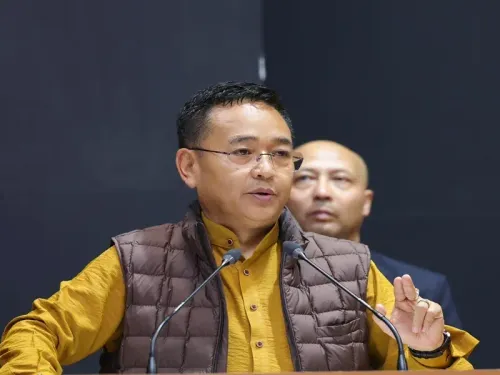
Chief Minister Prem Singh Tamang has exempted private vehicles from restrictions on Saturdays and Sundays .
The CM has been seen using public transport and walking to official events as a show of solidarity with the policy.
Residents have raised concerns about difficult terrain, inter-district travel hardship, and limited impact on national fuel consumption.
Calls have emerged for district-wise relaxations, particularly for Gangtok and inter-district commuters.
Sikkim has become the first state in India to roll out an odd-even vehicle movement policy on state highways, following Prime Minister Narendra Modi's appeal for fuel conservation and responsible governance, officials said on Tuesday, 19 May. The Himalayan state's move marks a swift administrative response to the Centre's call, even as residents express mixed views on its practical impact.
How the Policy Works
Under the new system, private and government vehicles with registration numbers ending in odd digits were permitted to ply on Tuesday, while those ending in even digits will be allowed on Wednesday. The restriction applies across state highways throughout Sikkim. Notably, taxis and two-wheelers have been exempted from the rule.
Chief Minister Prem Singh Tamang, popularly known as Prem Singh Golay, also announced that private vehicles would face no movement restrictions on Saturdays and Sundays, a concession aimed at minimising public inconvenience during the weekend.
Leading by Example
The Chief Minister has himself been seen using public transport and walking to official programmes — a visible signal of the state government's intent to lead by example. Resident Remon Chettri welcomed the initiative, saying Sikkim has consistently demonstrated leadership in implementing national policies tied to sustainability and public discipline. At a symbolic level, Sikkim continues to lead through policy implementation,
Chettri said.
Residents Flag Practical Challenges
The implementation has, however, generated mixed reactions. Resident Keshav Sapkota acknowledged the symbolic value of the measure but questioned its material impact on India's overall fuel consumption, pointing to Sikkim's relatively small population and limited vehicle density. He also flagged the state's difficult terrain as a complicating factor. Only a few selected urban areas have better connectivity, while most of the state consists of difficult terrain. Because of this, many people are facing inconvenience,
Sapkota said.
Chettri, while supportive, suggested targeted relaxations during school hours and for inter-district commuters travelling between Namchi, Gyalshing, Soreng, and Gangtok. He also proposed that the government consider district-wise implementation or special provisions for Gangtok, the state's primary administrative and commercial hub.
Broader Context
Sikkim's move comes amid a broader national conversation on energy security and fuel dependency. This is the first instance of any Indian state formally adopting an odd-even system as a direct response to a prime ministerial appeal for conservation — as opposed to the pollution-driven odd-even schemes previously used in Delhi. Whether other states follow Sikkim's lead remains to be seen, and the effectiveness of the policy in a mountainous, low-density state will likely shape the broader debate on its replicability across India.
Point of View
Meaning the measurable fuel savings will be negligible at the national scale — a point residents themselves are making. The more consequential story is whether this becomes a template that larger, more vehicle-dense states feel pressured to adopt. Mountainous terrain, limited public transport alternatives, and inter-district dependency make Sikkim a poor test case for replicability. The policy risks being remembered more as a gesture of political alignment with the Centre than as a substantive conservation measure — unless the government pairs it with investment in public mobility infrastructure.
NationPress
3 Oct 2026
Frequently Asked Questions
What is Sikkim's odd-even vehicle policy?
Sikkim's odd-even policy restricts private and government vehicles to alternate days based on whether their registration number ends in an odd or even digit. It applies across state highways and was introduced following PM Modi's appeal for fuel conservation, making Sikkim the first Indian state to adopt such a rule for this purpose.
Are all vehicles covered under Sikkim's odd-even rule?
No. Taxis and two-wheelers are exempt from the restriction. Additionally, private vehicles face no movement restrictions on Saturdays and Sundays, as announced by Chief Minister Prem Singh Tamang to reduce public inconvenience.
Why did Sikkim introduce the odd-even vehicle policy?
The policy is part of Sikkim's response to Prime Minister Narendra Modi's appeal for fuel conservation and responsible governance. Chief Minister Tamang framed it as a broader initiative to reduce fuel consumption and promote responsible transport practices.
What concerns have Sikkim residents raised about the policy?
Residents have pointed to the state's difficult mountainous terrain, limited urban connectivity, and the logistical challenges of inter-district travel as key concerns. Some have called for relaxations during school hours and for commuters travelling between districts like Namchi, Gyalshing, Soreng, and Gangtok.
Has any Indian state implemented an odd-even vehicle rule before?
Delhi has used odd-even vehicle schemes in the past, but those were driven by air pollution emergencies. Sikkim is the first state to implement such a policy specifically in response to a prime ministerial appeal for fuel conservation.