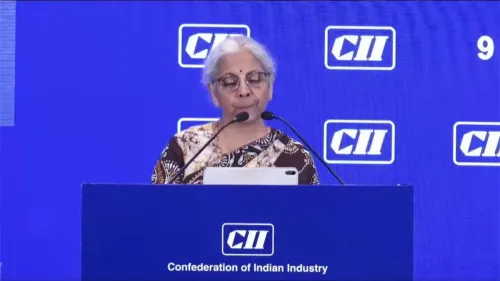
Sitharaman: Ecosystems, Not Incentives, Drive GCC Growth
Synopsis
Finance Minister Nirmala Sitharaman told the CII National GCC Business Summit 2026 that India's next GCC growth phase demands institutional change, not just incentives. She backed a lifecycle National Framework covering setup, expansion, innovation and retention, and praised CII's national and state framework reports as key policy inputs.
Key Takeaways
Nirmala Sitharaman addressed the CII National GCC Business Summit, 2026 on 9 July 2026 , calling for institutional rather than incremental change in GCC policy.
She stated that global enterprises now choose destinations based on ecosystems — talent, infrastructure, regulatory predictability — not costs or incentives alone.
The National Framework for GCCs adopts a lifecycle approach spanning investment decisions, establishment, expansion, innovation and long-term retention.
The CII released both a National GCC Framework report and State GCC Framework reports, which Sitharaman described as valuable inputs for policymakers.
The framework signals an attempt to reduce inter-state policy variation and embed retention-focused measures at the national level.
State-level adoption of the framework and related provisions in upcoming budgets are the key indicators to watch.
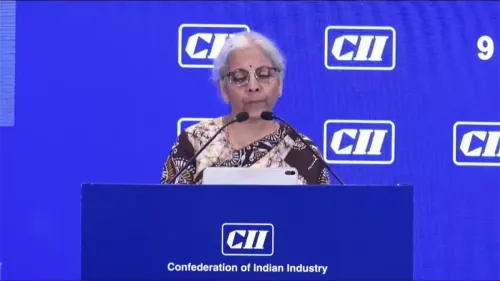
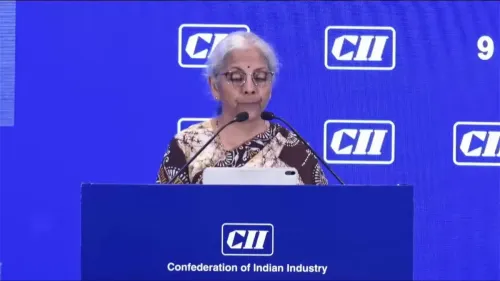
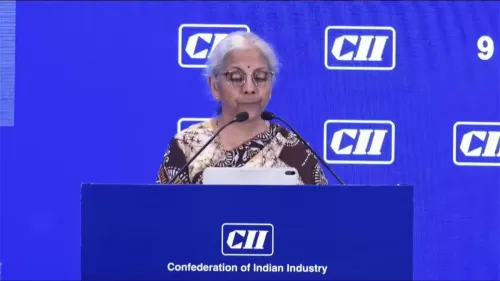
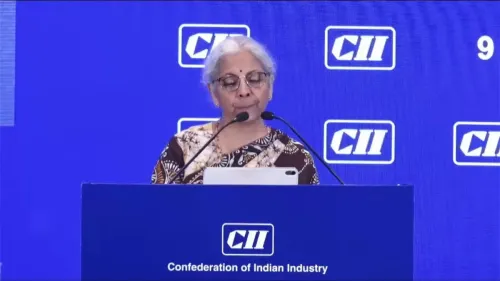
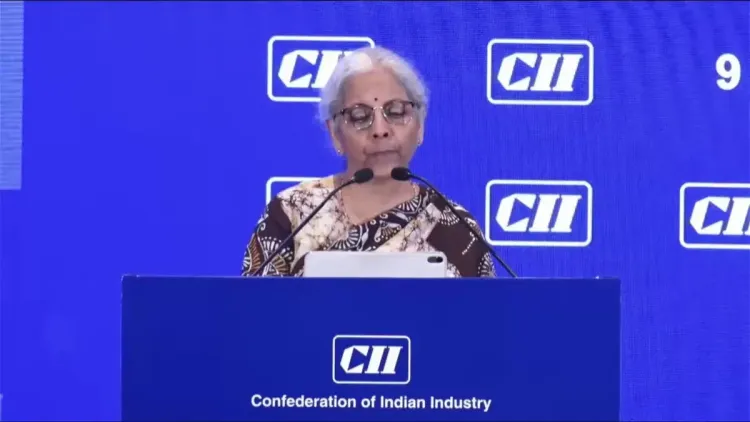
Union Finance Minister Nirmala Sitharaman on Thursday, 9 July 2026 called for institutional rather than incremental change in India's approach to Global Capability Centres (GCCs), speaking at the CII National GCC Business Summit, 2026. She underscored that global enterprises now evaluate entire ecosystems — spanning talent, infrastructure and regulatory predictability — over cost advantages or one-time incentives alone.
Context
Addressing the summit, Sitharaman said the day's discussions had 'reinforced an important lesson': that 'global enterprises no longer choose countries merely based on costs or incentives.' Her remarks signal a deliberate shift in how New Delhi frames its pitch to multinational corporations looking to set up or expand captive operations in India.
She congratulated the Confederation of Indian Industry (CII) for releasing both the National GCC Framework report and accompanying State GCC Framework reports, describing them as 'valuable inputs for policymakers' that contribute to the 'ongoing dialogue between the government and industry.'
Policy Backdrop
India's GCC story has its roots in the post-1991 liberalisation wave that seeded the country's IT and business-process management industry. Over three decades, captive centres evolved from back-office operations into high-value hubs handling R&D, analytics and product engineering. Multiple states have since introduced their own GCC-specific policies, creating a patchwork of incentives that the new national framework seeks to harmonise.
The National Framework, as described by Sitharaman, adopts a 'lifecycle approach' — covering the full arc 'from investment decisions and establishment to expansion, innovation and long-term retention.' This framing marks a departure from entry-level incentive packages toward sustained, institution-backed engagement with global enterprises across their entire India journey.
The CII, founded in 1895, has long served as a bridge between Indian industry and policymakers. Its role in producing both national and state-level framework reports positions it as a key architect of the consultative process that the government is drawing on for GCC policy design.
Stakeholders and Impact
The primary beneficiaries of a robust national GCC framework are the global enterprises — chiefly from the United States, Europe and Japan — that operate or plan to set up capability centres in India. For these firms, policy predictability across states reduces compliance complexity and de-risks long-term investment decisions.
State governments stand to gain as well: a harmonised national baseline could reduce a race-to-the-bottom on incentives and instead push states to compete on talent pipelines, infrastructure quality and ease of doing business. India's IT and services workforce — already among the largest in the world — sits at the centre of this ecosystem argument.
For domestic industry, the shift toward retention and innovation-stage support means GCCs may deepen local vendor ecosystems, university partnerships and R&D collaboration rather than remaining isolated captive units.
What's Next
The immediate watch is whether state governments formally adopt or align with the National GCC Framework in their own policy documents, and whether the framework's lifecycle provisions translate into regulatory or fiscal measures in upcoming union and state budgets.
Industry consultations between the CII, state investment promotion bodies and the Ministry of Finance are likely to intensify as the framework moves from report to implementation. Sitharaman's public endorsement at a high-profile summit sends a clear signal that GCC policy has the attention of the finance ministry, raising the prospect of dedicated provisions in future budget cycles.
Point of View
Subsidy-led playbook toward a more durable, institution-backed value proposition for MNCs. By publicly endorsing the CII's lifecycle framework at a national summit, the finance ministry is signalling that GCC policy is graduating from a state-level scramble to a coordinated federal strategy. This matters because retention and innovation-stage support — the harder end of the lifecycle — have historically been the weakest link in India's captive-centre ecosystem. If the framework gains traction in upcoming budgets and state policy documents, it could meaningfully raise the ceiling on the sophistication of work India attracts from global enterprises.
NationPress
9 Jul 2026
Frequently Asked Questions
What is the National GCC Framework India 2026?
The National GCC Framework is a policy initiative, highlighted at the CII National GCC Business Summit 2026, that takes a lifecycle approach to supporting Global Capability Centres in India — covering everything from initial investment decisions and establishment through to expansion, innovation and long-term retention of global enterprises.
What did Nirmala Sitharaman say about GCCs at the CII summit?
Finance Minister Nirmala Sitharaman said global enterprises no longer choose countries based on costs or incentives alone, and that India's next phase of GCC growth requires institutional rather than incremental change, backed by a lifecycle-oriented national framework.
What is a Global Capability Centre (GCC) in India?
A Global Capability Centre is a captive unit set up by a multinational corporation in India to handle functions such as IT, R&D, analytics and business processes. India hosts a large number of such centres, leveraging its talent pool and, increasingly, its broader technology ecosystem.
What role does CII play in India's GCC policy?
The Confederation of Indian Industry (CII), founded in 1895, produced both the National GCC Framework report and State GCC Framework reports presented at the 2026 summit, serving as a key intermediary between global industry and Indian policymakers on GCC strategy.
Which states are involved in India's GCC framework?
Multiple Indian states have introduced their own GCC-specific policies to attract high-end functions such as R&D and analytics. The national framework aims to reduce inter-state variation and provide a common baseline, with state-level adoption being the key next step to watch.