Sitharaman highlights ₹30-32 cr organic spice unit in Meghalaya
Synopsis
Union Finance Minister Nirmala Sitharaman spotlighted the Eastern Ri-Bhoi Organic FPC's new spice processing unit in Meghalaya — a ₹30-32 crore facility serving 500 farmers, built through convergence of MOVCD-NER, MIDH, IFAD funding and state programmes, offering a replicable model for smallholder value-chain development across the North East.
Key Takeaways
The Eastern Ri-Bhoi Organic FPC unites 500 organic farmers from 9 villages through 26 Farmer Interest Groups in Meghalaya .
The Organic Spice Processing Unit was established with an investment of approximately ₹30–32 crore , facilitated by the Government of Meghalaya .
Central schemes MOVCD-NER (launched 2015 ) and MIDH (launched 2014 ) provided key policy and financial support to the project.
Convergence with IFAD -supported programmes was critical to assembling the investment, distributing risk across central, state and international sources.
Finance Minister Nirmala Sitharaman cited the project as a model for states to build farmer-owned, market-driven rural infrastructure by layering multiple financing streams.
The unit is expected to improve grading, processing and market access for organic spices from Ri-Bhoi district , a growing organic cluster in the North East .
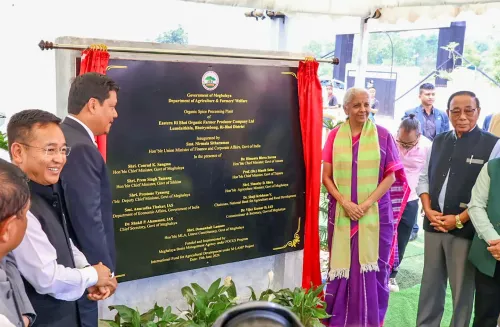
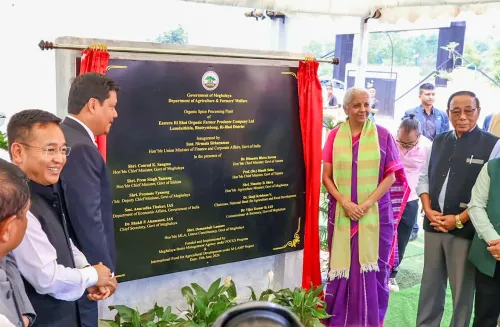
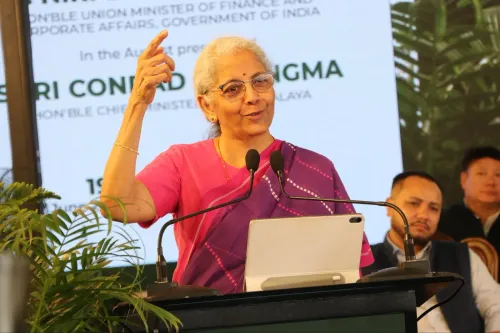
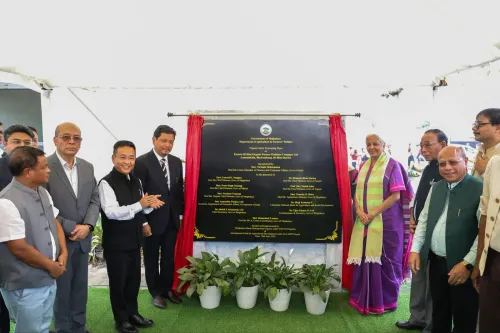
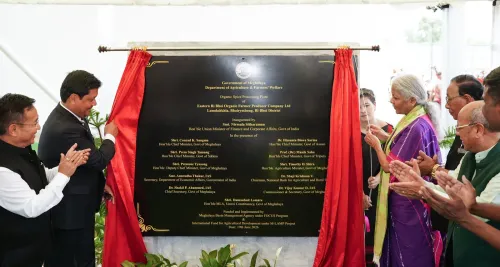
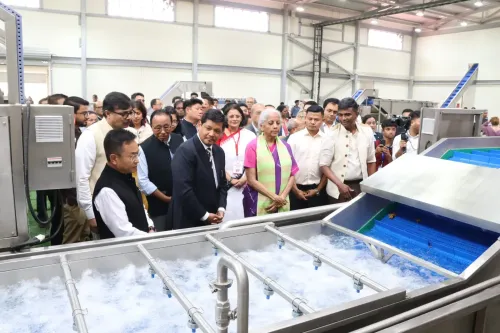
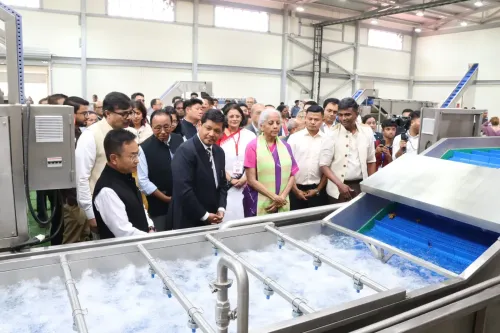
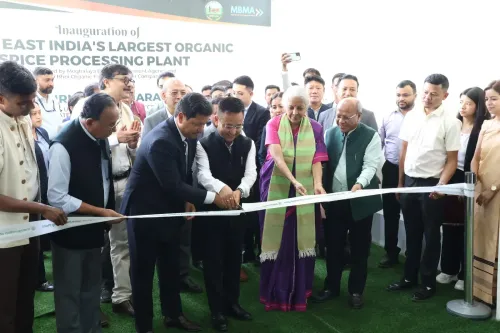
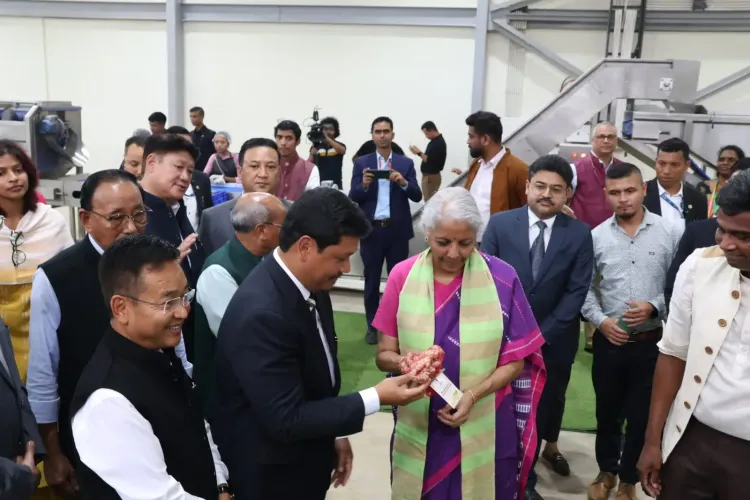
Union Finance Minister Nirmala Sitharaman on Friday, 19 June 2026, highlighted the establishment of a state-of-the-art Organic Spice Processing Unit in Ri-Bhoi district, Meghalaya, backed by an investment of approximately ₹30–32 crore, calling it a model for how states can leverage central schemes, externally aided projects and convergence financing to build farmer-owned enterprises.
Context
The unit is anchored around the Eastern Ri-Bhoi Organic Farmer Producer Company (FPC), which brings together 500 organic farmers from 9 villages, organised through 26 Farmer Interest Groups. The Government of Meghalaya, working through convergence with IFAD-supported programmes, facilitated the establishment of the processing facility. The Finance Minister described the project as demonstrating that 'investments in value addition, aggregation and processing can transform smallholder agriculture into a sustainable and commercially viable sector.'
Policy Backdrop
The FPC has drawn support from two major central government schemes: the Mission for Organic Value Chain Development for North East Region (MOVCD-NER), launched in 2015 to develop certified organic value chains for spices, fruits and vegetables across the eight North Eastern states, and the Mission for Integrated Development of Horticulture (MIDH), operational since 2014, which supports production, post-harvest management and marketing of horticultural crops. State government programmes have supplemented both central streams.
The Farmer Producer Company model itself has been promoted by the Government of India since 2013 through equity grants and credit-linked schemes designed to enable smallholder collectives to aggregate produce, add value and access direct market linkages. Ri-Bhoi district has emerged as a notable cluster for organic ginger, turmeric and chilli cultivation in Meghalaya. IFAD has partnered with the state on externally aided livelihood projects since the early 2010s, with an emphasis on dovetailing international financing with central scheme funding.
Stakeholders and Impact
The primary beneficiaries are the 500 smallholder organic farmers of Eastern Ri-Bhoi who now have access to organised processing infrastructure, reducing dependence on intermediaries and improving their share of the value chain. The convergence of MOVCD-NER, MIDH, state budgetary support and IFAD financing distributes investment risk across multiple sources rather than burdening a single channel. This approach is seen by policymakers as a replicable template for other districts across the North Eastern Region (NER).
The Finance Minister's post, part of a thread (3/n), signals that the Union government views this as a showcase of the broader policy goal of raising farmer incomes through market-linked rural enterprises rather than production subsidies alone. For the organic spice sector, a processing unit of this scale can improve grading, packaging and traceability — prerequisites for premium domestic and export markets.
What's Next
Attention will now turn to whether similar convergence-financed organic processing units are announced for other NER districts, and whether the model finds explicit mention in forthcoming budget or parliamentary discussions. The Eastern Ri-Bhoi unit could serve as a reference point for scaling the convergence financing architecture to other smallholder-intensive states. Policymakers and farmer collectives in states with comparable organic potential are likely to study this structure closely.
Point of View
MIDH, IFAD funds and state budgets — as a scalable blueprint for agricultural value-chain development in the North East. By anchoring the narrative around a farmer-owned FPC rather than government expenditure, the communication aligns with the broader political messaging of moving rural policy from subsidy-dependence toward enterprise creation. The choice of Ri-Bhoi, a district with organic spice potential but limited prior visibility, also suggests an intent to demonstrate that the model works beyond headline states. If the convergence template gains traction in parliamentary and budget discussions, it could reshape how externally aided projects are integrated with central schemes across other agrarian states.
NationPress
19 Sept 2026
Frequently Asked Questions
What is the Eastern Ri-Bhoi Organic FPC?
The Eastern Ri-Bhoi Organic Farmer Producer Company (FPC) is a farmer-owned collective comprising 500 organic farmers from 9 villages in Ri-Bhoi district, Meghalaya , organised through 26 Farmer Interest Groups . It was set up to enable collective aggregation, processing and marketing of organic spices.
How much was invested in the Meghalaya Organic Spice Processing Unit?
The Organic Spice Processing Unit in Ri-Bhoi was established with an investment of approximately ₹30–32 crore , facilitated by the Government of Meghalaya through convergence with IFAD -supported programmes and central government schemes.
What is MOVCD-NER and how does it support organic farming?
MOVCD-NER — the Mission for Organic Value Chain Development for the North East Region — is a central government scheme launched in 2015 to develop certified organic value chains for spices, fruits and vegetables across the eight North Eastern states by supporting cluster-based infrastructure and market linkages.
What is the role of IFAD in Meghalaya's farming projects?
IFAD (International Fund for Agricultural Development) has partnered with Meghalaya on externally aided rural livelihood projects since the early 2010s. In the Ri-Bhoi project, IFAD-supported programmes were converged with central and state financing to co-fund the spice processing unit.
Why did Nirmala Sitharaman highlight the Ri-Bhoi organic project?
Finance Minister Nirmala Sitharaman cited the Eastern Ri-Bhoi unit as a replicable model showing how states can layer central schemes, externally aided projects and state funds to build farmer-owned, market-driven rural enterprises — a key policy priority for raising smallholder incomes in the North East .