Sitharaman in Chennai: Saiva Thirumurais Brought Tamil to the People
Synopsis
Union Finance Minister Nirmala Sitharaman, speaking in Chennai, praised the Saiva Thirumurais for democratising Tamil literature — helping ordinary people learn and sing a language once seen as the exclusive preserve of scholars.
Key Takeaways
Union Finance Minister Nirmala Sitharaman spoke in Chennai on 1 August 2026 on Tamil language and literary heritage.
She highlighted the Saiva Thirumurais as unmatched in their wealth of Tamil, calling them a bridge between scholars and common people.
Sitharaman noted the Thirumurais helped ordinary people 'learn and sing' Tamil, not just study it academically.
She observed that multiple Tamil literary traditions are visible within the Thirumurais.
Tamil was recognised as a classical language by the Government of India in 2004 , providing institutional backing for such heritage promotion.
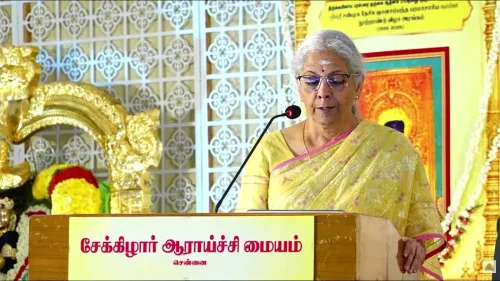
The wealth of Tamil literature has always been vast — but for centuries, it felt like a possession locked away for scholars alone. Speaking in Chennai, Union Finance Minister Nirmala Sitharaman argued that the Saiva Thirumurais broke that barrier, bringing the full richness of the Tamil language within reach of ordinary people.
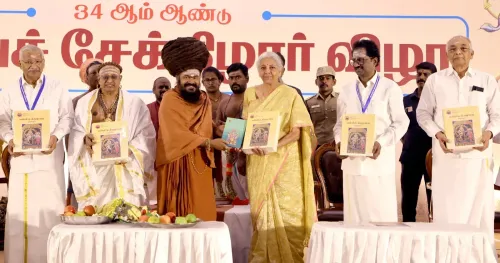
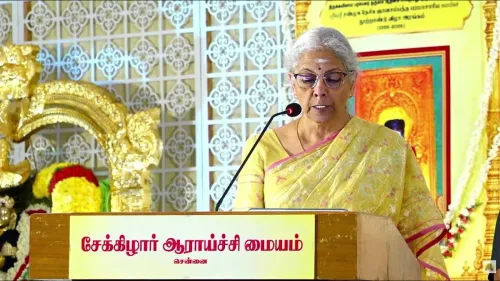
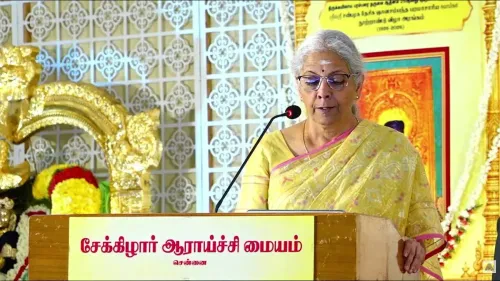
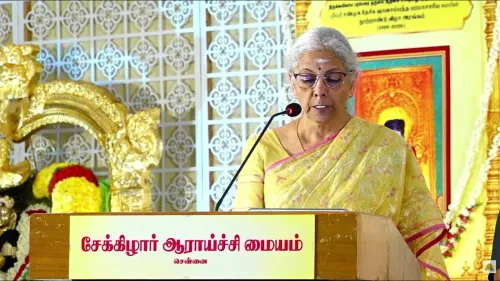
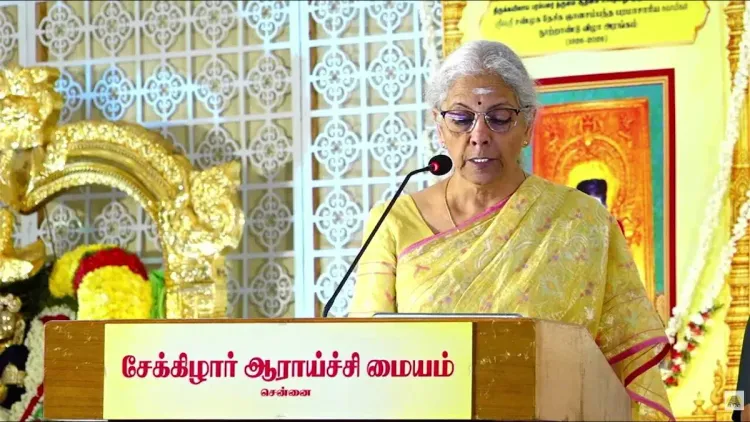
In remarks shared on Saturday, 1 August 2026, Sitharaman reflected on the singular place the Thirumurais occupy in Tamil literary heritage. Quoting her own words: 'We speak about Tamil language and Tamil literature in many places. There is nothing that can match the wealth of Tamil found in the Saiva Thirumurais. These Thirumurais have helped ordinary people — who once thought Tamil belonged only to scholars — to learn and sing the language. We can see many different Tamil literary traditions within these Thirumurais.'
From the Sanctum to the Street: What the Thirumurais Did
The Saiva Thirumurais are a canonical collection of Tamil Shaivite devotional hymns, composed across centuries by poet-saints revered in the Shaiva tradition. What made them historically significant was not just their theological content but their linguistic democratisation — they were composed to be sung, memorised, and lived, not merely studied. Sitharaman's observation that they helped common people 'learn and sing' Tamil points to this oral, participatory character that set them apart from classical scholarly texts. The hymns carry within them multiple strands of Tamil literary tradition — metres, imagery, and idioms that span the breadth of classical Tamil poetics — making them simultaneously a devotional canon and a literary archive.Classical Language Status and the Politics of Cultural Pride
The backdrop matters. Tamil was recognised as a classical language by the Government of India in 2004, the first language to receive that designation, triggering decades of institutional investment in Tamil literary research and promotion. Central government leaders invoking Tamil's classical heritage in public speeches has become a recurring pattern — a signal of respect toward Tamil Nadu's deep cultural identity, and a political gesture in a state where linguistic pride runs at the core of public life. Sitharaman, a native Tamil speaker herself, carries particular credibility when she speaks on this terrain. Her remarks in Chennai were not a policy announcement — they were a cultural affirmation, delivered in the language itself, anchoring the Thirumurais as a living bridge between Tamil's ancient literary glory and its everyday speakers today. The message is clear: Tamil's greatest texts were never meant only for the learned. They were written for everyone — and they still are.Point of View
She chose a text with deep cross-caste resonance in Tamil Shaivite society, not merely a generic literary reference. The framing — that these hymns belong to everyone, not just the learned — carries an implicit democratic message that aligns with the BJP's broader 'cultural nationalism for all' positioning. Whether such cultural diplomacy translates into political capital in Tamil Nadu remains the central question for the party's southern strategy.
NationPress
1 Aug 2026
Frequently Asked Questions
What did Nirmala Sitharaman say about Tamil language in Chennai?
Sitharaman said the Saiva Thirumurais represent an unmatched wealth of Tamil and have helped ordinary people — not just scholars — learn and sing the Tamil language.
What are the Saiva Thirumurais?
The Saiva Thirumurais are a collection of Tamil Shaivite devotional hymns composed by poet-saints over centuries, considered a cornerstone of Tamil literary and religious tradition.
When was Tamil recognised as a classical language?
Tamil was recognised as a classical language by the Government of India in 2004 , making it the first language to receive this designation in India.
Why did Sitharaman speak about Tamil literature?
Sitharaman spoke at an event in Chennai reflecting on Tamil literary heritage, praising the Thirumurais for democratising Tamil by making it accessible to common people beyond the scholarly community.
What is the significance of the Thirumurais in Tamil literary tradition?
The Thirumurais contain multiple strands of Tamil literary tradition — metres, imagery, and classical poetic forms — while also serving as devotional hymns meant to be sung by everyone, making them both a literary archive and a living cultural practice.