Sitharaman Meets Indian Engineer on ITER Fusion Project
Synopsis
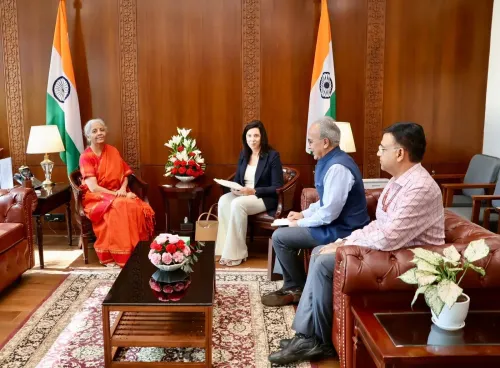
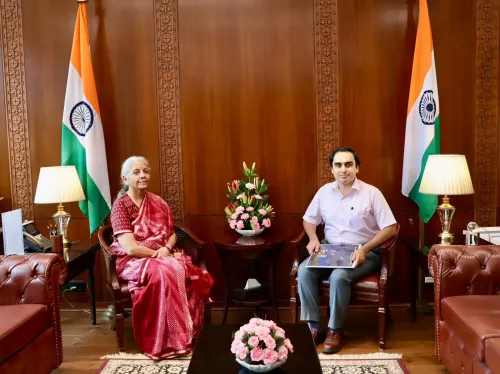
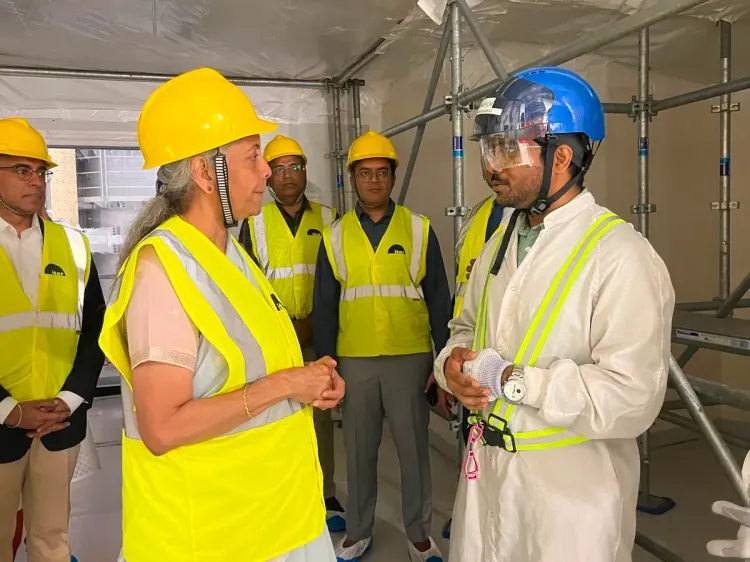
Union Finance Minister Nirmala Sitharaman interacted with Ajaikumar Shankar, a Coimbatore-based engineer and Anna University graduate, currently working on the ITER international fusion reactor project in France. The exchange spotlights India's active role in global clean-energy research and the contribution of state-university graduates to frontier science.
Key Takeaways
Nirmala Sitharaman interacted with Ajaikumar Shankar , an engineer from Coimbatore, Tamil Nadu , on 4 July 2026 .
Shankar is a graduate of Anna University, Chennai , specialising in Advanced Manufacturing, and is currently contributing to the ITER project.
ITER is a 35-nation international fusion reactor project based in France ; India joined as a full partner in December 2005 .
India's ITER contribution includes design and manufacture of major components such as the cryostat , building domestic advanced-manufacturing capability.
The interaction underscores the role of state engineering universities in producing talent for high-technology global projects.
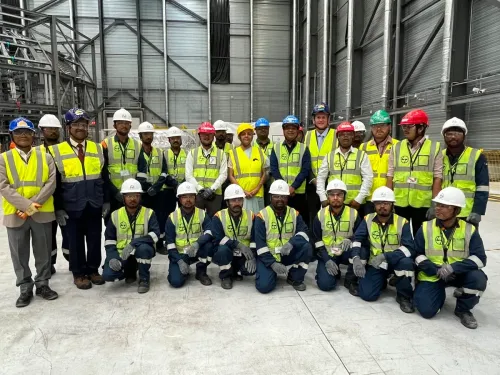
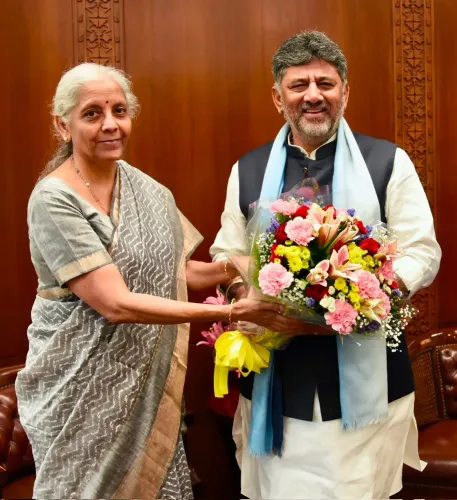
Union Finance Minister Nirmala Sitharaman interacted with Ajaikumar Shankar, an engineer from Coimbatore, Tamil Nadu, who is currently contributing to the International Thermonuclear Experimental Reactor (ITER) project, according to a post shared on 4 July 2026. Shankar, a graduate of Anna University, Chennai with a specialisation in Advanced Manufacturing, represents India's growing footprint in one of the world's most ambitious clean-energy endeavours.
Context
The interaction highlights the Finance Minister's engagement with Indian professionals working at the frontier of global science. Ajaikumar Shankar hails from Coimbatore, a city long recognised as a hub for precision engineering and manufacturing in southern India. His academic foundation at Anna University — one of India's foremost public technical universities — underscores the role of state-funded engineering education in producing talent for high-technology international projects.
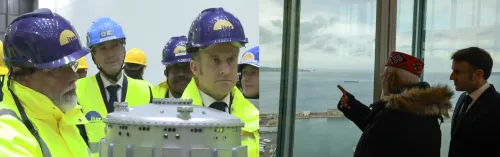
The ITER project, headquartered in Saint-Paul-lès-Durance, France, aims to demonstrate the scientific and technical feasibility of fusion energy. It is a collaboration among 35 nations, with India as a full partner since December 2005.
Policy Backdrop
India's membership in ITER is not merely symbolic. Since joining as a full partner, India has committed to designing, manufacturing, and supplying critical components for the reactor, including major sections of the cryostat — the massive steel vessel that houses the fusion machine at ultra-low temperatures. This participation has helped build domestic capabilities in advanced manufacturing, precision welding, and cryogenic engineering.
Successive governments have supported Indian industry and academia in supplying precision components to ITER, framing the partnership as a vehicle for technology transfer and long-term energy security. For a country with Nirmala Sitharaman as Finance Minister — a minister who frequently highlights Indian contributions in science and manufacturing — such interactions serve as public recognition of the pipeline running from Indian universities to global research facilities.
Stakeholders and Impact
Engineers like Ajaikumar Shankar sit at the intersection of India's STEM education system and its international scientific commitments. Graduates from institutions such as Anna University who find their way to projects like ITER represent a validation of India's technical education ecosystem, particularly from state universities outside the IIT network.
The broader Indian scientific community, domestic manufacturing firms supplying ITER components, and students pursuing advanced manufacturing programmes all have a stake in the visibility such interactions generate. When a senior cabinet minister publicly acknowledges an engineer's contribution to a global fusion project, it signals institutional support for careers in deep-tech and international research.
What's Next
ITER is currently in its assembly phase, with first plasma operations anticipated in the coming years. Milestones in assembly and testing will keep India's manufacturing contributions in focus, as will any new contracts or technology-transfer agreements linked to the project. The Finance Ministry's engagement with ITER contributors may also reflect broader interest in ensuring that India's investment in the project translates into domestic industrial and scientific capacity for the long term.
Point of View
Contributing partner in international big-science projects rather than a passive beneficiary. Coming from the Finance Ministry, the gesture carries an implicit policy message: that investments in STEM education and in multilateral science partnerships like ITER are bearing human capital returns. Watching whether this translates into budget or policy follow-through for fusion research and advanced manufacturing will be the real test.
NationPress
4 Jul 2026
Frequently Asked Questions
Who is Ajaikumar Shankar and what is his role in ITER?
Ajaikumar Shankar is an engineer from Coimbatore, Tamil Nadu, and a graduate of Anna University, Chennai, with a specialisation in Advanced Manufacturing. He is currently contributing to the International Thermonuclear Experimental Reactor (ITER) project, a 35-nation fusion energy research initiative based in France.
What is the ITER project and why is India involved?
ITER is an international nuclear fusion research project in Saint-Paul-lès-Durance, France, aimed at proving the feasibility of fusion as a clean energy source. India joined as a full partner in December 2005 and contributes by designing and manufacturing critical components, including sections of the cryostat.
Why did Nirmala Sitharaman meet an ITER engineer?
Finance Minister Nirmala Sitharaman interacted with Ajaikumar Shankar to publicly recognise India's contribution to the ITER fusion project. Such ministerial interactions are part of routine acknowledgement of Indian professionals working on significant international science and technology programmes.
What has India contributed to the ITER fusion reactor?
India has committed to supplying major components for the ITER reactor, most notably large sections of the cryostat — the steel vessel that maintains ultra-low temperatures around the fusion machine — along with other precision-engineered parts, building domestic capability in advanced manufacturing and cryogenic engineering.
Which university did the ITER engineer Ajaikumar Shankar attend?
Ajaikumar Shankar graduated from Anna University in Chennai, Tamil Nadu, one of India's leading public technical universities, with a specialisation in Advanced Manufacturing.