Sitharaman Meets Karnataka Rural Minister Khandre at Parliament
Synopsis
Karnataka's Rural Development and Panchayat Raj Minister Eshwara Khandre called on Union Finance Minister Nirmala Sitharaman at Parliament House on 21 July 2026, reflecting standard inter-governmental coordination on central rural scheme funding and panchayat grants despite the political divide between the two governments.
Key Takeaways
Eshwara Khandre , Karnataka's Rural Development and Panchayat Raj Minister, met Union Finance Minister Nirmala Sitharaman at Parliament House, New Delhi on 21 July 2026 .
The meeting follows established federal practice of state rural ministers engaging the Union Finance Minister during Parliament sessions to discuss centrally sponsored scheme funding.
Karnataka's panchayati raj institutions are key delivery channels for 15th Finance Commission grants and MGNREGA funds, making Finance Ministry engagement critical for the state.
The Congress-led Karnataka government and the BJP-led Union government maintain inter-governmental coordination on rural welfare funding despite political differences.
Outcomes from such meetings can influence panchayat grant releases and MGNREGA fund flows to Karnataka's rural households.
Budget watchers will track Union Budget 2027 and Karnataka Assembly supplementary demands for signals on rural scheme allocations.
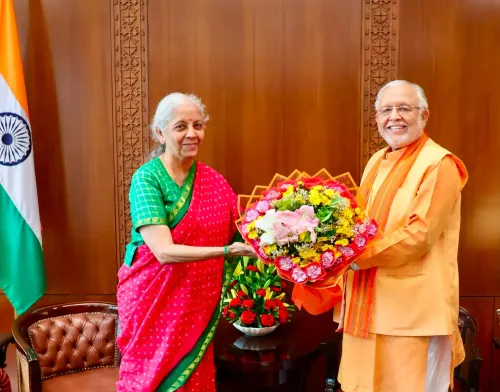
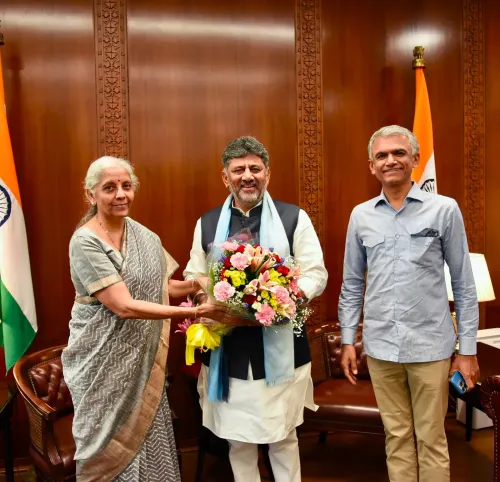
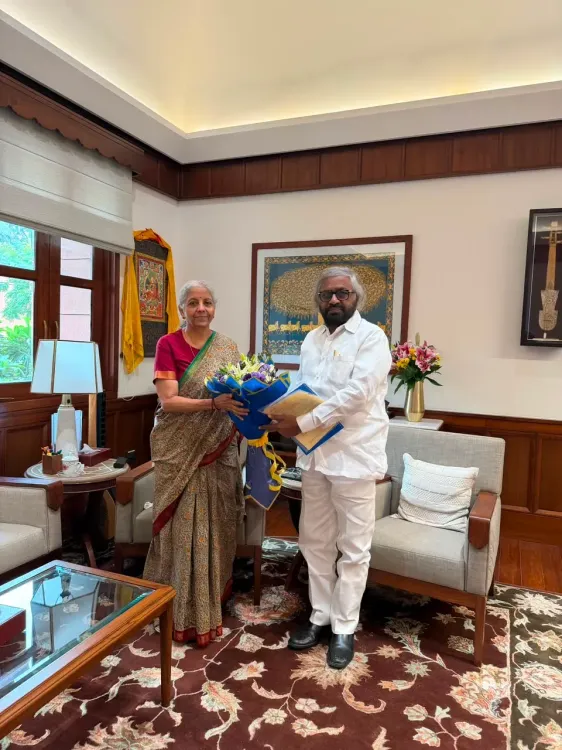
Union Finance Minister Nirmala Sitharaman received Eshwara Khandre, Karnataka's Minister for Rural Development and Panchayat Raj, at Parliament House, New Delhi, on Tuesday, 21 July 2026. The courtesy call brought together a senior Union minister and a state counterpart from the Congress-led Karnataka government for inter-governmental dialogue on rural and panchayat-related matters.
Context
Eshwara Khandre holds the Rural Development and Panchayat Raj portfolio in the Government of Karnataka, which is administered by the Indian National Congress. His visit to Smt. Nirmala Sitharaman at Parliament House follows a well-established federal practice in which state ministers responsible for rural affairs engage the Union Finance Minister during Parliament sessions. Such meetings typically cover implementation of centrally sponsored schemes, pending fiscal transfers, and grant utilisation at the panchayat level.
Parliament House serves as a key venue for central-state coordination, particularly when both Houses are in session and state representatives are present in the capital. The meeting signals active inter-governmental engagement despite the political differences between the BJP-led Union government and the Congress-led Karnataka administration.
Policy Backdrop
Rural development and panchayati raj financing in India is shaped significantly by Finance Commission recommendations. The 15th Finance Commission laid out grants to rural local bodies and panchayats for basic services, directly influencing the quantum of funds flowing from the Union to states including Karnataka. These grants are administered through state panchayat raj departments, making the Finance Minister a critical interlocutor for state rural ministers.
MGNREGA — the Mahatma Gandhi National Rural Employment Guarantee Act — remains the flagship centrally sponsored scheme for rural employment. Expanded under successive Union budgets since 2005, it is implemented on the ground through state panchayat raj machinery. Discussions around wage releases, pending dues, and fund utilisation under MGNREGA are a routine part of such bilateral meetings. Karnataka's panchayati raj institutions are among the primary delivery channels for these central outlays at the grassroots level.
Stakeholders and Impact
The most direct stakeholders in any outcome from this meeting are panchayati raj institutions across Karnataka and the rural households they serve. Timely release of Finance Commission grants and MGNREGA funds can directly affect local infrastructure works, wage payments, and basic service delivery in Karnataka's villages. State rural development departments depend on predictable central transfers to plan and execute schemes without disruption.
The meeting also reflects a broader pattern of pragmatic federalism: even where state and Union governments are led by rival parties, administrative necessity drives engagement on fiscal and scheme-related matters. Karnataka's Congress government has continued to engage the BJP-led Centre on such issues since coming to power, underscoring that rural welfare funding transcends partisan considerations at the operational level.
What's Next
Watchers of Union-state fiscal relations will look to Union Budget 2027 discussions and Karnataka's own supplementary demands in the state Assembly for signals on rural scheme allocations. Any revision in panchayat grants or MGNREGA fund releases for Karnataka would be a concrete downstream indicator of the kind of engagement this meeting represents. Inter-ministerial coordination of this nature often feeds into the broader budget exercise, making such calls at Parliament House a routine but consequential feature of India's cooperative federalism.
Point of View
Direct access to the Finance Minister is a practical lever to press for timely MGNREGA releases and Finance Commission grants ahead of the next budget cycle. Sitharaman, managing the Union's fiscal envelope, benefits from state-level feedback on scheme implementation gaps. The optics of the meeting also serve both sides: the Centre signals responsiveness to Opposition-ruled states, while Karnataka demonstrates administrative seriousness to its constituents.
NationPress
23 Jul 2026
Frequently Asked Questions
Why did Karnataka minister Eshwara Khandre meet Nirmala Sitharaman?
Karnataka's Rural Development and Panchayat Raj Minister Eshwara Khandre called on Union Finance Minister Nirmala Sitharaman at Parliament House on 21 July 2026, in a standard inter-governmental meeting to discuss central funding for rural schemes and panchayat grants.
What schemes are likely discussed when a state rural minister meets the Finance Minister?
Such meetings typically cover MGNREGA fund releases, Finance Commission grants to rural local bodies, and the implementation status of centrally sponsored rural infrastructure schemes that flow through state panchayat raj departments.
Who is Eshwara Khandre?
Eshwara Khandre is the Minister for Rural Development and Panchayat Raj in the Congress-led Government of Karnataka, responsible for overseeing rural employment, local body governance, and panchayati raj institutions in the state.
How does Karnataka receive central funds for rural development?
Karnataka receives central transfers for rural development primarily through Finance Commission grants to panchayats and allocations under centrally sponsored schemes like MGNREGA, both of which are administered through the state's panchayat raj department.
Does political rivalry between state and Union governments affect rural funding?
In practice, Indian states — including those governed by parties in Opposition at the Centre — routinely engage the Union Finance Ministry on rural funding, as administrative necessity and scheme timelines require inter-governmental coordination regardless of political differences.