Sitharaman moved by MS Subbulakshmi's UN peace song amid global wars
Synopsis
At a Chennai student dialogue on 25 September 2026, Union Finance Minister Nirmala Sitharaman recalled being emotionally moved by Maitreem Bhajata — the peace hymn composed by Kanchi Periyavar and sung by Bharat Ratna M.S. Subbulakshmi at the United Nations in 1966 — saying every line resonates urgently amid today's global conflicts.
Key Takeaways
Nirmala Sitharaman shared a personal reflection on Maitreem Bhajata at a student dialogue in Chennai on 25 September 2026 .
The Sanskrit peace hymn was composed by Kanchi Periyavar (Chandrasekharendra Saraswati) , the 68th Shankaracharya of Kanchi.
Subbulakshmi performed the hymn at the United Nations General Assembly in 1966 .
Sitharaman said she has listened to the song since childhood and a recent hearing left her emotionally moved amid current global tensions.
She noted that wars anywhere in the world affect everyone, including Indians, in some way.
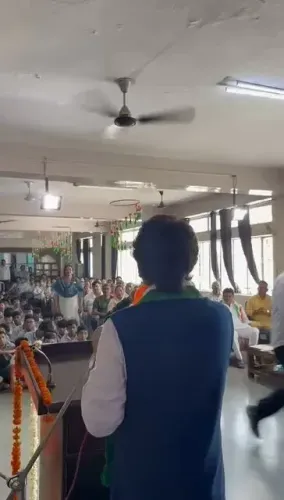
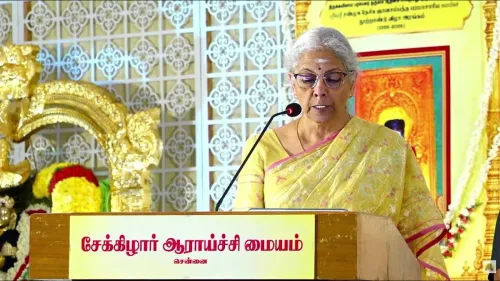
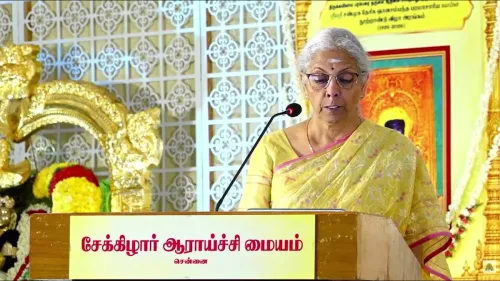
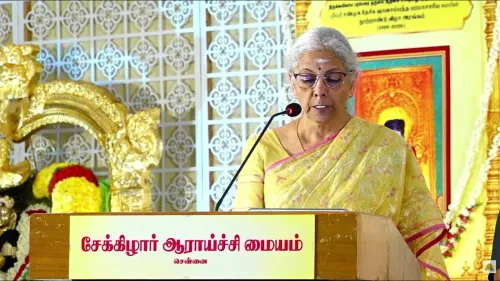
A song composed by a saint, sung at the United Nations, and now echoing in the mind of a finance minister listening to college students in Chennai — Union Finance Minister Nirmala Sitharaman on Friday, 25 September 2026, shared a deeply personal reflection on the timeless relevance of Maitreem Bhajata, the Sanskrit peace hymn, amid the wars scarring today's world.
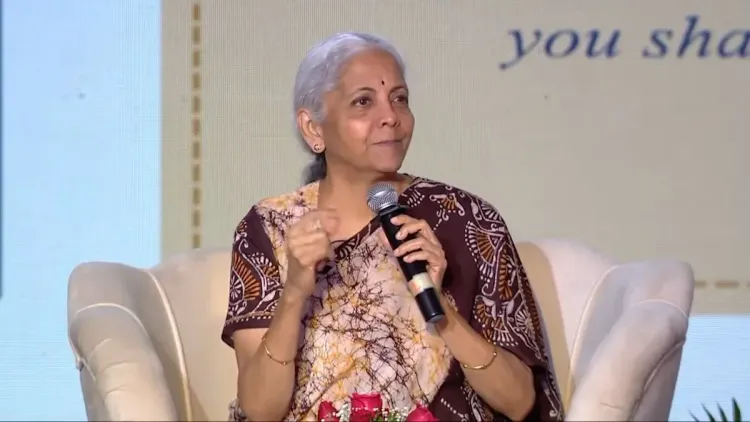
Speaking at a dialogue session with college students in Chennai, Tamil Nadu, Sitharaman said she has listened to the song — sung by Bharat Ratna M.S. Subbulakshmi — since childhood. She described how a recent hearing of the composition moved her emotionally, because every line felt urgent and immediate in the context of present-day global conflicts.
The song that made the United Nations pause
Maitreem Bhajata was composed by Chandrasekharendra Saraswati, the revered 68th Shankaracharya of Kanchi, known widely as Kanchi Periyavar. Its Sanskrit verses call on nations to abandon war, practise friendship, and build a world at peace. In 1966, M.S. Subbulakshmi performed the hymn at the United Nations General Assembly — a moment that remains one of the most celebrated intersections of Indian classical music and global diplomacy.
The hymn's core plea is disarmingly direct: forsake war, choose harmony. For a song born in a South Indian mutt and carried to the floor of the world's foremost multilateral body, its staying power is itself a statement.
Why the words hit harder now
Sitharaman did not name specific ongoing conflicts, but her message was unambiguous. 'Wherever wars occur in the world, their impact affects all of us in some way,' she said, according to the post shared on her official handle. The sentiment tracks a pattern that has grown more pronounced as simultaneous conflicts — from Europe to West Asia — have disrupted supply chains, food prices, and energy markets in ways that reach every household, including in India.
The minister added that every line of the hymn now carries 'profound meaning' to her — a personal register notably different from formal policy statements, and one that resonated in a setting designed precisely for candid conversation with young Indians.
Student outreach and the classroom as a pulpit
The Chennai dialogue is part of a broader pattern of senior ministers engaging directly with students — an audience whose questions frequently cut past the scripted to the consequential. Indian leaders have periodically reached for classical compositions and spiritual figures when articulating positions on global peace, particularly at moments when India's role as a 'Vishwabandhu' — a friend to all nations — is being actively projected at multilateral forums.
That a Finance and Corporate Affairs Minister chose a poet-saint's hymn over a GDP slide to frame her worldview for the next generation says something worth noting. The wars of the world, Sitharaman reminded those students, are not abstractions on a news ticker. They arrive, eventually, at everyone's door.
Frequently Asked Questions
What is Maitreem Bhajata and who composed it?
Maitreem Bhajata is a Sanskrit peace hymn composed by Chandrasekharendra Saraswati, the 68th Shankaracharya of Kanchi, widely known as Kanchi Periyavar. Its verses appeal to nations and people to abandon war and cultivate friendship and global harmony.
When did M.S. Subbulakshmi sing at the United Nations?
Bharat Ratna M.S. Subbulakshmi performed Maitreem Bhajata at the United Nations General Assembly in 1966, making it one of the most celebrated moments connecting Indian classical music to global diplomacy.
What did Nirmala Sitharaman say about global wars at the Chennai event?
Sitharaman said that wherever wars occur in the world, their impact affects all of us in some way, and that every line of Maitreem Bhajata carries profound meaning in the current global environment.
Where was Nirmala Sitharaman when she made these remarks?
She was speaking at a dialogue session with college students in Chennai, Tamil Nadu, on 25 September 2026.
Who was Kanchi Periyavar?
Kanchi Periyavar is the revered title for Chandrasekharendra Saraswati, the 68th Shankaracharya of the Kanchi Kamakoti Peetham, a highly respected Hindu spiritual leader and scholar who composed the peace hymn Maitreem Bhajata.