Sitharaman: PM-KISAN reaches 9.4 cr farmers via DBT
Synopsis
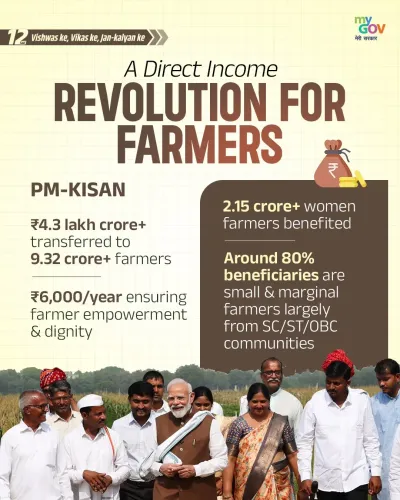
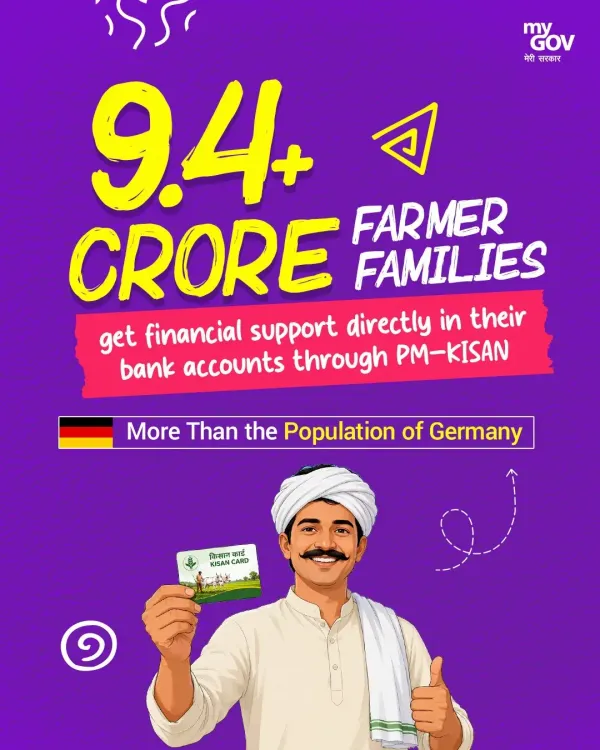
Union Finance Minister Nirmala Sitharaman marked 11 years of Digital India by highlighting that PM-KISAN now delivers Rs 6,000 annual support to over 9.4 crore farmer families directly via DBT, showcasing technology-driven welfare delivery at scale.
Key Takeaways
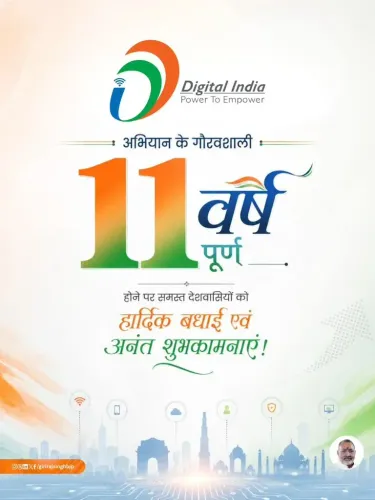
Union Finance Minister Nirmala Sitharaman posted on 1 July 2026 , the 11th anniversary of the Digital India programme.
More than 9.4 crore farmer families receive direct financial support under PM-KISAN via the DBT platform.
PM-KISAN provides Rs 6,000 per year in three instalments of Rs 2,000 each to eligible landholding families.
The scheme uses Aadhaar-linked bank accounts to route payments without intermediaries, curbing leakages.
Digital India was launched on 1 July 2015 to expand digital infrastructure and e-governance across India.
PM-KISAN is cited as a flagship example of the JAM Trinity (Jan Dhan, Aadhaar, Mobile) enabling welfare at scale.
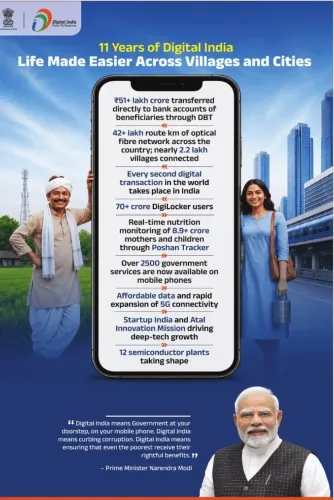
Union Finance Minister Nirmala Sitharaman on Wednesday, 1 July 2026 highlighted that more than 9.4 crore farmer families are receiving direct financial support through the Pradhan Mantri Kisan Samman Nidhi (PM-KISAN) scheme via the Direct Benefit Transfer (DBT) platform, calling it a reflection of the 'true success of Digital India' as the programme marks 11 years since its launch.
Context
Sitharaman's post comes on 1 July, the anniversary of the Digital India programme, which was formally inaugurated on 1 July 2015 by the central government to expand digital infrastructure, e-governance services, and financial inclusion across the country. The hashtag #11YearsOfDigitalIndia anchors her statement within a broader government-wide commemoration of the initiative's first decade-plus milestone.
The Finance Minister's remarks specifically link PM-KISAN to the Digital India ecosystem, underscoring how welfare delivery has been transformed through technology-backed payment rails. She stated that farmers receive support 'in their bank accounts through DBT,' pointing to the elimination of intermediaries in subsidy distribution.
Policy Backdrop
PM-KISAN was launched in February 2019 as a central sector scheme providing an annual income support of Rs 6,000 to eligible landholding farmer families, disbursed in three equal instalments of Rs 2,000 each directly into verified bank accounts. The scheme is fully funded by the central government and operates through Aadhaar-linked bank accounts to ensure targeted delivery.
The Direct Benefit Transfer mechanism, scaled up from 2013 across multiple ministries, was designed to curb leakages in subsidy distribution by routing payments straight to beneficiaries. Over successive years, DBT coverage has expanded from a handful of schemes to hundreds, with Aadhaar-seeding of bank accounts serving as the verification backbone. Successive Union Budgets have increased allocations for PM-KISAN while mandating digital verification for every instalment release.
The Digital India programme itself was conceived as the overarching framework enabling such welfare architecture — building broadband connectivity, promoting cashless transactions, and pushing e-governance services to the last mile. PM-KISAN's scale is frequently cited by the government as a flagship demonstration of this infrastructure in action.
Stakeholders and Impact
The primary beneficiaries are small and marginal landholding farmer families spread across rural India, who receive income support without approaching any government office or intermediary. The DBT model means funds credited to accounts can be used immediately, improving liquidity for agricultural inputs at the start of sowing seasons.
The broader ecosystem of Jan Dhan bank accounts, Aadhaar biometric identity, and mobile connectivity — collectively called the JAM Trinity — underpins PM-KISAN's delivery. This architecture has also been replicated in fertiliser subsidy reforms and rural employment wage payments, making PM-KISAN a template for technology-driven welfare in India.
What's Next
The government is expected to release updated PM-KISAN dashboard figures and fund utilisation data in the coming weeks, which will offer a clearer picture of actual disbursements against the stated beneficiary count. Observers will also watch the next Economic Survey for an independent assessment of DBT's impact on agricultural household incomes.
As Digital India enters its twelfth year, policymakers are likely to push deeper integration of artificial intelligence and real-time data verification into welfare schemes, with PM-KISAN's DBT pipeline serving as one of the most mature models available for such expansion.
Point of View
The Finance Ministry reinforces the government's argument that technology-led delivery is both scalable and leakage-free. This messaging pattern is consistent with pre-Budget and mid-year political communication that positions DBT as a structural reform rather than a routine welfare measure. The timing also signals that the ruling coalition intends to keep farmer income support and digital infrastructure at the centre of its policy identity heading into the next electoral cycle.
NationPress
1 Jul 2026
Frequently Asked Questions
What is PM-KISAN and how much money do farmers get?
PM-KISAN, or Pradhan Mantri Kisan Samman Nidhi, is a central government scheme that provides Rs 6,000 per year to eligible landholding farmer families, paid in three instalments of Rs 2,000 each directly into their bank accounts via DBT.
How many farmers benefit from PM-KISAN in 2026?
According to Finance Minister Nirmala Sitharaman's post on 1 July 2026, more than 9.4 crore farmer families are receiving direct financial support under PM-KISAN through the DBT platform.
What is DBT and why is it used for PM-KISAN?
DBT, or Direct Benefit Transfer, is a government payment system that routes subsidies and welfare funds straight into verified, Aadhaar-linked bank accounts, eliminating intermediaries and reducing leakages in subsidy distribution.
When was Digital India launched and what is it?
Digital India was formally launched on 1 July 2015 as a flagship government programme to expand digital infrastructure, promote e-governance, and drive financial inclusion across India. In 2026 it completes 11 years.
What is the connection between Digital India and PM-KISAN?
PM-KISAN uses the digital infrastructure built under Digital India — including Aadhaar biometric identity, Jan Dhan bank accounts, and mobile connectivity — to deliver income support directly to farmer families, making it a key example of the programme's real-world impact.