Sitharaman Unveils Innovation Ecosystem Push in Budget 2026-27
Synopsis
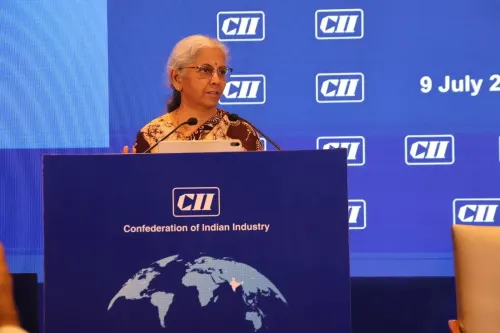
Finance Minister Nirmala Sitharaman at the CII National GCC Business Summit outlined Budget 2026-27 measures including five University Townships, City Economic Regions, and continued Digital Public Infrastructure support to build globally competitive innovation hubs and draw GCC investment beyond India's major metros.
Key Takeaways
Budget 2026-27 includes a dedicated set of measures to strengthen innovation ecosystems across India.
Five University Townships will be established to deepen industry-academia-research linkages and build future-ready talent.
City Economic Regions (CERs) aim to make second-tier Indian cities viable and attractive for Global Capability Centre (GCC) expansion.
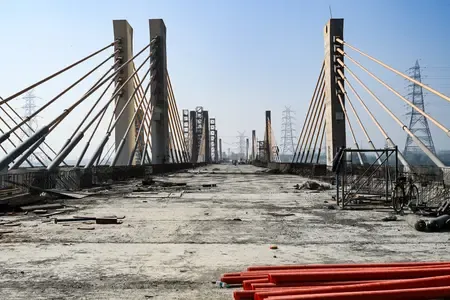
Continued investment in Digital Public Infrastructure , skilling, urban infrastructure, and multimodal logistics underpins the strategy.
The Urban Challenge Fund (introduced in Budget 2025-26 ) supports cities in improving economic competitiveness for the next investment cycle.
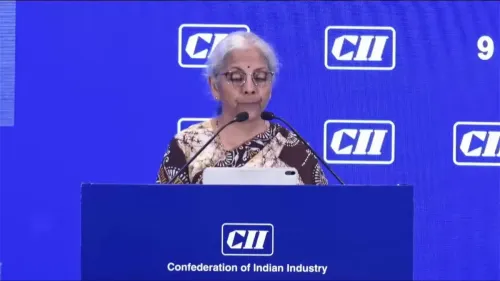
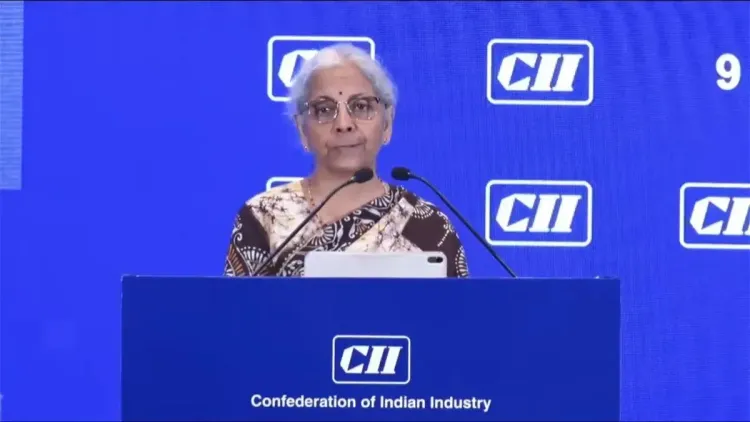
Finance Minister Sitharaman made the announcements at the CII National GCC Business Summit, 2026 on 9 July 2026 .
Union Finance Minister Nirmala Sitharaman on Thursday, 9 July 2026 outlined a cluster of innovation-focused measures embedded in Union Budget 2026-27, speaking at the CII National GCC Business Summit, 2026 in New Delhi. The announcements span university townships, city economic regions, and continued investment in digital and physical infrastructure aimed at making India a globally competitive destination for technology and research investment.
Context
Addressing industry leaders at the Confederation of Indian Industry (CII) National GCC Business Summit, Sitharaman highlighted that Budget 2026-27 carries forward a deliberate strategy to deepen innovation ecosystems across the country. The Finance Minister cited continued support for Digital Public Infrastructure (DPI), skilling, urban infrastructure, and multimodal logistics as foundational pillars of this agenda. These are not new themes — successive budgets since 2016 have layered incentives and infrastructure spending to attract high-value technology investment — but the 2026-27 package introduces structural instruments designed to spread that growth geographically.
Policy Backdrop
Two headline proposals stand out. First, five University Townships are to be established to tighten linkages between industry, academia, and research institutions, with the explicit goal of producing 'future-ready talent pools.' The concept builds on the thrust of the National Education Policy 2020, which called for multidisciplinary research clusters and stronger university-industry collaboration. Second, City Economic Regions (CERs) are designed to accelerate the emergence of globally competitive innovation hubs beyond India's traditional metropolitan centres — directly addressing the concentration of Global Capability Centres (GCCs) in a handful of large cities.
GCCs — multinational-owned R&D and services hubs — have expanded rapidly in India since the early 2000s, but remain heavily clustered in cities such as Bengaluru, Hyderabad, and Pune. The CER framework is explicitly intended to give GCC operators the confidence to expand into second-tier cities. Complementing this, the Urban Challenge Fund, introduced in Budget 2025-26, continues to support cities in improving economic competitiveness and readying themselves for the next generation of investment.
Stakeholders and Impact
The primary beneficiaries of these measures are GCC firms, urban local bodies, and research universities. For multinationals operating or planning capability centres in India, the CER framework offers a policy signal that tier-2 and tier-3 cities will receive structured support — infrastructure, talent pipelines, and regulatory attention — rather than being left to compete informally with established metros. University townships, if executed, could create dedicated zones where academic research is co-located with industry labs, reducing the friction that typically slows technology transfer in India.
Urban local bodies stand to benefit from both the Urban Challenge Fund and the CER designation process, which would channel investment and attention toward cities that build competitive economic environments. Skilling institutions and logistics operators are also identified as integral to the broader ecosystem, signalling that the government views human capital and supply-chain connectivity as inseparable from innovation capacity.
What's Next
The announcements made at the CII National GCC Business Summit represent the policy intent embedded in Budget 2026-27; detailed guidelines, funding allocations, and site selection for the five University Townships and CERs are expected to follow through subsequent government releases and NITI Aayog documents. Parliamentary discussion during the ongoing 2026-27 budget session will likely probe the Urban Challenge Fund's specific allocations and the criteria for designating City Economic Regions. The degree to which GCC operators respond — particularly by committing to locations outside established metros — will serve as an early indicator of whether the framework achieves its decentralisation ambitions.
Point of View
Which has remained stubbornly concentrated in a few southern and western metros despite years of broad investment incentives. By pairing talent infrastructure (university townships) with economic zoning (CERs) and city-level fiscal support (Urban Challenge Fund), the government is signalling a shift from demand-side incentives to supply-side ecosystem building. If implemented with rigour, this could meaningfully alter where the next wave of multinational R&D investment lands in India. The summit setting — a direct address to GCC decision-makers — also suggests the Finance Ministry is treating this not merely as a budget line but as an active investment pitch.
NationPress
9 Jul 2026
Frequently Asked Questions
What are City Economic Regions announced in Budget 2026-27?
City Economic Regions (CERs) are a framework announced in Budget 2026-27 to designate and support cities outside traditional metros as globally competitive innovation hubs, encouraging Global Capability Centres (GCCs) to expand into tier-2 and tier-3 Indian cities.
What are the five University Townships proposed by Nirmala Sitharaman?
The five University Townships are proposed zones where industry, academia, and research institutions will be co-located to strengthen collaboration and build talent pipelines; detailed site selection and guidelines are yet to be released by the government.
What is the Urban Challenge Fund in the Union Budget?
The Urban Challenge Fund was introduced in Budget 2025-26 and continued in 2026-27 to help Indian cities improve their economic competitiveness and prepare for the next generation of domestic and foreign investment.
What did Nirmala Sitharaman say at the CII GCC Summit 2026?
At the CII National GCC Business Summit, 2026 on 9 July 2026 , Finance Minister Nirmala Sitharaman outlined Budget 2026-27 measures including University Townships, City Economic Regions, and sustained support for Digital Public Infrastructure, skilling, and multimodal logistics to build stronger innovation ecosystems.
How does Budget 2026-27 support GCC expansion in India?
Budget 2026-27 supports GCC expansion through City Economic Regions that enable multinationals to set up capability centres beyond major metros, complemented by University Townships for talent supply and the Urban Challenge Fund to upgrade city-level infrastructure and competitiveness.