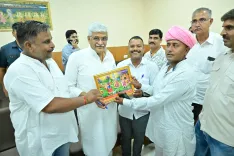
Smriti Irani: Congress leaders show distrust in own booth workers
Synopsis
BJP leader Smriti Irani accused Congress leaders of proving distrust in their own booth-level workers through 'blind opposition', sharpening the BJP's narrative on Congress's organisational credibility ahead of electoral contests.
Key Takeaways
Smriti Irani posted on October 17, 2026 , accusing Congress of showing distrust toward its own booth-level workers.
She described Congress's stance as 'blind opposition' ( andha virodh ) — reflexive rather than principled.
The post targets Congress's booth-level organisational credibility , a critical metric in Indian elections.
BJP has consistently emphasised its own booth-management infrastructure as a competitive advantage.
The attack is likely to prompt responses from Congress leadership and intensify debate around ground-level party structures.
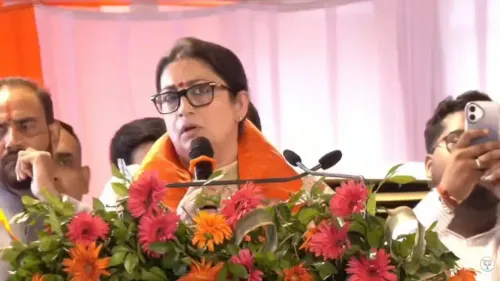
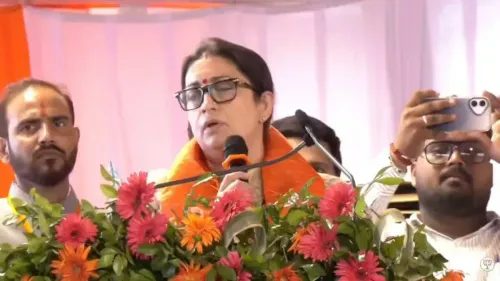
A sharp volley from the BJP's ranks landed on Saturday, October 17, 2026, when BJP leader Smriti Irani turned a pointed political spotlight on the Indian National Congress — arguing that the party's relentless opposition is, in effect, a vote of no-confidence in its own grassroots machinery.
Posting on X in Hindi, Irani wrote: 'कांग्रेस के नेतागण इस अंधे विरोध के माध्यम से अपने ही बूथ के कार्यकर्ताओं पर अविश्वास का भाव सिद्ध कर रहे हैं।' — 'Congress leaders, through this blind opposition, are proving their distrust in their own booth-level workers.'
The booth worker: ground zero of every Indian election
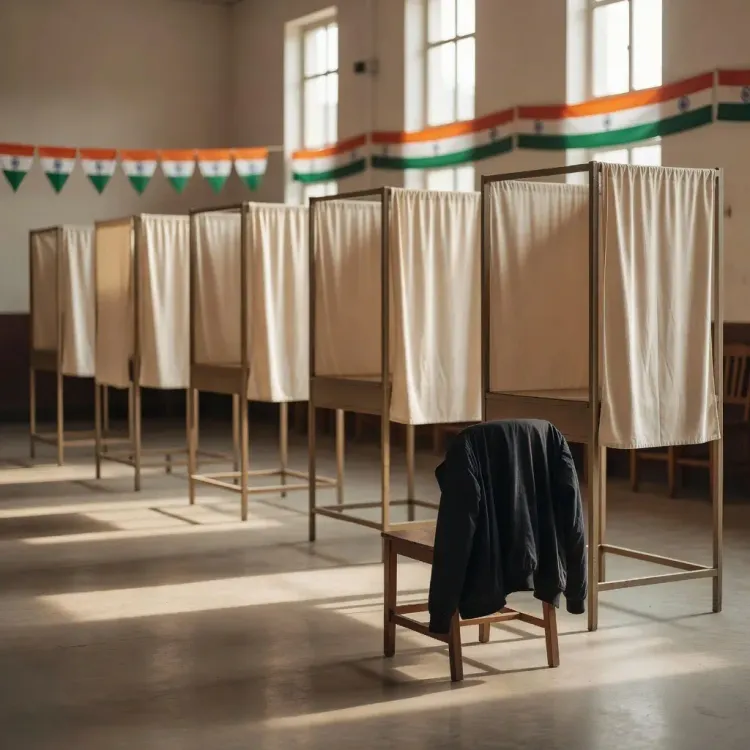
The booth-level worker is the bedrock of Indian electoral politics. In a country where polling is conducted across hundreds of thousands of booths, it is the local party volunteer — not the national leader — who drives voter turnout, manages mobilisation, and delivers results on polling day. Accusations that a party's leadership does not trust this layer cut directly at its organisational credibility.
Irani's framing is pointed: she is not attacking Congress's policies or its national narrative. She is suggesting the party's senior leadership is so locked into reflexive opposition that it has lost faith in the very workers who are expected to deliver votes when the time comes. It is a charge designed to sow doubt inside the Congress tent as much as it is meant to score points outside it.
A recurring line of attack in India's political theatre
This is not an isolated rhetorical move. Indian political discourse — particularly during election cycles — is dense with competing claims about which party has the stronger booth-level organisation. The BJP has, over the past decade, invested heavily in building a reputation for granular, data-driven booth management, and attacking the Congress's internal cohesion has become a standard play in that larger narrative.
By framing Congress's opposition as 'blind' (andha virodh), Irani also implies the party's stances are not driven by principle or policy but by an unconditional reflex — a characterisation Congress leaders are likely to contest directly.
Point of View
The people who actually deliver votes. By labelling the opposition 'blind,' she attempts to decouple Congress workers from their own leadership, a tactic that gains traction when elections are near. The BJP's emphasis on superior booth management has been a cornerstone of its electoral strategy, and framing Congress as internally divided reinforces that contrast. Whether Congress responds with a counter-narrative around its own grassroots outreach will determine how much traction this line of attack gets.
NationPress
17 Oct 2026
Frequently Asked Questions
What did Smriti Irani say about Congress booth workers?
Smriti Irani said Congress leaders are proving their distrust in their own booth-level workers through what she called 'blind opposition', suggesting the party's reflexive stance undermines its grassroots cadre.
What is a booth-level worker in Indian politics?
A booth-level worker is a party volunteer responsible for voter mobilisation and turnout management at a specific polling booth — considered the most fundamental unit of electoral organisation in India.
Why is booth-level organisation important in Indian elections?
With hundreds of thousands of polling booths across India, booth-level workers are critical to driving voter turnout. A party's strength on the ground is often seen as a direct indicator of its electoral preparedness.
What does 'blind opposition' mean in Indian political context?
'Blind opposition' or andha virodh refers to a ruling-party criticism that the opposition rejects every government move reflexively, without policy reasoning — used to portray the opposition as obstructionist rather than constructive.
How has BJP used booth management as a political narrative?
BJP has consistently highlighted its data-driven, structured booth-management system as a key competitive advantage, often contrasting it with what it describes as the Congress party's weaker grassroots infrastructure.