Smriti Irani pays homage to 26/11 Mumbai attack martyrs
Synopsis
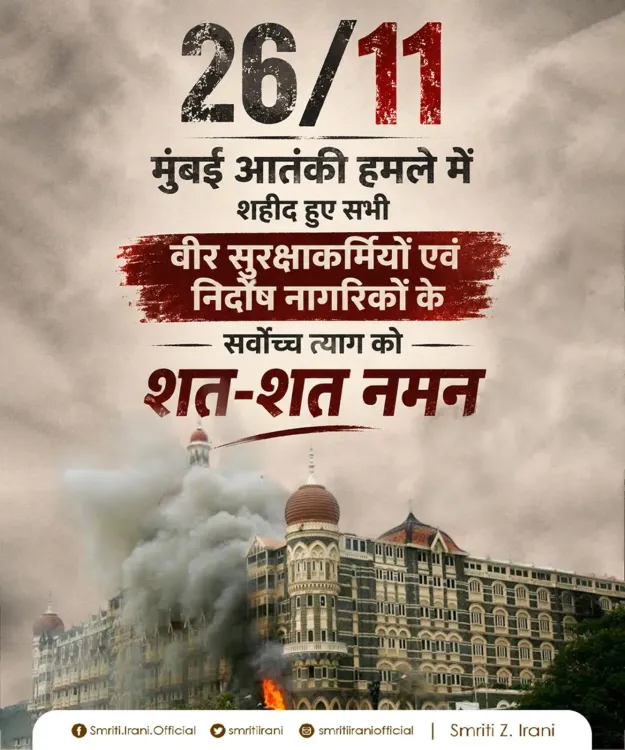
BJP leader Smriti Irani on 26 November 2026 paid homage to civilians and security personnel killed in the 26/11 Mumbai attacks, saying the nation would always remember their sacrifice and that India's resolve against terrorism remains unbreakable.
Key Takeaways
BJP leader Smriti Irani on 26 November 2026 paid homage to civilians and security personnel killed in the 26/11 Mumbai attacks.
She said the nation would always remember their courage, valour and sacrifice, and that unity and resolve against terrorism are unbreakable.
The 26 November 2008 assaults by Lashkar-e-Taiba militants on hotels, a railway station and other Mumbai sites killed 166 people.
Mumbai Police officers including Hemant Karkare , Ashok Kamte and Vijay Salaskar were killed while responding.
Parliament created the National Investigation Agency in December 2008 to investigate and prosecute terrorism cases.
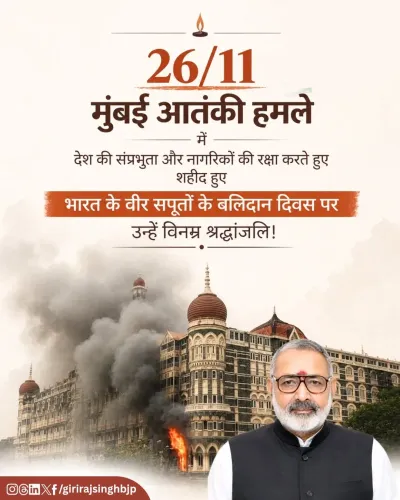
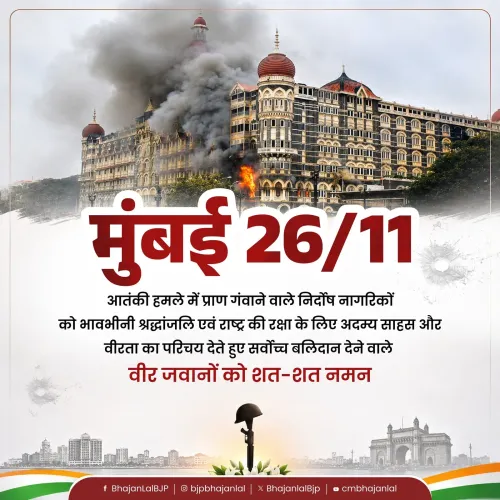
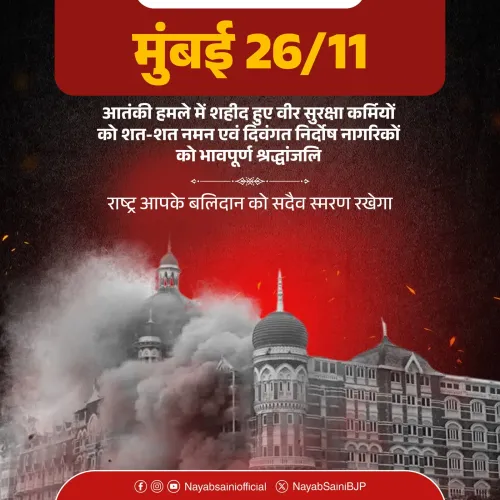
Eighteen years after gunmen laid siege to Mumbai, BJP leader Smriti Irani on Thursday, 26 November 2026 offered a solemn homage to the innocent civilians killed in the 26/11 terror attacks and to the security personnel who made the supreme sacrifice defending India. The former Union Minister of Women and Child Development and Minority Affairs said the nation would always remember their courage, valour and sacrifice, and that unity and resolve against terrorism remain unbreakable.
Writing in Hindi, she offered a bhavpurna shraddhanjali (heartfelt homage) to those claimed by death in what she called a kayartaapurna aatanki hamla (cowardly terrorist attack) in Mumbai, and to the brave personnel who gave the supreme sacrifice in defence of the nation. She added that the country would always remember their sahas, shaurya aur balidan (courage, valour and sacrifice).
The night Lashkar-e-Taiba struck Mumbai
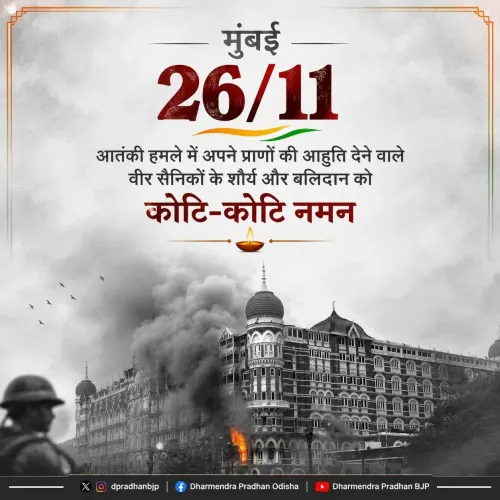
On 26 November 2008, militants of Lashkar-e-Taiba launched coordinated attacks on hotels, a railway station and other sites across the city. The assault killed 166 people, among them civilians caught in the crossfire and security personnel who ran toward it.
That night still sits at the centre of India's public memory of urban terrorism. Landmarks that drew visitors from around the world, a crowded railway terminus, and streets that should have been ordinary became killing grounds.
The Mumbai Police officers who did not return
The Mumbai Police lost senior officers including Hemant Karkare, Ashok Kamte and Vijay Salaskar while they were responding to the attacks. Their deaths, alongside those of other personnel and of civilians, are why this date is observed as a roll of honour, not a passing calendar note.
Families of the dead remain the quiet centre of every anniversary. For them, the messages issued each 26 November are a public reminder that the names have not been filed away.
The federal agency born after the siege
Within weeks of the attacks, Parliament created the National Investigation Agency through an Act in December 2008, giving India a dedicated federal body to investigate and prosecute terrorism cases. The legal turn was a direct answer to the gaps the siege had exposed.
Indian leaders have since issued annual statements on this date, commemorating the dead and restating a counter-terror posture that has also shaped relations with Pakistan, from where the plot was traced to Pakistan-based groups. Memorial gatherings are typically held at key attack sites in the city.
On this anniversary, Irani's message closed on a single line of policy as much as of grief: the resolve against terrorism, she said, is unbroken. Memory, here, is how the country keeps that line.
Point of View
Folding grief into a restatement of counter-terror policy. Irani's note sits in that lineage: homage first to civilians and the force, then an explicit line that the resolve against terrorism is unbroken. The creation of the National Investigation Agency after the 2008 siege remains the clearest institutional marker of how that night recast federal investigation of terror. On this date, memory and posture are meant to travel together.
NationPress
26 Nov 2026
Frequently Asked Questions
What did Smriti Irani say on the 26/11 anniversary?
BJP leader Smriti Irani paid heartfelt homage to innocent civilians killed in the 26/11 Mumbai terror attacks and to security personnel who made the supreme sacrifice. She said the nation would always remember their courage, valour and sacrifice, and that unity and resolve against terrorism remain unbreakable.
When did the 26/11 Mumbai attacks take place?
The coordinated terrorist attacks in Mumbai began on 26 November 2008. Militants of Lashkar-e-Taiba targeted hotels, a railway station and other sites in the city.
How many people were killed in the 26/11 Mumbai attacks?
The attacks killed 166 people, including civilians and security personnel. The toll remains the central human fact of the anniversary each year.
Which Mumbai Police officers were killed in the 26/11 attacks?
Senior Mumbai Police officers including Hemant Karkare, Ashok Kamte and Vijay Salaskar were killed while responding to the attacks. Their deaths are commemorated each 26 November along with those of other personnel and civilians.
Why was the National Investigation Agency set up?
The National Investigation Agency was established by an Act of Parliament in December 2008, after the Mumbai attacks, to investigate and prosecute terrorism cases. It was a direct institutional response to the gaps the 26/11 siege had exposed.