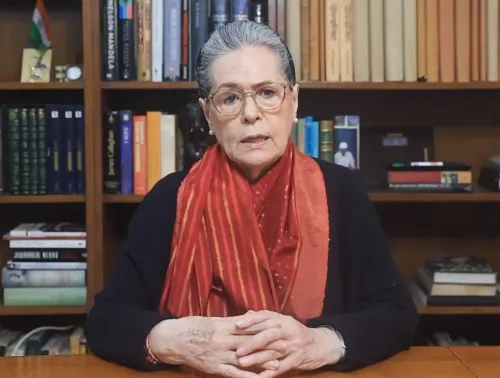
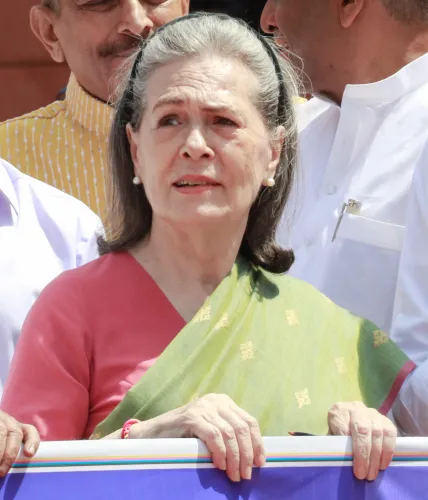
Sonia Gandhi slams Modi govt's Gaza silence, warns of damage to India's global standing
Synopsis
Sonia Gandhi's op-ed in The Indian Express is more than a foreign policy critique — it is a direct challenge to the Modi government's strategic realignment. By invoking the UN commission's genocide findings, citing Justice S. Muralidhar's role, and arguing that Pakistan has filled the diplomatic space India vacated, Gandhi is framing Gaza not just as a moral question but as a measurable strategic failure for India.
Key Takeaways
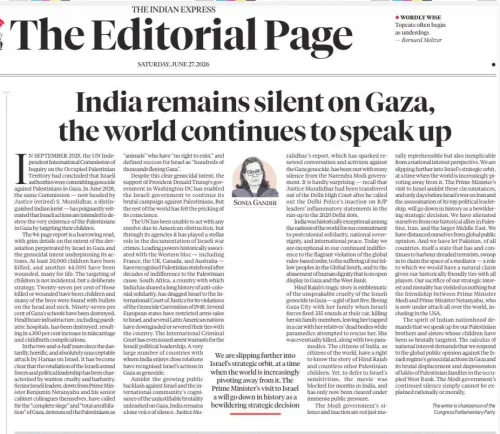
Sonia Gandhi published an opinion article in The Indian Express on 27 June criticising India's silence on the Gaza conflict .
She cited the UN Independent International Commission of Inquiry , which concluded in September 2025 that Israel was committing genocide in Gaza; the finding was reiterated in June 2026 .
The commission's 94-page report documents the killing of at least 20,000 children and wounding of 44,000 more, according to Gandhi's article.
Gandhi alleged a 300 per cent rise in miscarriages and childbirth complications due to destruction of healthcare facilities in Gaza.
She described PM Modi's visit to Israel as a 'bewildering strategic decision' and warned that Pakistan had exploited India's silence to claim a mediator's role in the region.
Countries including France , the UK , Canada , and Australia have recognised Palestinian statehood, while the International Criminal Court has issued arrest warrants against Israeli political leadership.
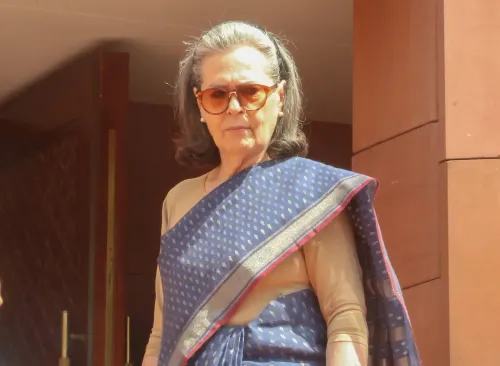
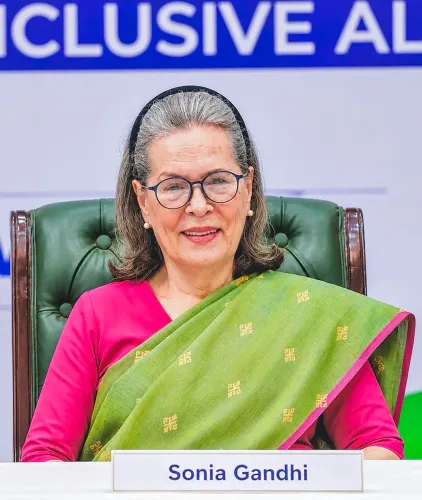
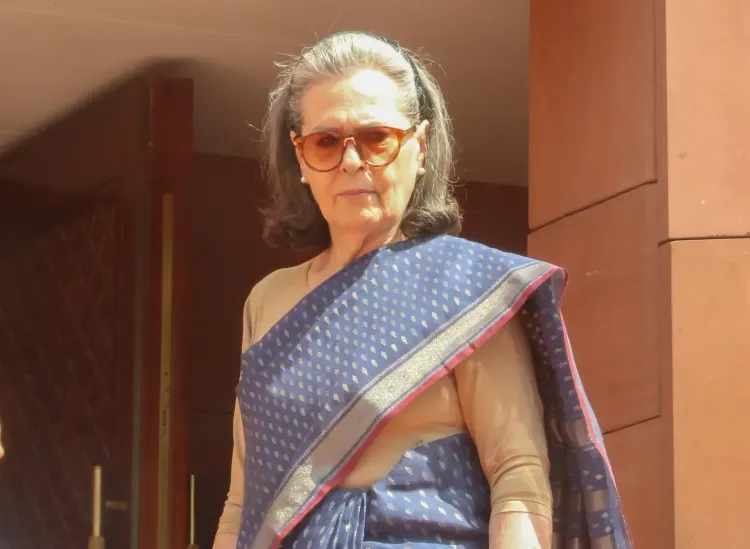
Congress Parliamentary Party (CPP) Chairperson Sonia Gandhi on Saturday, 27 June launched a pointed critique of the Modi government's position on the Gaza conflict, arguing that its continued silence is both morally indefensible and strategically self-defeating for India. Writing in an opinion article in The Indian Express, Gandhi contended that New Delhi's posture has eroded India's long-held foreign policy identity and weakened its credibility on the world stage.
The Core Charge: Silence as Strategic Failure
Gandhi alleged that India's 'stony silence' and 'inaction' on Gaza have distanced the country from its historical partners — Palestine, Iran, and the broader West Asia region. She further claimed that this vacuum has allowed Pakistan to position itself as a regional mediator, a role she argued India would naturally hold given its historically friendly ties with all parties in the region.
'The Modi government's continued silence simply cannot be explained rationally or morally,' she wrote, adding that India had effectively become 'a lone voice of silence' amid growing international condemnation of Israeli military actions in Gaza.
UN Commission Findings and Civilian Toll
Gandhi cited findings from the UN Independent International Commission of Inquiry on the Occupied Palestinian Territory, which, she noted, concluded in September 2025 that Israeli authorities were committing genocide against Palestinians in Gaza. She further stated that in June 2026, the same commission — now headed by Justice (retired) S. Muralidhar, described by Gandhi as 'a distinguished Indian jurist' — reiterated that Israeli actions were intended to destroy the very existence of Palestinians in Gaza by targeting children.
Quoting from the commission's 94-page report, Gandhi wrote: 'The 94-page report is a harrowing read, with grim details on the extent of the devastation perpetrated by Israel in Gaza and the genocidal intent underpinning its actions. At least 20,000 children have been killed, and another 44,000 have been wounded, many for life.' She also claimed that the destruction of healthcare facilities, including paediatric hospitals, had led to a 300 per cent increase in miscarriages and childbirth-related complications.
October 7 Attack and Israel's Response
Gandhi characterised the October 7 Hamas attack on Israel as a 'dastardly, horrific, and absolutely unacceptable attack,' while arguing that Israel's military response over the subsequent two-and-a-half years had been marked by 'wanton cruelty and barbarity.' She quoted senior Israeli leaders, including Prime Minister Benjamin Netanyahu, as having called for the 'complete siege' and 'total annihilation' of Gaza and described Palestinians in dehumanising terms.
She also alleged that the support extended by US President Donald Trump's administration had enabled Israel to continue its military campaign, and that the United Nations had been unable to act decisively because of American obstruction — even as its agencies documented alleged Israeli war crimes.
India's Shifting Global Alignment
Gandhi pointed to a shifting international consensus, noting that countries historically aligned with the Western bloc — including France, the United Kingdom, Canada, and Australia — had recognised Palestinian statehood. She added that South Africa had approached the International Court of Justice alleging violations of the 1948 Genocide Convention, that several European nations had imposed arms export restrictions on Israel, and that the International Criminal Court had issued arrest warrants against Israeli political leadership.
Contrasting this with India's stance, Gandhi wrote: 'Today we are exceptional in our continued indifference to the flagrant violation of the global rules-based order, to the suffering of our fellow peoples in the Global South, and to the abasement of human dignity that is on open display in Gaza and the West Bank.'
Modi's Israel Visit and Strategic Concerns
Gandhi described Prime Minister Narendra Modi's visit to Israel — undertaken, she said, shortly before Israel's military action against Iran and the assassination of senior Iranian political leaders — as a 'bewildering strategic decision.' She argued that India was moving deeper into Israel's strategic sphere at a moment when much of the international community was pulling back.
Concluding her article, Gandhi alleged that India's departure from its traditional foreign policy had yielded little beyond the personal 'friendship' between Prime Minister Modi and Prime Minister Netanyahu. The spirit of Indian nationhood, she argued, demanded that the country speak up for Palestinians — both on moral grounds and in the calculus of national interest.
Point of View
Because it cuts across party lines on a question of national interest. What is missing from the piece, however, is any acknowledgement of India's complex energy, defence, and diaspora dependencies in the Gulf, which constrain New Delhi's room to manoeuvre far more than any ideological preference. The Modi government's silence on Gaza may well be a calculated position, not an oversight — and that distinction matters for any serious foreign policy debate.
NationPress
26 Sept 2026
Frequently Asked Questions
What did Sonia Gandhi say about India's position on Gaza?
Sonia Gandhi, in an op-ed published in The Indian Express on 27 June, accused the Modi government of 'stony silence' and 'inaction' on the Gaza conflict, arguing that this stance is both morally indefensible and damaging to India's strategic interests in West Asia. She contended that India has alienated itself from Palestine, Iran, and the broader Middle East while allowing Pakistan to claim a mediator's role in the region.
What UN findings did Sonia Gandhi cite in her article?
Gandhi cited the UN Independent International Commission of Inquiry on the Occupied Palestinian Territory, which she said concluded in September 2025 that Israeli authorities were committing genocide against Palestinians in Gaza. She noted that the commission, now headed by Justice (retired) S. Muralidhar, reiterated this finding in June 2026, with its 94-page report documenting the killing of at least 20,000 children.
How did Sonia Gandhi describe the October 7 Hamas attack?
Gandhi described the October 7 Hamas attack on Israel as a 'dastardly, horrific, and absolutely unacceptable attack,' while arguing that Israel's military response over the following two-and-a-half years had been marked by 'wanton cruelty and barbarity.' She maintained that condemning the attack did not preclude criticism of Israel's subsequent military conduct.
Why did Sonia Gandhi criticise PM Modi's visit to Israel?
Gandhi described PM Modi's visit to Israel as a 'bewildering strategic decision,' noting it was undertaken shortly before Israel's military action against Iran and the assassination of senior Iranian political leaders. She argued the visit signalled India moving deeper into Israel's strategic orbit at a time when much of the international community was distancing itself from Israel.
Which countries have recognised Palestinian statehood, according to Gandhi's article?
Gandhi noted that France, the United Kingdom, Canada, and Australia — countries historically aligned with the Western bloc — had recognised Palestinian statehood. She also pointed to South Africa approaching the International Court of Justice over alleged violations of the 1948 Genocide Convention, and to the International Criminal Court issuing arrest warrants against Israeli political leadership.