NDA hits back at Sonia Gandhi over Gaza critique of Modi government
Synopsis
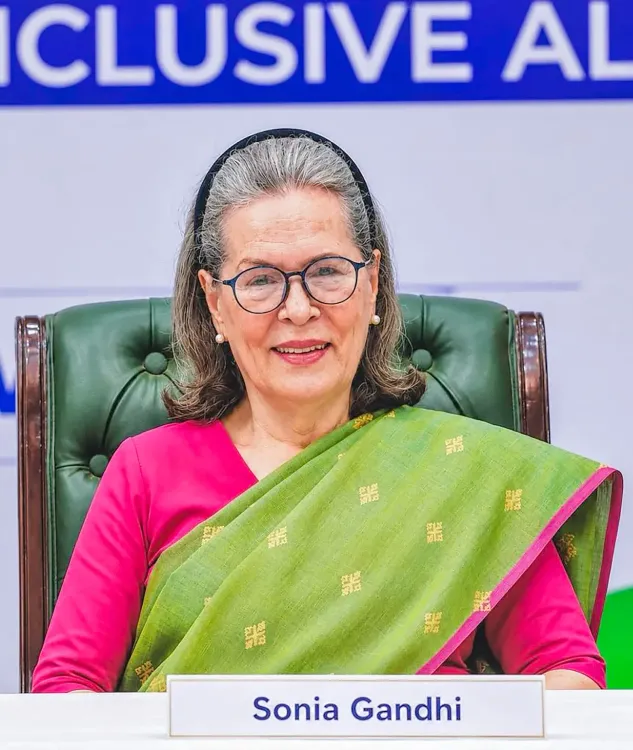
Sonia Gandhi's opinion piece accusing the Modi government of 'stony silence' on Gaza has triggered a full-court NDA press — with BJP, Shiv Sena, and JD-U all hitting back. The exchange lays bare a genuine fault line: India's historically balanced Israel-Palestine posture versus its current diplomatic silence on civilian casualties, a tension the ruling coalition has yet to resolve publicly.
Key Takeaways
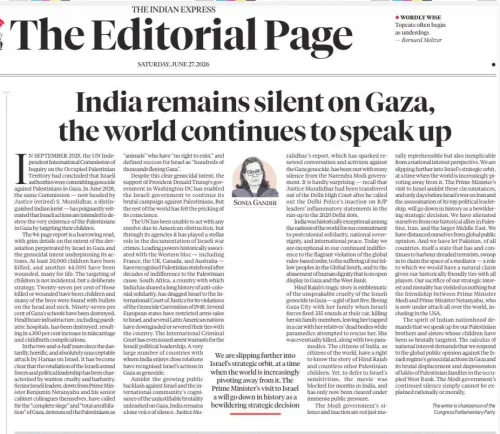
Sonia Gandhi published an opinion article on 27 June accusing the BJP -led Centre of 'stony silence' and 'inaction' on the Gaza conflict.
Sriniwas said India speaks for 'world peace' and 'cessation of violence across the board,' not a single community.
Shiv Sena's Shaina NC cited PM Modi's humanitarian aid to Gaza and MEA bilateral outreach as evidence of India's engagement.
JD-U's Neeraj Kumar said India has 'always extended support to Palestine' and does not need 'a certificate from Sonia Gandhi.' Congress spokesperson Pawan Khera said the government has not condemned the killing of civilians in Gaza and called the vote-bank allegation 'shameful.' TMC MP Saugata Roy backed Gandhi, citing India's silence on Gaza as part of a broader pattern.
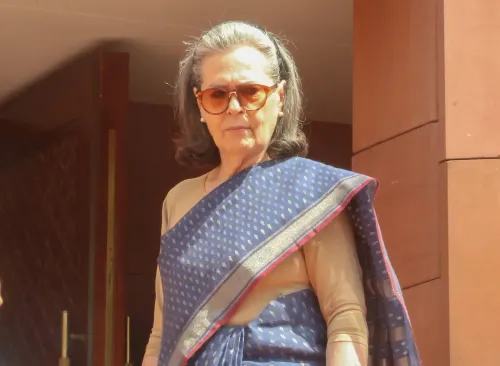
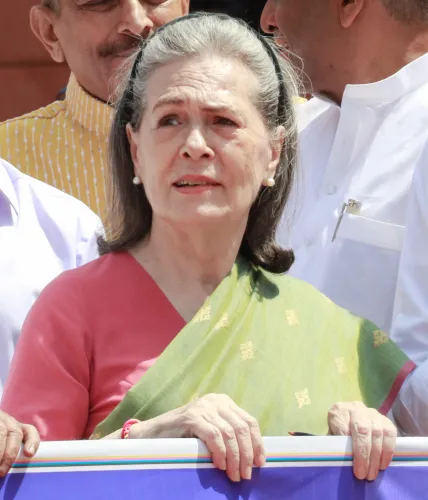
National Democratic Alliance (NDA) leaders on Saturday, 27 June sharply rebuked senior Congress leader Sonia Gandhi after she publicly criticised the Modi government's stance on the Gaza conflict, with ruling coalition members asserting that India's foreign policy is anchored in world peace and does not require her validation.
What Sonia Gandhi Said
In an opinion article, Gandhi alleged that the Bharatiya Janata Party (BJP)-led Centre's 'stony silence' and 'inaction' on the Gaza situation are 'not just morally reprehensible but also inexplicable from a national interest perspective.' The article drew swift and pointed responses from across the ruling coalition.
NDA's Rebuttal
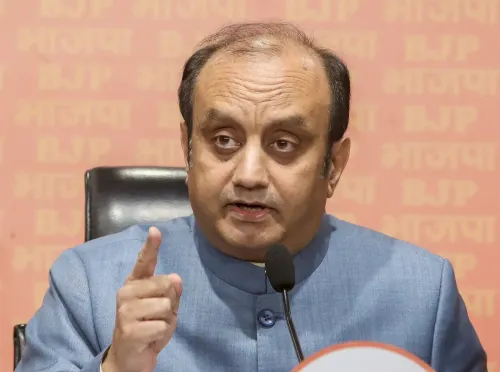
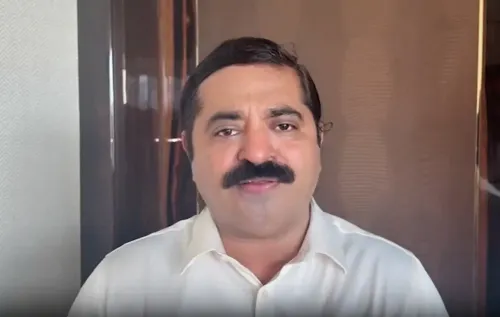
BJP leader T.R. Sriniwas accused Gandhi of taking a 'narrow view of appeasement,' arguing that the ruling alliance speaks for the entire world rather than a single community. 'We talk about world peace. We talk about the cessation of violence across the board and bringing people to the negotiation table so that no issues are left unresolved,' he said, urging Gandhi to adopt a 'broader perspective' and acknowledging that 'everybody has a collective responsibility for peace' in a multipolar world.
BJP leader Manmeet Singh went further, calling Gandhi a practitioner of 'divisive politics,' extending the charge to her predecessors Indira Gandhi, Jawaharlal Nehru, and Rajiv Gandhi.
Shiv Sena spokesperson Shaina NC contended that the Ministry of External Affairs had already engaged in bilateral discussions to maintain peace between Israel and Palestine, and that Prime Minister Narendra Modi had dispatched humanitarian aid to Gaza. 'Maybe Sonia Gandhi has ignored all of this,' she said.
Janata Dal (United) leader Neeraj Kumar was more direct: 'India has always extended support to Palestine, we don't need a certificate from Sonia Gandhi on that.' He added that there has historically been a 'consensus on India's foreign policy' across party lines.
Congress and Opposition Push Back
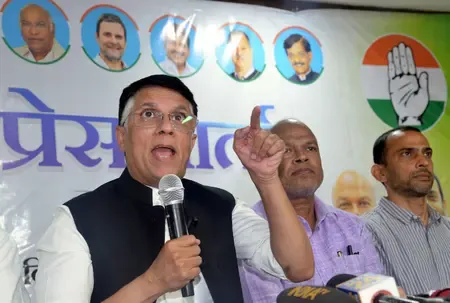
Congress spokesperson Pawan Khera defended Gandhi, saying she had written the article with a 'heavy heart.' He argued that the government has 'distanced India from what its stand used to be on situations like the Palestine issue,' and noted that Prime Minister Modi had not yet condemned the killing of civilians in Gaza.
Responding to charges of vote-bank politics, Khera said, 'Does talking about human values have anything to do with votes? Do they think Hindus wouldn't have felt bad or sad when they saw the sight in Gaza?' He called the vote-bank allegation 'the most shameful and most foolish remark' he had heard.
All India Trinamool Congress (TMC) Member of Parliament Saugata Roy also backed Gandhi, pointing to India's silence during the US and Israel actions against Iran as a pattern. 'In Gaza, innocent children were killed, the government should have raised its voice against it,' he said.
The Broader Context
The exchange reflects a deepening fault line in Indian politics over the country's traditionally non-aligned foreign policy posture. India has historically maintained close ties with both Israel — a major defence supplier — and Palestine, whose cause it has supported at multilateral forums for decades. Critics argue the current government has tilted toward Israel without adequate public acknowledgement of civilian casualties in Gaza. The ruling coalition insists its diplomatic engagement, including humanitarian assistance, speaks for itself.
With the Gaza conflict continuing to draw international attention, the debate over India's public positioning is unlikely to subside.
Point of View
But it sidesteps the substantive question she raised: has India's public posture on Gaza shifted from its traditional non-aligned balance? Pointing to humanitarian aid and MEA bilateral talks is not the same as a clear public statement on civilian casualties — a distinction the opposition is exploiting effectively. India's credibility as a voice for the Global South partly rests on its willingness to speak plainly on humanitarian crises, regardless of strategic partnerships. The ruling coalition's framing of Gandhi's critique as 'appeasement' may resonate domestically, but it risks obscuring a legitimate foreign-policy debate that deserves a more rigorous official response.
NationPress
26 Sept 2026
Frequently Asked Questions
What did Sonia Gandhi say about India's position on Gaza?
Sonia Gandhi, in an opinion article, alleged that the BJP-led Centre's 'stony silence' and 'inaction' on the Gaza conflict are 'not just morally reprehensible but also inexplicable from a national interest perspective.' She argued the government has distanced India from its traditional stance on the Palestine issue.
How did NDA leaders respond to Sonia Gandhi's Gaza criticism?
NDA leaders from BJP, Shiv Sena, and JD-U rejected Gandhi's critique, saying India's foreign policy focuses on world peace and not a single community. JD-U's Neeraj Kumar said India does not need 'a certificate from Sonia Gandhi,' while Shiv Sena's Shaina NC cited PM Modi's humanitarian aid to Gaza and MEA bilateral outreach.
What is India's official stance on the Gaza conflict?
India has not issued a formal public condemnation of civilian casualties in Gaza, according to the opposition. The government, however, says the Ministry of External Affairs has engaged in bilateral discussions for peace between Israel and Palestine, and that PM Modi has sent humanitarian aid to Gaza.
Who backed Sonia Gandhi's position on Gaza?
Congress spokesperson Pawan Khera defended Gandhi, saying she wrote with a 'heavy heart' and that the government has not condemned civilian killings in Gaza. TMC MP Saugata Roy also backed her, pointing to India's broader silence on the conflict.
Why does India's Gaza stance matter politically?
India has historically maintained ties with both Israel — a key defence partner — and Palestine, whose cause it has supported at multilateral forums for decades. Critics argue the current government has not publicly acknowledged civilian casualties in Gaza, creating a tension between India's non-aligned tradition and its current diplomatic posture.