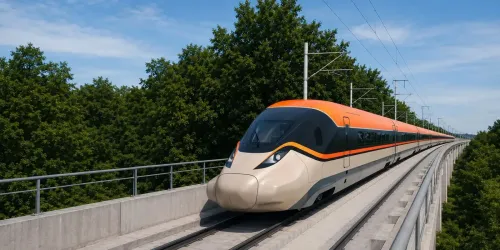
Sonowal hails Bullet Train North Corridor extension to Guwahati
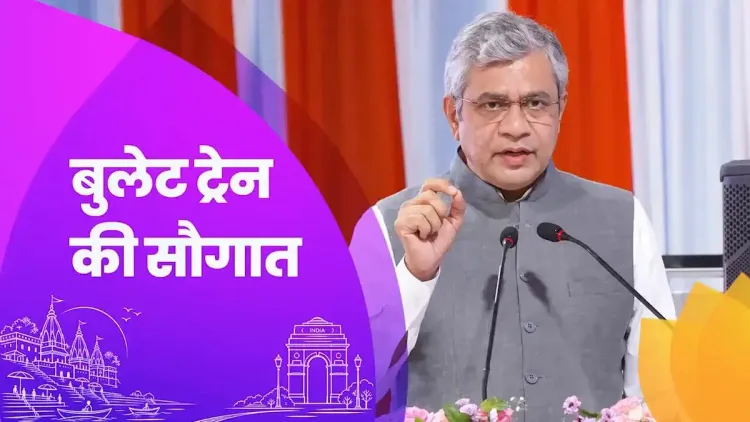
Synopsis
Union Minister Sarbananda Sonowal has welcomed the extension of the Bullet Train North Corridor to Guwahati, thanking PM Modi and Railways Minister Ashwini Vaishnaw for a decision he says ends decades of infrastructural neglect in North East India.
Key Takeaways
Union Minister Sarbananda Sonowal publicly welcomed the decision to extend the Bullet Train North Corridor to Guwahati on November 1, 2026 .
Sonowal credited PM Narendra Modi and Railways Minister Ashwini Vaishnaw for the decision.
The extension marks the first time North East India has been formally included in India's high-speed rail map.
India's high-speed rail programme began with the Mumbai–Ahmedabad corridor approved in 2015 with Japanese collaboration.
Key implementation steps — route surveys, land acquisition, and budget allocation — are yet to be publicly detailed.
Guwahati is the commercial gateway to all eight North Eastern states and stands to gain most directly from the link.
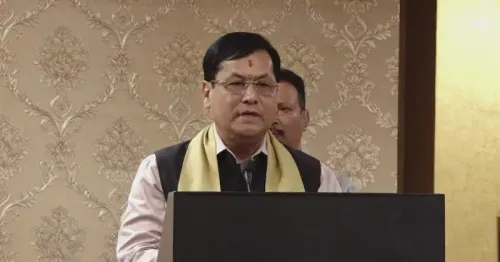
The North East just got a seat at India's high-speed rail table. Union Ports and Shipping Minister Sarbananda Sonowal on Sunday, November 1, 2026, publicly welcomed the government's decision to extend the Bullet Train North Corridor all the way to Guwahati — hailing it as a transformative leap for a region he says was long left behind.
Sonowal, a senior BJP leader and former Chief Minister of Assam, directed his gratitude squarely at Prime Minister Narendra Modi and Union Railway Minister Ashwini Vaishnaw, crediting the decision to their leadership. 'After decades of neglect, the North East is now firmly on the fastlane of connectivity and progress,' he wrote, in a message that carried unmistakable personal weight from a leader who spent years steering Assam's fortunes.
Guwahati at the end of a high-speed line
Guwahati, Assam's commercial capital and the undisputed gateway to all eight North Eastern states, has long been the region's economic nerve centre without the infrastructure to match that status. A bullet train link would dramatically compress travel times between the North East and the rest of India — turning what are today multi-day rail journeys into a matter of hours. The announcement, if executed, would represent the single biggest leap in the region's rail connectivity in the post-Independence era.
India's high-speed rail story began in earnest with the Mumbai–Ahmedabad corridor, approved in 2015 with Japanese collaboration as the country's first bullet train project. That initial corridor anchored the vision. The extension of a 'North Corridor' to Guwahati now signals an ambition to push high-speed rail beyond the western heartland and deep into India's frontier geography — a logistically and financially far more complex undertaking.
Correcting what successive budgets called a historical wrong
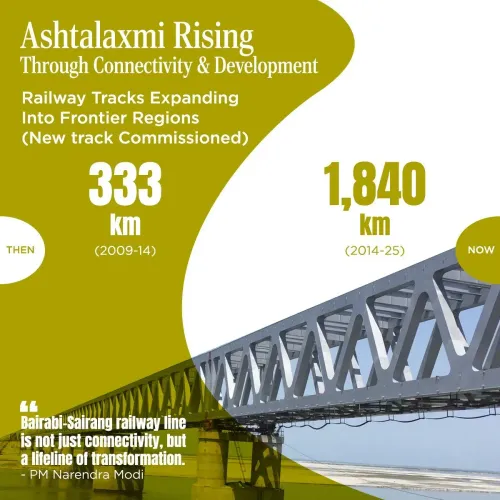
The framing Sonowal uses — 'decades of neglect' — is not rhetorical flourish invented for a social media post. It mirrors the language successive Union Budgets have used when announcing enhanced allocations for North East India: a formal acknowledgement that the region received disproportionately little investment for most of the post-Independence period. Since 2014, road, rail and waterway projects in the eight-state region have been positioned as a structural correction, not incremental improvement.
Railways Minister Ashwini Vaishnaw has been the principal driver of high-speed and semi-high-speed expansion under the current government, overseeing both the ongoing Vande Bharat network rollout and the Mumbai–Ahmedabad bullet train construction. His involvement in the North Corridor decision signals institutional ownership at the railways ministry — not just a political announcement.
What comes next on the ground
Announcements of this scale carry a long implementation tail. Route surveys, land acquisition notifications, environmental clearances and dedicated funding lines in the railway budget are the hard steps between a ministerial declaration and the first spike in the ground. The terrain between the Indo-Gangetic plains and Assam — crossing rivers, floodplains and geologically sensitive zones — makes engineering here categorically more demanding than the flat corridor between Mumbai and Ahmedabad. Watchers of the North East infrastructure space will track whether the next Union Budget translates this announcement into a funded project line.
For now, the minister's post marks a political milestone: the moment the North East was formally written into India's high-speed rail map. The fastlane, Sonowal says, runs through Guwahati.
Point of View
If it advances to funded project status, would be the Modi government's most geopolitically significant infrastructure announcement for the North East — combining domestic connectivity optics with India's Act East strategic posture. Sonowal's post, coming from a minister whose political identity is deeply tied to Assam, gives the announcement regional legitimacy beyond a railway ministry press release. The real test will arrive in the next Union Budget: whether a dedicated outlay appears, or whether this joins the long list of surveyed-but-unfunded North East rail proposals. Vaishnaw's direct involvement is the strongest signal yet that institutional momentum exists to move this beyond the announcement stage.
NationPress
1 Nov 2026
Frequently Asked Questions
What is the Bullet Train North Corridor to Guwahati?
It refers to a proposed extension of India's high-speed rail network northward and eastward to reach Guwahati, the commercial capital of Assam and gateway to all eight North Eastern states. The decision was announced by the central government and welcomed by Union Minister Sarbananda Sonowal on November 1, 2026.
Who announced the extension of the bullet train to Guwahati?
Union Minister Sarbananda Sonowal credited Prime Minister Narendra Modi and Railways Minister Ashwini Vaishnaw with the decision in his post on November 1, 2026.
When did India's first bullet train project start?
India's first bullet train project, the Mumbai–Ahmedabad high-speed rail corridor, was approved in 2015 with Japanese funding and technical collaboration.
What is the significance of Guwahati in North East India?
Guwahati is the largest city in Assam and the primary commercial and transit hub for all eight North Eastern states, making it the most logical anchor point for any high-speed rail link to the region.
What are the next steps for the Bullet Train North Corridor project?
Key next steps include route surveys, land acquisition notifications, environmental clearances, and funding allocations in the Union Railway Budget — none of which have been publicly detailed as of the November 2026 announcement.