Sonowal Highlights Maritime Amrit Kaal Vision 2047 Progress

Synopsis
Union Ports Minister Sarbananda Sonowal on 22 June 2026 highlighted over 300 initiatives under PM Modi's Maritime Amrit Kaal Vision 2047, citing ecosystem modernisation, sustainable growth, and Blue Economy development as pillars of India's push to become a global maritime powerhouse.
Key Takeaways
Union Minister Sarbananda Sonowal promoted PM Narendra Modi 's Maritime Amrit Kaal Vision 2047 on 22 June 2026 .
The vision claims deployment of over 300 initiatives across India's maritime sector.
Four stated pillars: initiative deployment, ecosystem modernisation, sustainable growth, and Blue Economy value creation.
The framework builds on the Sagarmala Project (2015) and Maritime India Vision 2030 (2021).
Stakeholders include port authorities, shipping companies, coastal states, exporters, and fishing communities.
Detailed implementation roadmaps and budget allocations remain awaited by industry observers.
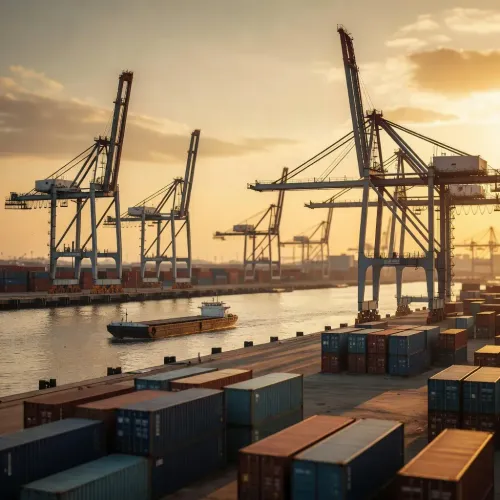
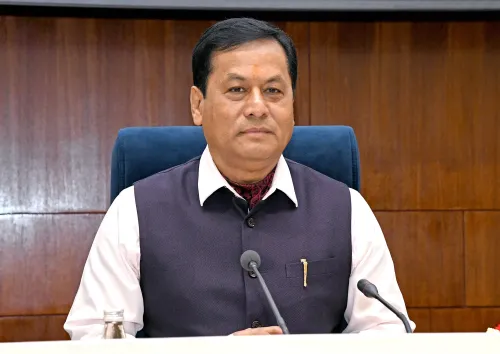
Union Minister of Ports, Shipping and Waterways Sarbananda Sonowal on Monday, 22 June 2026 highlighted the strides made under Prime Minister Narendra Modi's Maritime Amrit Kaal Vision 2047, pointing to over 300 initiatives deployed to transform India into a global maritime powerhouse.
Context
In his post on X, Minister Sonowal outlined four pillars of progress under the vision: deployment of 300-plus initiatives, ecosystem modernisation for global competitiveness, sustainable growth at the core of operations, and value creation by unlocking India's Blue Economy. The post underscores the government's intent to frame maritime development within the broader Amrit Kaal national development horizon — India's journey toward its centenary of independence in 2047.
The Maritime Amrit Kaal Vision 2047 is a long-term policy framework aimed at positioning India among the world's leading maritime nations. It builds on earlier frameworks, including Maritime India Vision 2030, which set medium-term targets for port capacity expansion and green port development.
Policy Backdrop
India's maritime policy architecture has been progressively layered over the past decade. The Sagarmala Project, launched in 2015, initiated port-led development to reduce logistics costs and promote coastal shipping — a foundation on which subsequent visions have been constructed. Maritime India Vision 2030, released in 2021, added targets for capacity modernisation and sustainability.
The current emphasis on sustainable growth mirrors international regulatory shifts at the International Maritime Organisation (IMO) and aligns with India's own net-zero commitments. The integration of the Blue Economy — encompassing fisheries, offshore energy, coastal tourism, and seabed resources — signals a broader understanding of ocean-based economic potential beyond traditional port throughput.
Successive central governments have sought to raise India's share of global maritime trade and lower logistics costs. The current administration has consistently linked sectoral ambitions to the 2047 national development vision, using the Amrit Kaal framing across infrastructure, energy, and trade policy.
Stakeholders and Impact
Port authorities, shipping companies, coastal state governments, and exporters are the primary stakeholders in the Maritime Amrit Kaal Vision 2047. For exporters, lower logistics costs and modernised port infrastructure directly affect competitiveness in global markets. Coastal states stand to gain from investment in port-adjacent industrial corridors and improved connectivity.
The Blue Economy angle is particularly significant for fishing communities and offshore energy developers, who could benefit from structured policy support and infrastructure investment. Sustainability commitments also open pathways for green shipping corridors and cleaner port operations, aligning Indian ports with evolving international trade requirements.
What's Next
Observers will watch for the release of detailed implementation roadmaps and specific budget allocations tied to the 300-plus initiatives cited by Minister Sonowal. New public-private partnership port projects and bilateral shipping agreements are also expected to emerge as concrete deliverables under the vision's framework.
With 2047 as the horizon, the Maritime Amrit Kaal Vision will be measured against India's ability to raise its share of global maritime trade, reduce logistics costs as a percentage of GDP, and develop port infrastructure capable of handling next-generation cargo volumes — benchmarks that will define whether the vision translates from policy to performance.
Point of View
The communication signals scale without committing to granular delivery metrics, a pattern common to mid-cycle policy messaging ahead of budget cycles. The Blue Economy framing is strategically significant: it broadens the constituency of the maritime agenda beyond port operators to coastal communities and green-energy investors. Whether the vision produces measurable gains in India's global maritime trade share will depend on the pace of public-private investment and the resolution of inter-ministerial coordination challenges that have historically slowed port-hinterland connectivity projects.
NationPress
22 Jun 2026
Frequently Asked Questions
What is Maritime Amrit Kaal Vision 2047?
Maritime Amrit Kaal Vision 2047 is India's long-term policy framework, associated with PM Narendra Modi's government, aimed at making India a leading global maritime nation by the centenary of its independence in 2047, encompassing port modernisation, Blue Economy development, and sustainable shipping.
What is India's Blue Economy policy?
India's Blue Economy policy integrates sustainable ocean-based economic activities — including fisheries, offshore energy, coastal tourism, and maritime trade — with infrastructure development to unlock the full economic potential of India's coastline and exclusive economic zone.
What is the Sagarmala Project?
The Sagarmala Project, launched in 2015, is a port-led development initiative by the Indian government designed to reduce logistics costs, modernise ports, and promote coastal and inland waterway shipping across the country.
What has Sarbananda Sonowal done for India's ports?
As Union Minister of Ports, Shipping and Waterways since 2021, Sarbananda Sonowal has overseen policy execution under Maritime India Vision 2030 and the Maritime Amrit Kaal Vision 2047, including initiatives targeting port capacity expansion, ecosystem modernisation, and Blue Economy integration.
How many initiatives are under Maritime Amrit Kaal Vision 2047?
According to Minister Sarbananda Sonowal's post on 22 June 2026, over 300 initiatives have been deployed under the Maritime Amrit Kaal Vision 2047 framework, though detailed implementation roadmaps and budget allocations are still awaited.