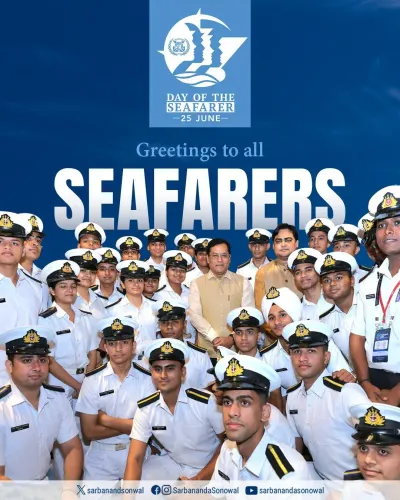
Sonowal: India now world's 2nd-largest seafarer supplier
Synopsis
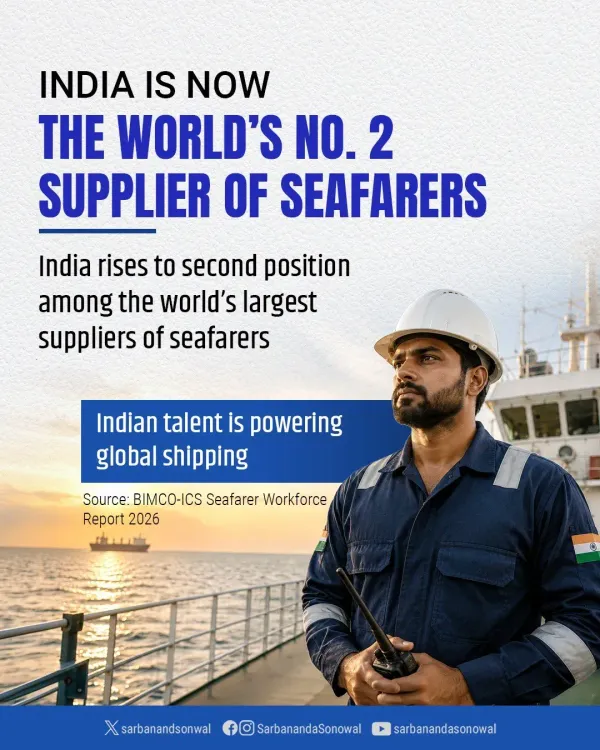
India has risen from fifth to second in the BIMCO–ICS Seafarer Workforce Report 2026, contributing 3,11,936 seafarers — 12.16% of the global total. Minister Sonowal credits a decade of maritime policy under PM Modi and announces Mission 20%: making one in five global seafarers Indian.
Key Takeaways
India is now the world's second-largest supplier of seafarers per the BIMCO–ICS Seafarer Workforce Report 2026.
India contributes 3,11,936 seafarers , representing 12.16% of the global maritime workforce.
India ranked fifth with a 5.2% share in 2015 — a climb of three places in one decade.
The Sagarmala Project (2015) and Maritime India Vision 2030 (2021) are the key policy pillars behind the rise.
Mission 20% sets the next national target: one in every five seafarers in the world to be Indian.
BIMCO and ICS have flagged a global officer shortage; India's growing pipeline directly addresses that structural gap.
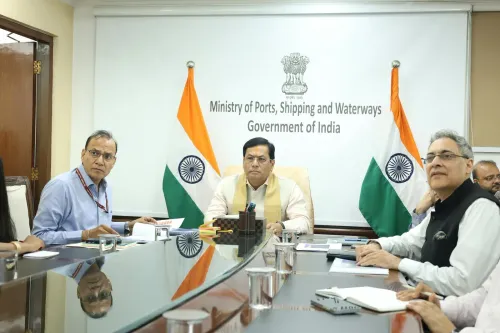
India has crossed a milestone that reshapes the global maritime map. Union Minister of Ports, Shipping and Waterways Sarbananda Sonowal announced on Wednesday, 29 July 2026 that India has officially become the world's second-largest supplier of seafarers, citing the BIMCO–ICS Seafarer Workforce Report 2026 — the most authoritative global count of maritime labour.
The number is concrete and striking: India now fields 3,11,936 seafarers, accounting for 12.16% of the world's maritime workforce. In 2015, India ranked fifth globally with a 5.2% share. That is a climb of three places and more than seven percentage points in a single decade — a pace of growth few maritime nations have matched.
From fifth to second: the decade that changed India's maritime rank
The leap did not happen in isolation. The Sagarmala Project, launched in 2015, anchored a port-led development push that created downstream demand for trained Indian officers and ratings. Maritime India Vision 2030, released in 2021, set explicit targets for seafarer training capacity and global competitiveness, aligning Indian certifications with international STCW standards so that Indian credentials would be accepted without question on vessels flying any flag.
Sonowal credited the transformation to a decade of deliberate policy under Prime Minister Narendra Modi: expanding maritime education institutions, modernising training infrastructure, digitising seafarer documentation services, and sustaining welfare programmes that have made careers at sea more accessible and more attractive for Indian youth.
Mission 20%: one in five seafarers, Indian
Second place is not the finish line. The minister announced Mission 20% — a national goal to raise India's share of the global seafarer workforce to one in every five. At current global workforce sizes, that would mean India supplying roughly 330,000 to 350,000-plus seafarers and displacing whoever holds first place today.
The target is ambitious by design. The Baltic and International Maritime Council (BIMCO) and the International Chamber of Shipping (ICS), the report's joint publishers, have long flagged a global shortage of qualified officers as the single biggest structural risk to world trade flows. India's growing pipeline directly addresses that gap — which is precisely why global shipping companies are increasingly crew-dependent on Indian talent.
Why global shipping needs India's seafarers now
More than 80% of world trade by volume moves by sea. A reliable, skilled, English-proficient seafarer workforce is not a vanity metric — it is a supply-chain necessity. India's rise to second place means Indian officers and ratings are now a structural pillar of global commerce, not a regional footnote.
The next milestones to watch: training-capacity additions in upcoming maritime budget cycles and the first formal review of progress under Mission 20%, which will reveal whether the policy pipeline is thick enough to sustain the climb.
India entered this decade ranked fifth in a field it now nearly leads. The question is no longer whether Indian seafarers can compete globally — it is how fast India can build the training berths to get to one in five.
Point of View
Digital service delivery, and welfare investment that made seafaring a viable career path at scale. For the BJP government, the ranking is a tangible, internationally verified proof-point for its 'Viksit Bharat' narrative on skilled-workforce exports. The announcement of Mission 20% is politically shrewd: it converts a past achievement into a forward target, keeping maritime ambition on the agenda through the next electoral cycle. The deeper strategic implication is that India is quietly becoming indispensable to the arteries of world trade — leverage that extends well beyond the shipping ministry.
NationPress
29 Jul 2026
Frequently Asked Questions
What rank is India in seafarer supply in 2026?
India is ranked second in the world for seafarer supply in 2026, according to the BIMCO–ICS Seafarer Workforce Report 2026, contributing 3,11,936 seafarers or 12.16% of the global maritime workforce.
What is Mission 20% for Indian seafarers?
Mission 20% is India's stated national goal to increase its share of the global seafarer workforce to 20%, meaning one in every five seafarers in the world would be Indian.
What was India's seafarer rank in 2015?
India ranked fifth globally in seafarer supply in 2015, with a 5.2% share of the world's maritime workforce — compared to second place and 12.16% in 2026.
What is the BIMCO–ICS Seafarer Workforce Report?
It is a periodic global report jointly published by the Baltic and International Maritime Council (BIMCO) and the International Chamber of Shipping (ICS) that counts and analyses the worldwide supply of seafarers.
What policies helped India rise in global seafarer rankings?
Key policies include the Sagarmala Project launched in 2015, Maritime India Vision 2030 released in 2021, expansion of maritime training institutions, digitisation of seafarer services, and alignment of Indian certifications with international STCW standards.