Sonowal meets Gujarat CM Patel in Kandla to push eMethanol push
Synopsis
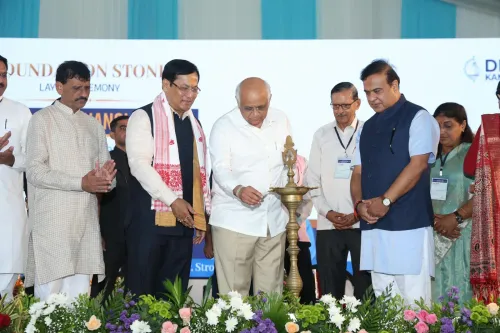
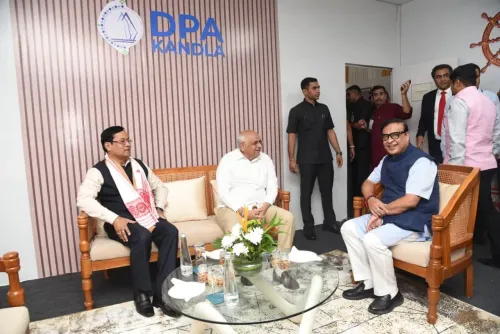
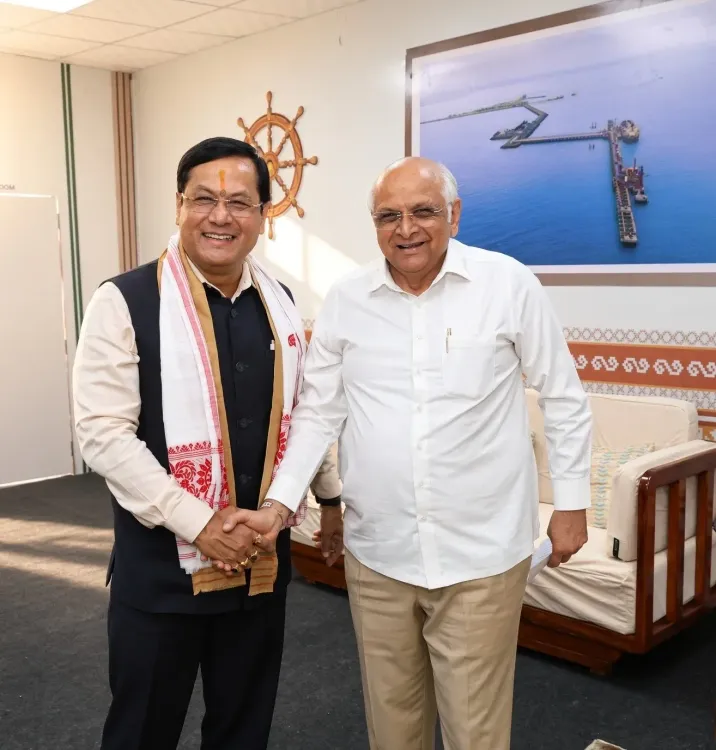
Union Minister Sarbananda Sonowal met Gujarat CM Bhupendra Patel at Deendayal Port, Kandla on 26 September 2026 to advance eMethanol green fuel development and forge new Assam-Gujarat industrial linkages under India's maritime decarbonisation agenda.
Key Takeaways
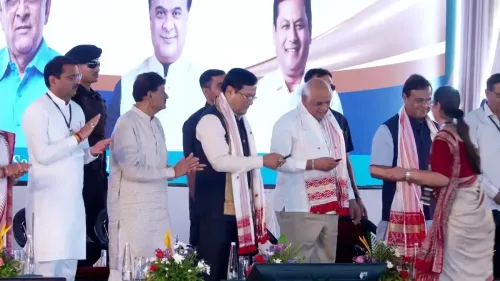
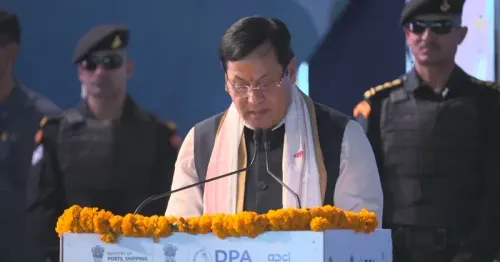
Sarbananda Sonowal met Gujarat CM Bhupendra Patel at Deendayal Port, Kandla on 26 September 2026 .
The talks centred on eMethanol — a green fuel produced from renewable hydrogen — and its potential as a shipping decarbonisation solution.
Deendayal Port is India's largest port by cargo volume and a Sagarmala programme hub for green fuel infrastructure.
India's National Green Hydrogen Mission (2023) provides the policy framework enabling eMethanol scale-up at major ports.
Assam's inland waterway network and Gujarat's coastal infrastructure offer complementary logistics potential for an inter-state industrial corridor.
Possible follow-ups include MoUs or a dedicated eMethanol bunkering facility announcement at Kandla.
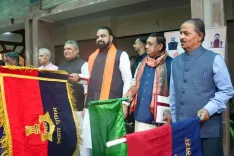
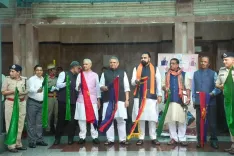
At Deendayal Port, Kandla, a conversation between two BJP-governed states is quietly reshaping India's green shipping agenda. Union Minister of Ports, Shipping and Waterways Sarbananda Sonowal met Gujarat Chief Minister Bhupendra Patel on Saturday, 26 September 2026, flagging a new industrial synergy between Assam and Gujarat under the banner of #eMethanol.
Why Kandla, and why eMethanol now
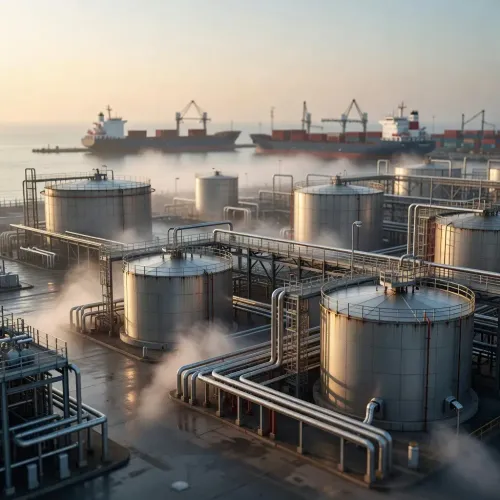
Deendayal Port — India's largest port by cargo volume — is far more than a gateway for goods. Under the Sagarmala port-led development programme, active since 2015, it has been earmarked as a hub for value-added manufacturing and green fuel infrastructure. eMethanol, produced from renewable hydrogen, sits at the frontier of maritime decarbonisation: it can power next-generation vessels with dramatically lower carbon emissions compared to conventional bunker fuel.
India's National Green Hydrogen Mission, launched in 2023, provided the policy scaffolding for exactly this kind of initiative — scaling green fuels, including e-methanol derivatives, for industrial and shipping use. A port of Kandla's scale, paired with political will from both a Union ministry and a state government, creates the conditions for a pilot that could matter globally.
Assam and Gujarat — an unlikely but logical pairing
At first glance, landlocked Assam and coastal Gujarat seem an odd couple for maritime industry. But the logic holds: Assam brings inland waterway connectivity and emerging green energy potential; Gujarat brings world-class port infrastructure and established industrial corridors. Together, they offer a complementary logistics chain that can move goods — and eventually green fuels — from India's northeast to its western seaboard.
Sonowal, himself a former Chief Minister of Assam, carries both ministerial authority and deep state-level credibility into these negotiations. His framing — 'India first is the vision' — signals that the push is designed to transcend state rivalries and position the collaboration within the broader national interest narrative.
What a Kandla eMethanol pilot could mean
Watchers of India's maritime decarbonisation space will now look for follow-up: possible MoUs, a dedicated eMethanol bunkering facility at Deendayal Port, or an Assam-Gujarat industrial corridor announcement. The shipping sector accounts for roughly 3% of global CO₂ emissions, and ports that move early on green fuels gain both regulatory and commercial advantage as international emission norms tighten.
No specific project outcomes from Saturday's meeting have been officially confirmed. But the optics — a Union minister and a state CM at India's busiest port, hashtagging a cutting-edge green fuel — are rarely accidental.
If eMethanol moves from hashtag to hardware at Kandla, India's western coast could emerge as Asia's green bunkering address — and that is a race no port wants to lose.
Point of View
Maritime decarbonisation. By pairing Sonowal's Union ministry authority with Gujarat's industrial muscle, the Centre is effectively piloting a model where port infrastructure and inter-state resource complementarity accelerate green fuel adoption ahead of tightening global shipping emission norms. The eMethanol framing is also strategically shrewd: it lets India claim a first-mover position in Asia's green bunkering market while reinforcing the National Green Hydrogen Mission's commercial relevance. Whether the meeting translates into binding commitments will be the real test of intent.
NationPress
26 Sept 2026
Frequently Asked Questions
What is eMethanol and why is it important for Indian shipping?
eMethanol is methanol produced using renewable hydrogen, offering significantly lower carbon emissions than conventional bunker fuel. It is a key focus of India's maritime decarbonisation strategy under the National Green Hydrogen Mission (2023), and ports like Kandla are being positioned as future eMethanol bunkering hubs.
Why did Sonowal meet Gujarat CM Bhupendra Patel in Kandla?
Union Minister Sarbananda Sonowal met Gujarat CM Bhupendra Patel at Deendayal Port, Kandla on 26 September 2026 to discuss advancing eMethanol green fuel projects and building new industrial synergies between Assam and Gujarat leveraging their complementary logistics infrastructure.
What is Deendayal Port, Kandla known for?
Deendayal Port in Kandla, Gujarat, is India's largest port by cargo volume. Under the Sagarmala port-led development programme initiated in 2015, it has been identified as a hub for green fuel infrastructure and value-added manufacturing.
How does Assam fit into Gujarat's maritime industrial plans?
Assam offers inland waterway connectivity and green energy potential, while Gujarat provides world-class coastal port infrastructure. Together they form a complementary logistics chain — from India's northeast to its western seaboard — that can support both cargo movement and green fuel distribution.
What could be the next steps after the Sonowal-Patel Kandla meeting?
Analysts are watching for possible MoUs, the announcement of a dedicated eMethanol bunkering facility at Deendayal Port, or a formal Assam-Gujarat industrial corridor declaration as follow-up outcomes from the 26 September 2026 meeting.