CM Hemant Soren warns tribals: history of debt traps must not repeat

Synopsis
Jharkhand CM Hemant Soren invoked the predatory moneylender system of colonial-era tribal history to urge Adivasi communities to stay united, understand the Fifth and Sixth Schedule protections, and guard their land and identity against repeating cycles of exploitation.
Key Takeaways
Jharkhand CM Hemant Soren posted on 5 November 2026 warning tribal communities that the conditions that enabled mahajani pratha (debt-trap moneylending) could resurface without unity.
Soren explicitly named the Fifth Schedule and Sixth Schedule of the Indian Constitution as protections tribal communities must understand and defend.
The Chotanagpur Tenancy Act of 1908 was historically enacted to prevent non-tribal moneylenders from seizing tribal land — the legislative legacy Soren invoked.
Jharkhand was formed in 2000 after sustained tribal mobilisation for autonomy over land, forest, and mineral resources.
The post follows a consistent pattern of Jharkhand tribal political leadership using historical memory to reinforce constitutional vigilance amid ongoing resource and land governance debates.
Soren called on tribal society to advance with 'identity, rights, and self-respect' while respecting all other communities.
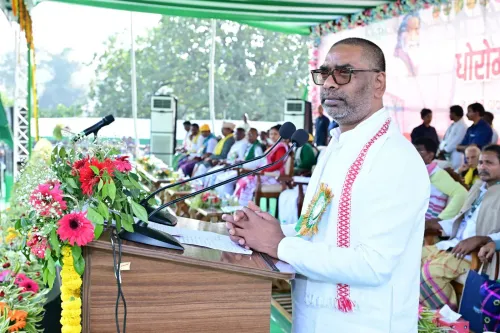
A warning steeped in history and sharp with political edge — Jharkhand Chief Minister Hemant Soren on Thursday, 5 November 2026 invoked the memory of mahajani pratha (the moneylender system) to remind tribal communities that land, rights, and identity remain under constant threat unless they stay united and constitutionally informed.
Posting on X in Hindi, Soren drew a direct line from a dark historical chapter to present dangers. 'We all know how the moneylender system trapped our society in exploitation and a web of debt and destroyed it,' he wrote. 'If we do not remain united today, if we do not strengthen our society, then similar circumstances can arise again. Our land, our rights, and our future could be put at risk.'
The ghost of mahajani pratha — and the laws written to bury it
The mahajani pratha — a predatory moneylending system that operated across tribal Jharkhand through the 19th and early 20th centuries — left a generational wound. Non-tribal creditors routinely seized land from indebted Adivasi families, stripping communities of their most fundamental resource. The colonial-era Chotanagpur Tenancy Act of 1908 was enacted precisely to stop this haemorrhage, restricting transfer of tribal land to non-tribals.
The same protective instinct was written into India's Constitution at independence. The Fifth Schedule (1950) gave the Governor — acting on tribal advisory councils — powers to regulate land transactions and governance in Scheduled Areas, covering mineral-rich states like Jharkhand. The Sixth Schedule extended autonomous district council rights primarily to the northeastern tribal belt. Soren explicitly named both in his post, calling on communities to 'know and protect' the safeguards the Constitution provides.
Jharkhand's founding struggle and what it was fighting for
Jharkhand was carved out of Bihar in 2000 after decades of tribal mobilisation demanding control over land, forest, and mineral wealth. The state sits atop some of India's richest mineral reserves — coal, iron ore, bauxite — which makes the question of who governs that wealth perpetually live. Soren's Jharkhand Mukti Morcha has long positioned itself as the constitutional guardian of that sovereignty.
The appeal on 5 November fits a well-worn but structurally important pattern in Jharkhand politics: when development pressures — mining clearances, land acquisition, demographic shifts — build quietly, tribal political leadership amplifies constitutional awareness to sharpen community vigilance. It is mobilisation through memory.
The unity message and what it demands
Soren closed with a call that was equal parts rallying cry and civic instruction: 'While respecting all communities, the tribal community must also move forward with its identity, rights, and self-respect. Remember, as long as we are united, no one can weaken our strength.'
The message is not merely rhetorical. Scheduled Area governance debates — over revenue codes, forest rights, mining regulations — regularly test the boundary between state autonomy and central authority. With Jharkhand's assembly periodic deliberations on land revenue and resource policy, Soren's post plants a marker: tribal constitutional rights are non-negotiable, and communities must understand them well enough to defend them.
When a Chief Minister reaches for history to explain the present, the present usually deserves a closer look.
Point of View
Making abstract safeguards feel urgent and personal to Adivasi communities. By naming the Fifth and Sixth Schedules explicitly, he is effectively running a civic-education campaign with an electoral undercurrent, reinforcing JMM's identity as the custodian of tribal constitutional rights. The message also functions as a preemptive signal to the Centre: any moves toward diluting Scheduled Area protections — in mining policy, land acquisition, or forest governance — will be framed as a return to colonial-era dispossession. In a state sitting on vast mineral wealth, that framing carries serious political and legal weight.
NationPress
5 Nov 2026
Frequently Asked Questions
What is mahajani pratha and why did Hemant Soren mention it?
Mahajani pratha was a predatory moneylending system in which non-tribal creditors trapped Adivasi families in debt and then seized their land. Soren invoked it on 5 November 2026 to warn that without unity and constitutional awareness, tribal communities risk repeating that history of dispossession.
What is the Fifth Schedule of the Indian Constitution?
The Fifth Schedule, in force since 1950, provides for special administration of Scheduled Areas where tribal populations are significant. It empowers Governors to regulate land transfer and governance in those areas, including in Jharkhand, to protect tribal interests.
What is the Sixth Schedule and does it apply to Jharkhand?
The Sixth Schedule establishes autonomous district councils for tribal areas, primarily in India's northeastern states. While Jharkhand is covered under the Fifth Schedule, Soren cited both as constitutional shields tribal communities must know and protect.
What was the Chotanagpur Tenancy Act of 1908?
The Chotanagpur Tenancy Act of 1908 was enacted during British rule to prevent non-tribals — particularly moneylenders — from acquiring tribal land through debt or purchase. It remains a foundational legal protection for tribal landholders in Jharkhand.
Why was Jharkhand created as a separate state?
Jharkhand was carved out of Bihar in 2000 after decades of tribal mobilisation demanding greater autonomy over land, forests, and mineral resources. The movement sought to protect Adivasi communities from economic marginalisation in one of India's most mineral-rich regions.