Is the Governor’s Refusal to Read the Address a Challenge to Democracy? CM Stalin in TN Assembly
Synopsis
In a gripping session of the Tamil Nadu Legislative Assembly, Chief Minister M. K. Stalin passionately defended the government's stance against the Governor's refusal to read the address. He highlighted the implications for democracy, the importance of patriotism, and the achievements under the DMK government, calling for unity and respect for constitutional values.
Key Takeaways
CM Stalin asserts the Governor's actions challenge democracy.
Tamil Nadu's economic growth is among the highest in India.
Over 200,000 farmers have received electricity connections.
The state maintains social harmony, free from communal violence.
Stalin defends the government's commitment to patriotism.
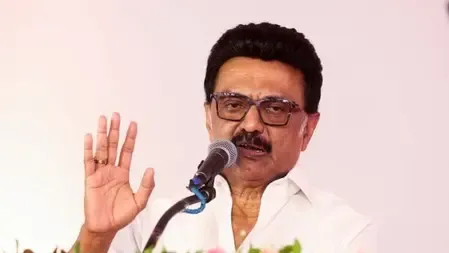
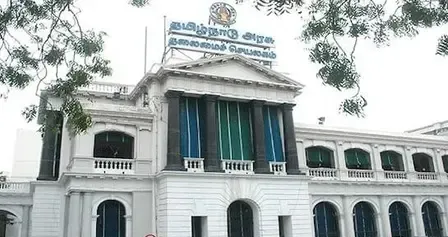
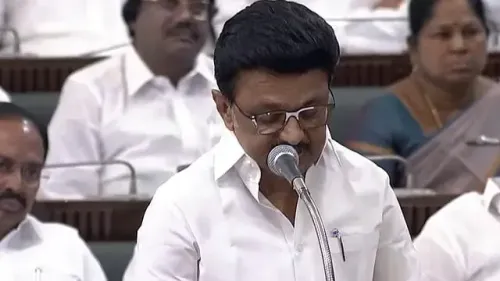
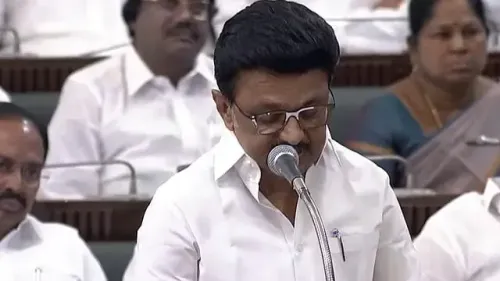
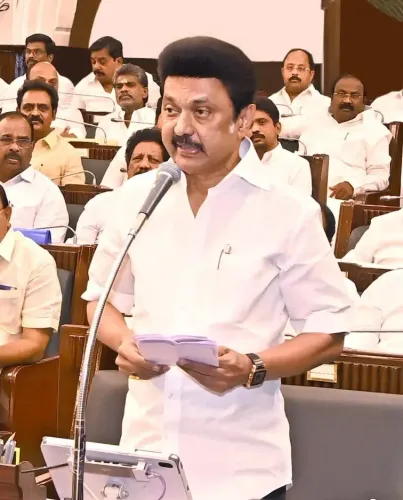
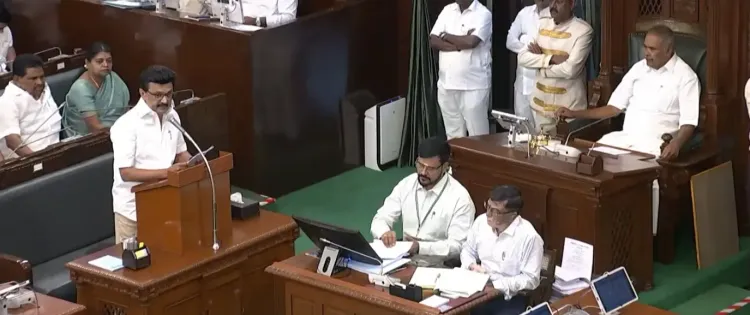
Chennai, Jan 24 (NationPress) The Tamil Nadu Legislative Assembly marked its fifth day on Saturday during the current session, with Chief Minister M. K. Stalin delivering a compelling and comprehensive rebuttal concerning the Governor’s address. In response to the debate, Stalin emphasized that he is constitutionally obligated to address the Governor’s remarks and felt it necessary to document the government's stance.
He declared that the people of Tamil Nadu possess “immense respect for the nation and patriotism” and dismissed any insinuation questioning the State’s dedication to national principles. “The refusal of the Governor to read the speech crafted by the elected government poses a direct challenge to democracy,” said the Chief Minister.
Stalin pointed out that this is not an isolated occurrence, noting that for the past three years, the Governor has repeatedly exited the Assembly for similar reasons, thereby eroding established constitutional traditions.
He accused the Governor of acting contrary to the essence of the Constitution and indicated that such behavior diminishes the dignity of the Governor's office. “The flaw lies not in Tamil Nadu’s vision, but rather in the distorted vision of the Governor,” he commented.
Additionally, he remarked that those who lecture the State on patriotism have never engaged in the struggles that define true patriotism.
Taking aim at the opposition parties, Stalin asserted that a government chosen by the populace and tasked with promoting Tamil Nadu’s welfare is being misrepresented as adversarial to the people.
The All India Anna Dravida Munnetra Kazhagam once again opted to boycott the House during the Chief Minister’s address.
Stalin highlighted the legacy and governance of the Dravida Munnetra Kazhagam, referencing former Chief Minister M. Karunanidhi, who he said “dedicated his life to the people for five years” and laid the groundwork for inclusive growth.
Under the DMK administration, Stalin noted that over 200,000 farmers have received electricity connections, museums have been established at Keezhadi and Porunai to celebrate Tamil civilization, and memorials as well as statues have been erected to honor prominent leaders.
He further stated that Tamil Nadu currently boasts the highest economic growth rate in India and has solidified its status as one of the nation’s top economic performers. Quoting official statistics, Stalin claimed that crime rates have decreased compared to the previous AIADMK regime and that Tamil Nadu ranks second among Indian states for tourist arrivals.
Reiterating the importance of social harmony, the Chief Minister affirmed that Tamil Nadu has seen no communal strife, caste-based violence, or mob lynching incidents. “This is a state that champions social justice, progress, and democracy,” Stalin declared, affirming the government’s resolve to uphold constitutional principles despite ongoing provocations.
Point of View
The ongoing confrontation between the Tamil Nadu government and the Governor highlights significant tensions in state governance. Chief Minister Stalin’s assertions regarding democracy and constitutional adherence resonate with broader themes of federalism in India. The narrative underscores the necessity for cooperation and respect among political entities for the health of our democracy.
NationPress
5 Oct 2026
Frequently Asked Questions
What was the Chief Minister's response to the Governor's address?
Chief Minister M. K. Stalin delivered a detailed response, emphasizing the constitutional obligation to address the Governor's remarks and asserting that the Governor's refusal to read the address challenges democracy.
How does Stalin view the Governor's conduct?
Stalin accused the Governor of undermining constitutional conventions and acting against the spirit of the Constitution, suggesting that it diminishes the dignity of the Governor's office.
What achievements did Stalin highlight during his address?
Stalin highlighted the provision of electricity connections to over 200,000 farmers, the establishment of museums showcasing Tamil civilization, and Tamil Nadu's economic growth and reduced crime rates.