Stalin urges Centre to withdraw FCRA Amendment Bill 2026
Synopsis
DMK president M. K. Stalin has endorsed a multi-faith delegation's appeal to Union Home Minister Amit Shah to withdraw the FCRA Amendment Bill 2026, repeal Section 15 of the Foreign Contribution (Regulation) Act, or refer it to a Joint Parliamentary Committee during the ongoing Monsoon Session.
Key Takeaways
The Joint Action Forum on Minorities , led by DMK MP P.
Wilson , met Home Minister Amit Shah on 6 August 2026 to oppose the FCRA Amendment Bill 2026.
The delegation demanded withdrawal of the Bill, repeal of Section 15 of FCRA, or referral to a Joint Parliamentary Committee .
The FCRA Amendment Bill was introduced in the Lok Sabha in March 2026 ; the original Act dates to 2010 and was last significantly amended in 2020 .
Stalin publicly endorsed the Forum's request on 8 August 2026 , citing 'far-reaching implications' for minority rights.
Stalin has appealed to the Union Government to act during the ongoing Monsoon Session of Parliament .
A multi-faith delegation walked into the Union Home Ministry on 6 August 2026 carrying a single, pointed demand: pull back the FCRA Amendment Bill 2026 before it reshapes the landscape for minority-linked civil society in India. DMK president M. K. Stalin has now publicly backed that demand, calling on the Union Government to act during the ongoing Monsoon Session of Parliament.
The delegation that walked into South Block
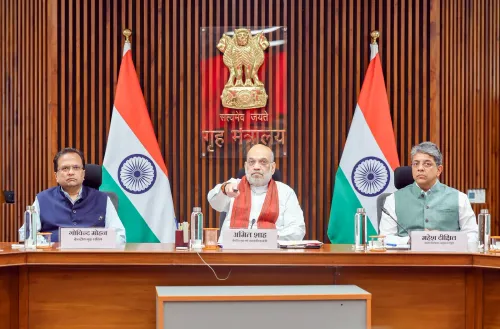
The Joint Action Forum on Minorities — led by DMK MP P. Wilson and comprising senior religious leaders from multiple denominations — met Union Home Minister Amit Shah to press for three specific outcomes: withdrawal of the FCRA Amendment Bill introduced in the Lok Sabha in March 2026, repeal of Section 15 of the Foreign Contribution (Regulation) Act, or, at minimum, referral of the Bill along with a comprehensive review of the Foreign Contribution (Regulation) Act, 2010 to a Joint Parliamentary Committee.
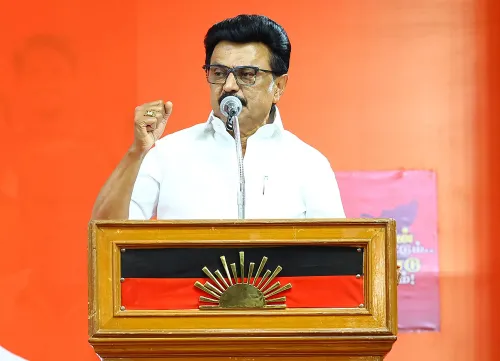
Stalin, endorsing the Forum's request on 8 August 2026, said the DMK 'has opposed the provisions of the proposed Bill from the very beginning due to their far-reaching implications.' That phrase — 'far-reaching implications' — is doing significant work: it signals the party's position that this is not a technical regulatory tweak but a structural shift in how minority and civil-society institutions can access and use foreign funding.
Why FCRA has always been a flashpoint
The Foreign Contribution (Regulation) Act was first enacted in 2010 to consolidate rules governing foreign donations to Indian NGOs, political parties, and associations. A significant tightening came in 2020, when amendments imposed stricter compliance requirements, capped administrative use of foreign funds, and barred sub-granting — changes that drew sharp criticism from civil-society groups, including many faith-based organisations that depend on overseas donations for welfare work.
The 2026 Amendment Bill has revived those anxieties. While its specific provisions remain under legislative scrutiny, the DMK's opposition follows a consistent pattern: the party has framed successive FCRA changes as instruments of central overreach that disproportionately burden minority-linked institutions and shrink the space for independent civil society.
Stalin's appeal and the Monsoon Session clock
By issuing this public endorsement, Stalin is not merely amplifying a delegation's request — he is placing the DMK's parliamentary weight behind it at a moment when the Monsoon Session is live and the Bill could move at any time. The call for a Joint Parliamentary Committee referral is a standard but strategically significant ask: it would slow the Bill's passage, force cross-party deliberation, and create a formal record of minority-community concerns.
Whether the Union Government treats the Forum's plea as a genuine policy consultation or absorbs it as routine opposition pressure will say much about the Bill's trajectory in the weeks ahead. The Monsoon Session will not wait.
Frequently Asked Questions
What is the FCRA Amendment Bill 2026?
The FCRA Amendment Bill 2026 is a proposed amendment to the Foreign Contribution (Regulation) Act, 2010, introduced in the Lok Sabha in March 2026. It seeks to further regulate how Indian NGOs and associations receive and use foreign donations, and has drawn opposition from minority groups and civil-society organisations.
Why is DMK opposing the FCRA Amendment Bill 2026?
The DMK has opposed the Bill from its introduction, arguing that its provisions have 'far-reaching implications' for minority rights and civil-society institutions. The party sees successive FCRA amendments as instruments of central overreach that disproportionately burden minority-linked organisations.
What did the Joint Action Forum on Minorities ask the Home Minister?
The Forum, led by DMK MP P. Wilson, asked Home Minister Amit Shah to withdraw the FCRA Amendment Bill 2026, repeal Section 15 of the Foreign Contribution (Regulation) Act, or refer the Bill along with a comprehensive review of the Act to a Joint Parliamentary Committee.
What is Section 15 of the Foreign Contribution (Regulation) Act?
Section 15 is a provision of the Foreign Contribution (Regulation) Act, 2010 that the Joint Action Forum on Minorities has specifically asked to be repealed. The exact scope of the section is part of the legislative debate; the Forum considers it harmful to minority and religious organisations.
What is a Joint Parliamentary Committee and why is it being demanded?
A Joint Parliamentary Committee (JPC) is a special committee comprising members from both Houses of Parliament, set up to examine a specific Bill or issue in detail. Demanding a JPC referral is a way to slow a Bill's passage, ensure broader deliberation, and formally record stakeholder concerns before a vote.