Did the Supreme Court Split on the Constitutionality of Section 17A in the Prevention of Corruption Act?
Synopsis
The Supreme Court's split verdict on Section 17A raises crucial questions about the protection of public servants and the balance of power within government. With contrasting judgments from Justices Viswanathan and Nagarathna, the future of this provision remains uncertain, as it is referred to the Chief Justice for further deliberation.
Key Takeaways
Supreme Court split verdict on Section 17A raises questions on public servant protections.
Justice Viswanathan's judgment emphasizes safeguarding honest officials.
Justice Nagarathna's dissent highlights issues of discrimination and constitutionality.
Referral to the Chief Justice for resolution indicates the ruling's significance.
Potential implications for administrative accountability and operational efficiency.
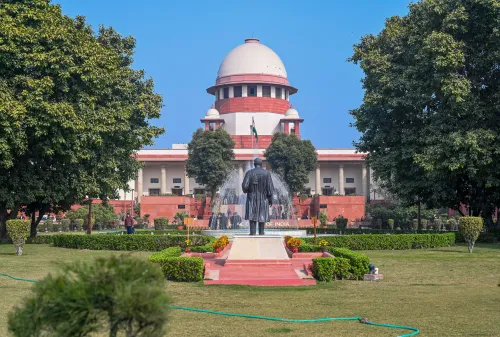
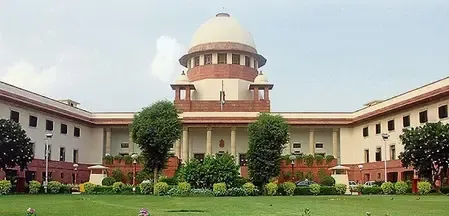
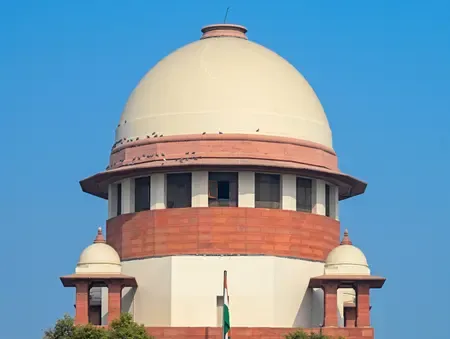
New Delhi, Jan 13 (NationPress) The Supreme Court delivered a split decision regarding the constitutional validity of Section 17A of the Prevention of Corruption Act on Tuesday.
This particular section requires prior approval from the competent authority before launching any inquiry or investigation against a public servant for actions taken while performing official duties.
A division bench comprised of Justice B.V. Nagarathna and Justice K.V. Viswanathan issued separate judgments concerning the challenge to Section 17A, which was amended in 2018.
Justice Viswanathan affirmed the constitutional validity of Section 17A, stating that it aims to safeguard honest public servants from trivial and malicious complaints that could lead to administrative dysfunction.
He further emphasized that the authority to grant permission for investigations should be entrusted to an independent body such as the Lokpal or Lokayukta, rather than the government.
"If honest public servants lack assurance that their decisions won't be subject to frivolous complaints, it is the nation that ultimately suffers. This can lead to a 'play-it-safe' mentality, causing policy paralysis. The remedy of striking down the provision may prove more detrimental than the issue itself," Justice Viswanathan remarked.
He dismissed worries regarding potential misuse, asserting, "The argument for striking down Section 17A due to the possibility of abuse lacks merit. The mere potential for misuse of a valid provision cannot justify declaring it unconstitutional."
In contrast, Justice Nagarathna deemed the provision unconstitutional, claiming it violates Article 14 of the Constitution. She argued that Section 17A creates an unjustifiable classification by providing protection solely to a specific category of public servants — those involved in higher-level decision-making — while excluding others from similar protections.
"Section 17A of the Act is struck down because it infringes upon Article 14 of the Constitution, as it seeks to shield only a specific class of public servants. The classification based on duty nature is both illegal and discriminatory," she stated.
Justice Nagarathna also mentioned, "Requiring prior approval to protect honest officers does not justify the provision's constitutionality, as a regime of prior approval contradicts the fundamental objectives of the Act and must be invalidated for that reason as well."
Due to these conflicting opinions, the issue has been referred to the Chief Justice of India to form an appropriate bench for resolution.
Point of View
It is essential to recognize the implications of the Supreme Court's split verdict on Section 17A of the Prevention of Corruption Act. While the decision reflects differing judicial philosophies, it underscores the need for a balanced approach to protect public servants without compromising accountability. This matter's referral to the Chief Justice indicates its significance in shaping future legal precedents.
NationPress
27 Sept 2026
Frequently Asked Questions
What is Section 17A of the Prevention of Corruption Act?
Section 17A mandates prior sanction from competent authorities before investigating a public servant's actions taken in their official capacity.
What was the outcome of the Supreme Court's ruling?
The Supreme Court issued a split verdict, with Justice Viswanathan upholding the provision's constitutionality and Justice Nagarathna declaring it unconstitutional.
Why is Section 17A controversial?
It is controversial because it creates potential barriers to investigating public servants, raising concerns about accountability and abuse of power.
What happens next after the split verdict?
The matter has been referred to the Chief Justice of India for the formation of an appropriate bench to resolve the conflicting opinions.
How does this ruling affect public servants?
The ruling could significantly influence how public servants are protected against frivolous allegations while ensuring accountability.