Swamy Flags SC's Status Report Demand on Ayodhya Temple Funds

Synopsis
The Supreme Court has sought a status report from the UP SIT on Ayodhya Ram Temple fund misappropriation. Dr. Subramanian Swamy invoked the TTD precedent — where the court replaced a state SIT with a CBI-led body — suggesting a similar escalation may follow in the Ayodhya case.
Key Takeaways
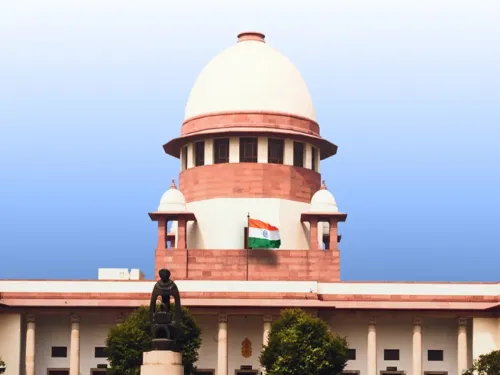
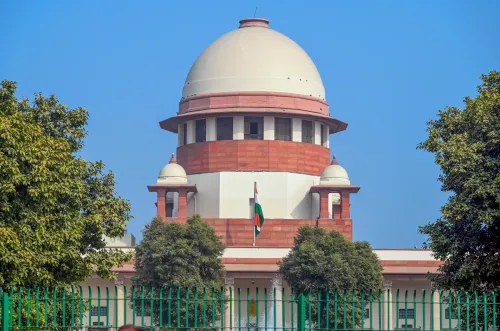
The Supreme Court of India sought a status report from the UP SIT on alleged misappropriation of Ayodhya Ram Temple funds.
Subramanian Swamy publicly linked this to the Subramanian Swamy vs Tirumala Tirupati Devasthanam case, where the court replaced a state SIT with a CBI-led independent multidisciplinary SIT .
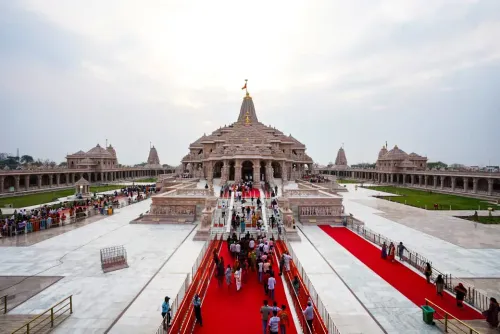
The Ayodhya Ram Temple was constructed following the November 2019 Supreme Court verdict and is administered by a dedicated trust funded by public donations.
The TTD precedent established that the apex court can override state-level investigation machinery in temple fund matters.
Stakeholders include the temple trust, the Uttar Pradesh government, the CBI , and millions of devotees whose contributions are under scrutiny.
The next Supreme Court hearing on the UP SIT status report will be closely watched for any order escalating the probe to a central agency.
Veteran politician Dr. Subramanian Swamy, former Union Minister and Rajya Sabha MP, on Tuesday, 14 July 2026, drew public attention to the Supreme Court of India's latest move seeking a status report from the Uttar Pradesh Special Investigation Team (UP SIT) on alleged misappropriation of funds at the Ayodhya Ram Temple. Swamy linked the development to his own earlier legal battle against the Tirumala Tirupati Devasthanam (TTD), signalling that a similar escalation — from a state SIT to a central probe body — could be imminent in the Ayodhya matter.
Context
In his post, Swamy recalled that the Supreme Court, in a prior ruling in the case of Subramanian Swamy vs Tirumala Tirupati Devasthanam, had replaced a state-level SIT with a CBI-led independent multidisciplinary SIT. He described this as a precedent directly relevant to the Ayodhya Ram Temple fund-misappropriation inquiry now before the court. The implication is clear: the apex court has shown willingness before to override state investigation machinery when it deems independent oversight necessary.
The Ayodhya Ram Temple, constructed at the Ram Janmabhoomi site in Uttar Pradesh following the landmark November 2019 Supreme Court verdict, is administered by a dedicated trust and has received substantial donations from millions of devotees across the country. Questions around the financial stewardship of those donations have drawn judicial attention.
Policy Backdrop
India's apex court has a well-established record of directing independent probes into the finances of major Hindu temples, particularly when state-level mechanisms are perceived to lack sufficient distance from the institutions under scrutiny. This pattern has played out in Andhra Pradesh, Tamil Nadu, and now Uttar Pradesh, with courts progressively favouring central agencies over state SITs in high-value temple fund matters.
The TTD case cited by Swamy is emblematic of this trajectory. The Tirupati-based trust is among India's wealthiest religious institutions, and the court's decision to install a CBI-anchored multidisciplinary team in that matter set a significant procedural benchmark. Swamy has been a consistent petitioner in such cases, arguing that transparency in temple revenue is a matter of constitutional and public interest.
Stakeholders and Impact
The principal stakeholders in the Ayodhya matter include the temple trust and its administrators, the Uttar Pradesh government which oversees the state SIT, the Central Bureau of Investigation, and the vast community of devotees whose contributions form the corpus under scrutiny. Any court order escalating the probe to a CBI-led body would significantly alter the political and administrative dynamics around the temple's governance.
For ordinary devotees, the credibility of the fund-management process is tied directly to their faith in the institution. A judicial demand for a status report signals that the court is actively monitoring the investigation, raising the stakes for all parties involved.
What's Next
The immediate focus is on the UP SIT's response to the Supreme Court's status report request. Legal observers will watch closely whether the court, after reviewing that report, chooses to expand the scope of the probe or — following the TTD precedent — replaces the state team with a CBI-led independent multidisciplinary SIT. Swamy's public framing of the TTD ruling as a template suggests he may press precisely that argument before the bench. The outcome will have implications not only for the Ayodhya Ram Temple but for the broader framework governing judicial oversight of temple finances across India.
Point of View
Not merely commentary — by citing the TTD ruling as a template, he is publicly laying the groundwork for a potential petition to replicate that outcome in the Ayodhya matter. The Supreme Court's decision to seek a status report, rather than await one, indicates active judicial monitoring rather than passive oversight. This fits a broader arc in which India's higher judiciary has steadily tightened its grip on temple fund governance, treating transparency in religious institutions as a justiciable public interest. If the court follows the TTD path, it would mark a significant centralisation of accountability mechanisms for one of India's most politically and religiously prominent temples.
NationPress
14 Jul 2026
Frequently Asked Questions
Why did the Supreme Court seek a status report on Ayodhya Ram Temple funds?
The Supreme Court sought a status report from the UP SIT to monitor the progress of its investigation into alleged misappropriation of funds at the Ayodhya Ram Temple, signalling active judicial oversight of the probe.
What is the Subramanian Swamy vs Tirumala Tirupati Devasthanam case?
It is a case in which Dr. Subramanian Swamy petitioned the Supreme Court over financial matters related to the Tirumala Tirupati Devasthanam trust; the court reportedly replaced a state-level SIT with a CBI-led independent multidisciplinary SIT in that matter.
Could the Ayodhya Ram Temple probe be handed to the CBI?
It is possible. Dr. Subramanian Swamy has explicitly cited the TTD case — where a state SIT was replaced by a CBI-led body — as a precedent, suggesting he may argue for the same outcome in the Ayodhya matter before the Supreme Court.
Who manages the Ayodhya Ram Temple and its funds?
The Ayodhya Ram Temple is managed by a dedicated trust established after the Supreme Court's landmark November 2019 verdict on the Ram Janmabhoomi title suit, and it holds substantial public donations from devotees.
What is the broader pattern of Supreme Court oversight of temple funds in India?
India's Supreme Court has a record of directing independent probes — often through the CBI — into the finances of major Hindu temples in states including Andhra Pradesh, Tamil Nadu, and Uttar Pradesh when state-level investigation mechanisms are deemed insufficient.