Taliban women's rights: Global voices urge diplomacy to drive change
Synopsis
The Taliban is holding firm on women's rights, insisting all decisions pass through a 'Sharia lens' — yet the diplomatic map around Kabul is being redrawn at speed. Russia has formally recognised the regime, India has quietly become its eighth-most-frequent diplomatic partner, and a newly elected Afghan-American Congresswoman is making the case that engagement, not isolation, is the only path to change.
Key Takeaways
Aisha Wahab , the first Afghan-American elected to the US House of Representatives , has called for active diplomacy with the Taliban to advance women's and human rights in Afghanistan .
A Taliban spokesperson told the BBC that women's education and employment restrictions must be resolved 'through the Sharia lens.' Russia became the only country to formally recognise the Taliban government in July 2025 .
India has risen to the eighth-most-frequent diplomatic partner of the Taliban, according to a Washington Institute analysis, while not officially recognising the regime.
Former Afghan President Hamid Karzai has reportedly linked girls' education and women's workforce participation to Afghanistan's international legitimacy.
Pakistan and Afghanistan borders have remained closed for nearly ten months amid a sharp breakdown in relations.
Afghanistan's Taliban regime is facing intensifying international pressure to lift its sweeping bans on women's education and employment, with global bodies, individual nations, and diaspora voices calling for sustained diplomatic engagement even as humanitarian and infrastructure support continues to flow into the country.
A Diaspora Voice in Congress
Aisha Wahab, who made history this month by becoming the first Afghan-American elected to the US House of Representatives in a special election in California, has urged a strategy of active diplomacy rather than isolation. The 39-year-old lawmaker, born in New York and raised in the US foster care system, spoke candidly about the situation in Afghanistan in a video interview with Democracy Now!
'As an Afghan American, someone who is proud of my culture and heritage, it's disappointing to see what is happening in Afghanistan, where they are blocking women and children from going to school, really living their lives,' Wahab said.
She added: 'I think that that's going to be a disaster to come for Afghanistan, let alone the fact that the United States needs to practice diplomacy. And regardless of which group is in power, we should be exercising diplomacy and having a relationship, hopefully even kind of steering them in the right direction when it comes to human rights, women's rights and just civil rights across the board.'
Taliban's Position: 'Through the Sharia Lens'
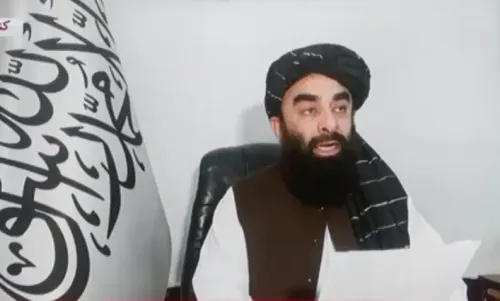
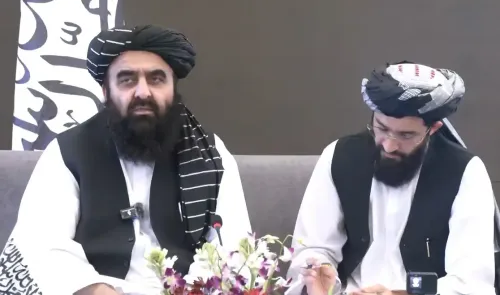
Her remarks came around the same time that a Taliban spokesperson told the BBC that restrictions on women's education and employment must be examined 'through the lens of Sharia.' Reiterating that the regime is 'committed to women's rights, freedom of speech and other things within Sharia,' the spokesperson stated: 'We should see everything through the Sharia lens.' On the question of girls' education specifically, he said the matter is 'under discussions… we need a Sharia-based solution for it.'
The position signals that, despite sustained external pressure, the Taliban is not prepared to make unconditional concessions — framing any future movement as an internal, religion-guided process rather than a response to foreign demands.
India's Stance and the Shifting Diplomatic Map
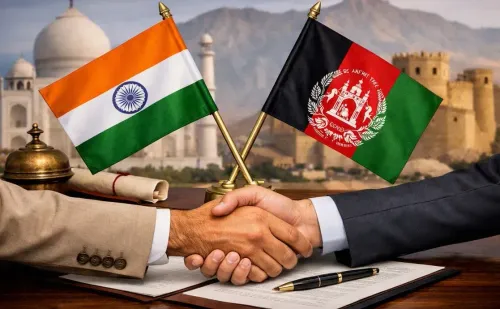
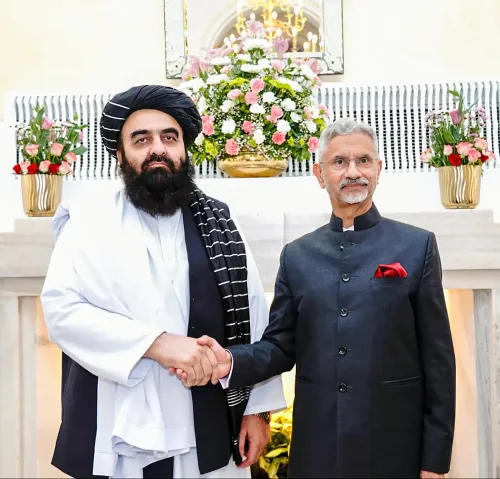
India, which has continued to provide humanitarian aid to Afghanistan, has not officially recognised the Taliban administration. New Delhi has consistently urged the formation of an inclusive government in Kabul and insisted that Afghan soil must not be used for terrorist activities against any country. Notably, according to a Washington Institute policy analysis published this month, India has moved from 'token contact to the eighth-most-frequent diplomatic partner' of the Taliban — a significant repositioning.
The same analysis observed that Iran has displaced China as Kabul's principal interlocutor, while Turkey, Qatar, and Uzbekistan occupy the tier below. Meanwhile, Russia took the most consequential formal step by becoming the only country to officially recognise the Taliban government in July 2025. Other governments have accepted Taliban-appointed diplomats without extending formal recognition.
Karzai Signals a Possible Internal Rethink
Former Afghan President Hamid Karzai has reportedly stated that girls' education and women's participation in the workforce are critical factors for Afghanistan to secure international legitimacy — remarks that hint at a possible rethink within certain sections of Kabul's political landscape.
The Washington Institute analysis cautioned, however, that 'the Taliban has learned that it can reap substantial international rewards without budging on key security and human rights issues.' It argued that the US retains leverage through instruments such as UN credentialing, Treasury Department licensing, and Central Asian project financing.
Pakistan-Afghanistan Tensions Add a Complicating Layer
The broader regional picture is further complicated by a sharp deterioration in relations between Pakistan and the Taliban-led Afghanistan. Once described as patron and proxy, the two sides have moved to open adversarial posturing, with borders reportedly closed for almost ten months. Kabul has been issuing formal demarches to Islamabad — a striking reversal for a movement that was widely described as having been bred and trained within Pakistan.
As the international community weighs how much leverage diplomacy actually confers, the next moves from Washington, New Delhi, and Beijing will be closely watched.
Point of View
The regime has extracted diplomatic normalisation and humanitarian flows without yielding on core human rights positions. The real question is whether the instruments of pressure that remain — UN credentialing, Treasury licensing, Central Asian financing — are being deployed with any coordinated intent, or whether each country is quietly managing a bilateral relationship while hoping another will do the hard work. India's quiet climb to eighth-most-frequent diplomatic partner is pragmatic but carries reputational risk if engagement produces no measurable improvement in Afghan women's conditions.
NationPress
11 Oct 2026
Frequently Asked Questions
Who is Aisha Wahab and why is she significant in the Afghanistan debate?
Aisha Wahab is a 39-year-old California lawmaker who became the first Afghan-American elected to the US House of Representatives in a special election in August 2025. She has publicly argued that diplomatic engagement with the Taliban — rather than isolation — is the most effective way to push for women's and human rights improvements in Afghanistan.
What is the Taliban's current position on women's education?
A Taliban spokesperson told the BBC that restrictions on women's education and employment must be evaluated 'through the lens of Sharia.' The spokesperson said the issue of girls' education is 'under discussions' and that 'a Sharia-based solution' is being sought, indicating no imminent policy reversal.
Has any country formally recognised the Taliban government?
Russia became the only country to formally recognise the Taliban government in July 2025. Other nations, including several that have accepted Taliban-appointed diplomats, have stopped short of extending formal diplomatic recognition.
What is India's current position on the Taliban?
India has not officially recognised the Taliban administration and continues to urge the formation of an inclusive government in Kabul. However, according to a Washington Institute analysis, India has significantly increased its diplomatic contacts and now ranks as the eighth-most-frequent diplomatic partner of the Taliban.
What leverage does the international community still hold over the Taliban?
According to a Washington Institute policy analysis, the US and its partners retain pressure points including UN credentialing, US Treasury Department licensing, and financing for Central Asian infrastructure projects. The analysis notes, however, that the Taliban has so far managed to secure international rewards without conceding on human rights or security issues.