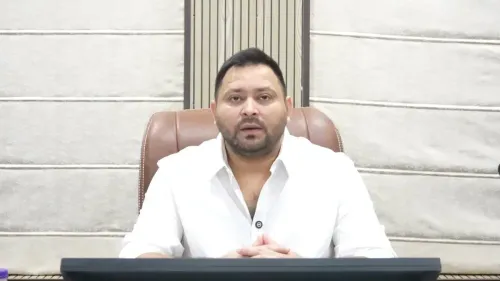
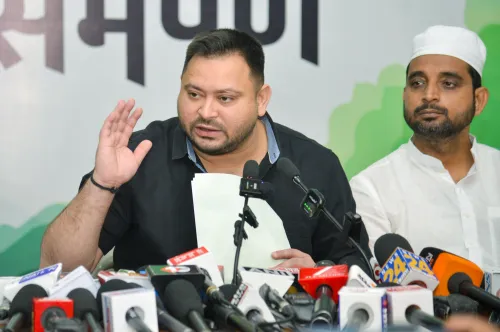
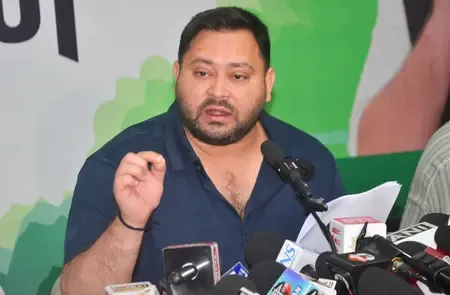
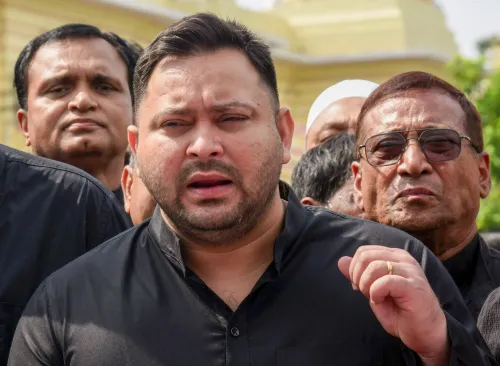
Tejashwi Yadav alleges fake voters in Bihar teacher seats
Synopsis
RJD leader Tejashwi Yadav has alleged that the BJP engineered fake voter additions in Bihar's four teacher constituencies — which together hold just 40,253 registered voters across 16 districts — ahead of upcoming Legislative Council elections, and called out the Election Commission, PM Modi, and Amit Shah.
Key Takeaways
Tejashwi Yadav alleged on October 23, 2026 that fake voters were added to Bihar's teacher and graduate constituency rolls.
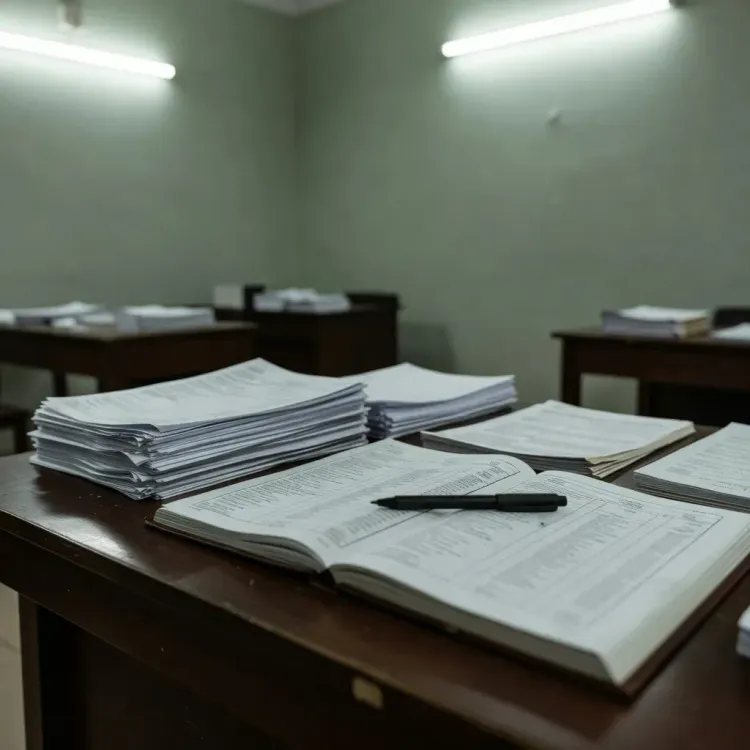
The four teacher constituencies span 16 districts and carry a combined electorate of just 40,253 voters , making ghost entries especially impactful.
Yadav directly named PM Narendra Modi , Amit Shah , and the Election Commission of India in his allegations.
Bihar's Legislative Council maintains separate graduate and teacher seats under the Representation of the People Act , a historically significant low-franchise arrangement.
The opposition is building a public record, signalling a possible formal complaint or legal challenge ahead of polls.
The Election Commission has not yet responded publicly to the voter-roll manipulation claims.
A pointed accusation landed on Friday morning when RJD leader Tejashwi Yadav alleged that the BJP has engineered fake voter registrations inside Bihar's upcoming teacher and graduate constituency elections — seats where the total electorate is so small that even a handful of ghost entries could swing a result.
In a post on X on October 23, 2026, the Leader of the Opposition in the Bihar Legislative Assembly charged that across four teacher constituencies spanning 16 districts, a total of just 40,253 registered voters exist — and that fraudulent names have been deliberately inserted into that tightly bounded roll. 'These fraudsters and their dishonesty will come to an end,' he wrote, 'because the public has now understood the thuggery and dacoity of these killers of democracy.'
Why small-franchise seats make easy targets
Bihar's Legislative Council maintains dedicated graduate and teacher constituencies under the Representation of the People Act — a colonial-era inheritance designed to give educated professionals a separate voice. These are not general-election behemoths: their voter rolls run into the tens of thousands, not millions. That arithmetic cuts both ways. A small roll means a small number of fake entries can generate an outsized electoral impact — making them, opposition leaders argue, disproportionately vulnerable to manipulation.
Tejashwi Yadav called out the Election Commission of India directly, lumping it alongside Prime Minister Narendra Modi and Union Home Minister Amit Shah in what he framed as a systemic architecture of electoral fraud. 'Chunav Aayog aur vote chori ki baisakhi ke sahare satta mein baithe' — 'sitting in power on the crutches of the Election Commission and vote theft' — was his characterisation of the central leadership.
A familiar Bihar playbook, now in a narrower arena
Allegations of inflated or bogus voter rolls have been a persistent feature of Bihar's political contest, surfacing across multiple election cycles in both assembly and council polls. Opposition parties, including the Rashtriya Janata Dal, have consistently framed such claims as evidence of structural bias in electoral administration. The BJP has not commented on the specific allegations in Yadav's post.
What gives this round an edge is the constituency math. When the total legitimate electorate for four seats across 16 districts is under 41,000 people, even a modest phantom-voter operation — if the allegations hold — would represent a significant percentage manipulation. The Election Commission now faces pressure to conduct a public roll audit before polling begins.
What the opposition wants — and what comes next
Yadav's post ends with a direct call to action: he urges readers to 'read the story of fake voters being added to teacher and graduate constituencies' — pointing to what appears to be documented material accompanying the post. The move signals a campaign to build a public record ahead of any formal complaint or legal challenge.
The Bihar teacher and graduate constituency elections remain a low-glamour but politically consequential corner of the state's democratic architecture. If the Election Commission orders a verification drive, that outcome alone would mark a win for the opposition narrative. If it doesn't, that silence becomes the story.
Point of View
Opposition parties have increasingly used social media to build parallel evidentiary records outside formal channels, pressuring institutions to act before they are seen as complicit. If the Election Commission conducts a roll verification, the RJD claims a moral victory; if it stays silent, that silence feeds the very narrative Yadav is constructing.
NationPress
23 Oct 2026
Frequently Asked Questions
What are teacher and graduate constituencies in Bihar?
Bihar's Legislative Council includes dedicated seats for registered teachers and graduates under the Representation of the People Act — a system designed to give educated professionals a separate legislative voice, with voter rolls limited to those specific professional categories.
What exactly did Tejashwi Yadav allege about Bihar's teacher constituencies?
Tejashwi Yadav alleged on October 23, 2026 that the BJP inserted fake voter names into the rolls of Bihar's four teacher constituencies, which together have just 40,253 registered voters spread across 16 districts, to manipulate the outcome of upcoming Legislative Council elections.
How many Bihar teacher constituency seats are being contested?
According to Yadav's post, four teacher constituencies and four graduate constituencies — eight Legislative Council seats in total — are due for elections in Bihar, with the four teacher seats covering 16 districts.
Has the Election Commission of India responded to the fake voter allegations in Bihar?
As of October 23, 2026, no public response from the Election Commission of India to these specific allegations has been reported. The Commission is the constitutional authority responsible for voter roll verification and oversight of Bihar council elections.
Why does adding fake voters matter more in small constituencies?
With only 40,253 total registered voters across four seats, even a small number of fraudulent entries represents a higher percentage of the electorate than in a general-election constituency of millions — potentially enough to determine a winner in a close contest.