Tejashwi Yadav visits students shot by Bihar Police, demands action
Synopsis
RJD leader Tejashwi Yadav visited student protesters injured in a Bihar Police firing on 26 July 2026, invoking constitutional protest rights and demanding immediate action against the officers responsible.
Key Takeaways
Tejashwi Yadav , Leader of the Opposition in the Bihar Legislative Assembly , visited student protesters injured by police firing on 26 July 2026 .
He demanded that the Bihar government take 'immediate action' against police personnel who opened fire on the students.
Tejashwi invoked Article 19 of the Indian Constitution, calling peaceful protest 'an essential right in a democracy.' The incident adds to a pattern of RJD criticism of the Nitish Kumar -led government on law-and-order and civil liberties grounds.
A formal magisterial or government inquiry into the firing has not been confirmed at the time of writing.
The episode is likely to be raised in the Bihar Legislative Assembly and may trigger further student mobilisation.
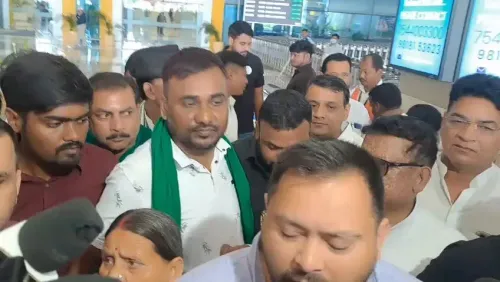
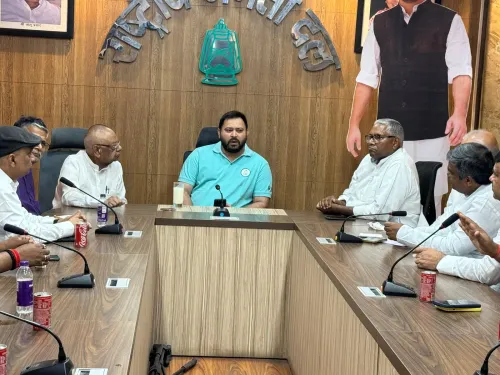
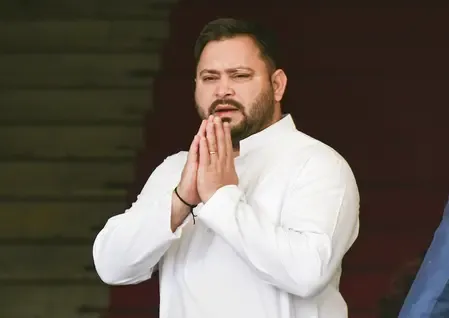
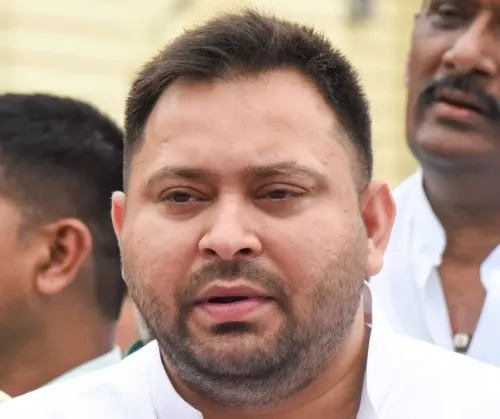
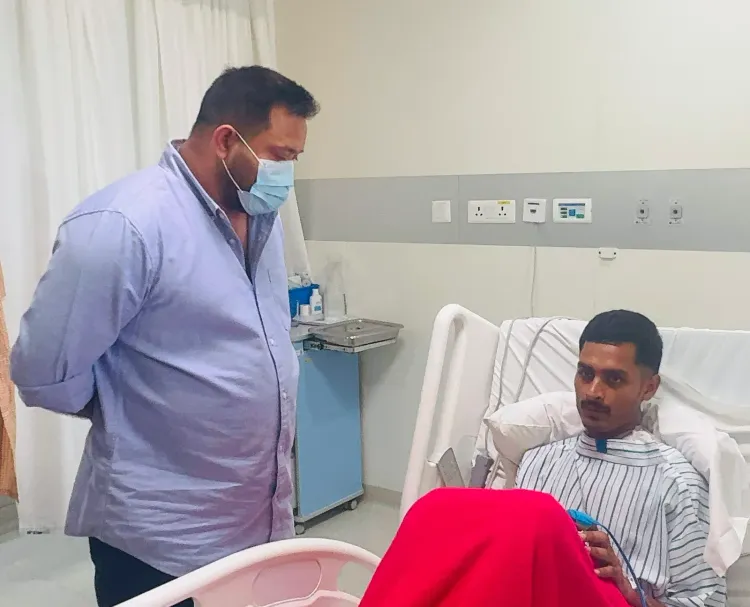
RJD leader and Leader of the Opposition Tejashwi Yadav on Sunday, 26 July 2026, visited student protesters injured by police firing, checking on their well-being and calling on the Bihar government to immediately act against the police personnel responsible for opening fire on demonstrators.
Posting photographs of his visit on X, Tejashwi wrote — translated from Hindi — 'Met student protesters injured by police bullets and enquired about their well-being. Peaceful protest is an essential right in a democracy that enables citizens to express dissent and hold autocratic power accountable. The Bihar government must take immediate action against the police personnel who fired on students.'
Context
The visit places Tejashwi at the centre of what appears to be a fresh confrontation between student demonstrators and the Bihar Police over an as-yet unspecified grievance. Student protests over education and employment concerns have been a recurring feature in Bihar, and incidents of police use of force during such demonstrations have previously drawn political and public scrutiny. Tejashwi's physical presence at the site of the injured students is a deliberate act of political solidarity, underscoring the opposition's posture on civil liberties.
In his post, Tejashwi invoked the constitutional guarantee of peaceful assembly, framing the police response as an assault on democratic rights. Article 19 of the Indian Constitution has protected the right to peaceful assembly and free expression since 1950, and it forms the standard legal reference point in such disputes.
Policy Backdrop
Bihar has been governed by Chief Minister Nitish Kumar — heading the state government and its police apparatus — for most of the period since 2005. The Rashtriya Janata Dal, founded by Lalu Prasad Yadav and now led by the Yadav family, has consistently positioned itself as a champion of social justice and civil liberties in opposition to the ruling dispensation. RJD leaders have repeatedly criticised the Nitish Kumar administration on law-and-order matters, particularly when state force is alleged to have been used against ordinary citizens or students.
The use of firearms by police against civilian protesters is among the most politically sensitive law-and-order questions in any Indian state. Under standard protocols, any instance of police firing that results in injury is expected to trigger a magisterial inquiry, though the speed and rigour of such inquiries have often been contested by opposition parties and civil society groups.
Stakeholders and Impact
The most immediate stakeholders are the student protesters who sustained bullet injuries, whose identities and the specific circumstances of the firing have not been officially confirmed at the time of writing. For the broader student community in Bihar, the incident raises questions about the space available for peaceful demonstration. For the Bihar Police, the episode invites scrutiny of the orders under which force was deployed and whether standard protocols were followed.
Opposition parties beyond the RJD are likely to amplify the issue, and the incident may feature in proceedings of the Bihar Legislative Assembly, where Tejashwi Yadav leads the opposition bench. Civil liberties organisations and student unions are potential further voices demanding accountability.
What's Next
The key development to watch is whether the Bihar government orders a formal inquiry — magisterial or otherwise — into the firing, and whether the Chief Minister's office issues any public statement on the matter. Tejashwi's demand for 'immediate action' (avilamba karvaai) against the personnel involved sets a clear political benchmark against which the government's response will be measured. Further student mobilisation around the underlying grievance, and possible floor proceedings in the assembly, remain likely pressure points in the days ahead.
Point of View
Forcing the ruling dispensation to either act or absorb the political cost of inaction. By anchoring his statement in Article 19, he elevates a law-and-order episode into a constitutional rights argument — harder for the government to dismiss as routine political criticism. The incident fits a broader arc in which Bihar's opposition has persistently used state use-of-force episodes to contest the Nitish Kumar administration's governance narrative. How swiftly the Bihar government responds — or fails to — will determine whether this becomes a sustained political liability heading into the next assembly session.
NationPress
26 Jul 2026
Frequently Asked Questions
Why did Tejashwi Yadav visit student protesters in Bihar?
Tejashwi Yadav visited student protesters who were injured in a police firing to check on their well-being and to publicly demand that the Bihar government take immediate action against the police personnel responsible.
What did Bihar Police do to the student protesters?
According to Tejashwi Yadav's post on X, Bihar Police opened fire on student protesters, injuring several of them. The specific circumstances and location of the firing had not been officially confirmed at the time of writing.
What action has Tejashwi Yadav demanded from the Bihar government?
He has demanded that the Bihar government immediately act against the police personnel who fired on the students, framing the demand as a matter of constitutional rights and democratic accountability.
Is it legal for police to fire on peaceful protesters in India?
No. Article 19 of the Indian Constitution guarantees the right to peaceful assembly and expression. Police use of firearms against peaceful demonstrators would be subject to legal scrutiny, and any such incident is expected to trigger a magisterial inquiry under standard protocols.
Who is in charge of Bihar Police?
Bihar Police functions under the state government headed by Chief Minister Nitish Kumar , who has governed Bihar for most of the period since 2005 and whose administration oversees the state's law-and-order apparatus.