CM Fadnavis: ₹452 Crore Aid to 57,000 Patients via Relief Fund
Synopsis
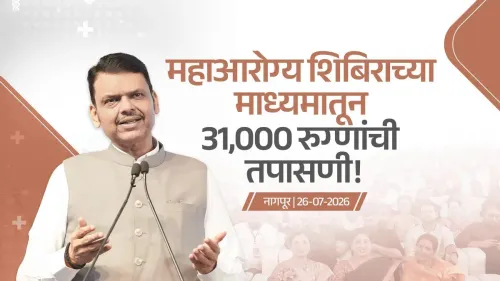
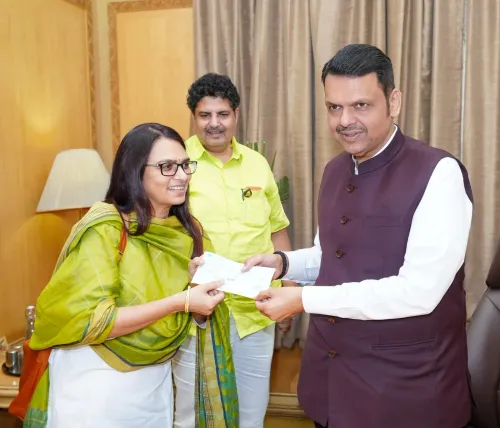
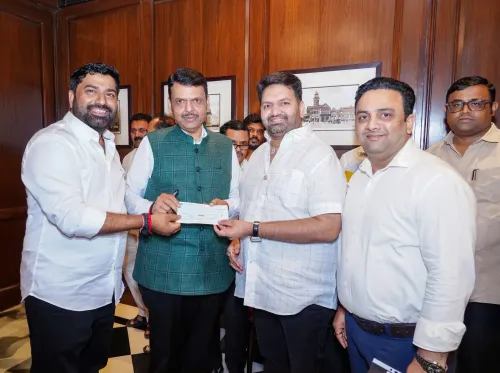
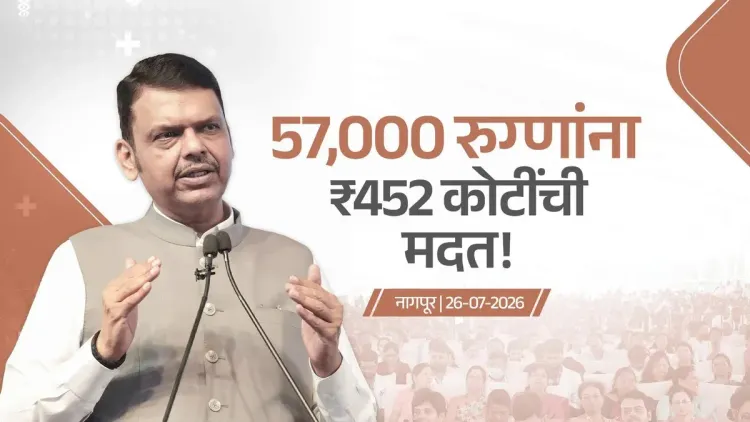
Maharashtra CM Devendra Fadnavis, speaking at the Maha Arogya Shibir inauguration in Nagpur on 26 July 2026, revealed that the Mukhyamantri Sahayata Nidhi has disbursed ₹452 crore to nearly 57,000 patients over the past one-and-a-half years, underscoring the state's push to reduce out-of-pocket healthcare costs.
Key Takeaways
The Mukhyamantri Sahayata Nidhi has provided ₹452 crore in financial assistance over the past one-and-a-half years .
Nearly 57,000 patients across Maharashtra have benefited from the relief fund in this period.
The announcement was made by CM Devendra Fadnavis at the inauguration of the Maha Arogya Shibir in Nagpur on 26 July 2026 .
The fund targets patients facing high medical costs not fully covered by central schemes like Ayushman Bharat .
Further district-level Maha Arogya Shibirs are expected to follow across Maharashtra.
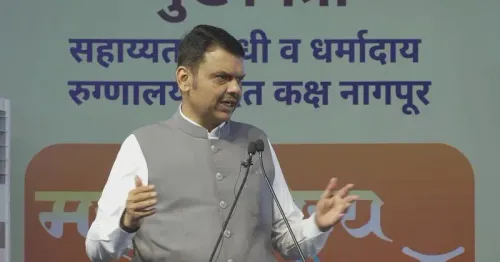
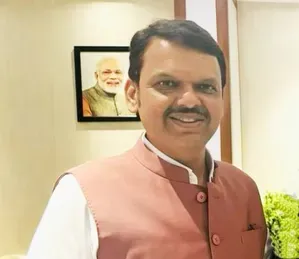
Maharashtra Chief Minister Devendra Fadnavis announced on Sunday, 26 July 2026, that the state government's Mukhyamantri Sahayata Nidhi has provided financial assistance of ₹452 crore to nearly 57,000 patients over the past one-and-a-half years. The announcement was made at the inauguration of the Maha Arogya Shibir in Nagpur.
Context
Addressing the health camp inauguration, CM Fadnavis stated — in both Marathi and Hindi — that the Chief Minister's Relief Fund had reached approximately 57,000 beneficiaries since its recent operational phase began. In his words: 'Mukhyamantri Sahayata Nidhi ke madhyam se pichhle dedh varsh mein lagbhag 57,000 marizon ko ₹452 crore ki aarthik sahayata pradan ki gayi' ('Through the Chief Minister's Assistance Fund, in the past one-and-a-half years, approximately 57,000 patients have been provided financial assistance of ₹452 crore'). The event, held in Nagpur — Maharashtra's winter capital — served as a platform to highlight the state's outreach in healthcare financing.
Policy Backdrop
The Mukhyamantri Sahayata Nidhi is a long-standing Maharashtra government mechanism designed to cover high out-of-pocket medical expenses for patients suffering from serious illnesses, particularly those from low-income households. The fund operates alongside central government schemes such as Ayushman Bharat, filling gaps that national programmes do not fully address. Maharashtra has periodically revised the fund's corpus and eligibility criteria across successive governments to widen its reach.
The Maha Arogya Shibir initiative pairs the relief fund's financial outreach with on-ground medical check-ups, treatment support, and health awareness drives across districts. Such camps are especially targeted at regions with limited access to tertiary care, making Nagpur — a hub for eastern Maharashtra — a strategic venue for the launch.
Stakeholders and Impact
The primary beneficiaries of the Mukhyamantri Sahayata Nidhi are patients requiring financial aid for expensive medical treatments and their families, many of whom fall outside the formal insurance net. An average disbursement of roughly ₹79,000 per patient — derived from the stated figures — suggests the fund is addressing mid-to-high-cost treatment needs rather than routine care. Low-income families in both urban and rural Maharashtra stand to benefit most from the scheme's continued expansion.
Health policy advocates have long argued that state-level relief funds are critical for bridging the financing gap in India's public health architecture. The scale of disbursement cited by CM Fadnavis positions Maharashtra as one of the more active states in deploying such funds at volume.
What's Next
The government is expected to roll out further district-level Maha Arogya Shibirs across Maharashtra in the coming months, extending the camp model beyond Nagpur. Any supplementary budget allocations for the Mukhyamantri Sahayata Nidhi in the next state fiscal cycle will be a key indicator of the administration's commitment to scaling the programme. The Nagpur inauguration signals that health outreach will remain a visible governance priority for the Fadnavis administration heading into the next legislative session.
Point of View
000 patients in eighteen months — positions the Mukhyamantri Sahayata Nidhi as a significant instrument in Maharashtra's healthcare financing architecture, not merely a symbolic fund. By anchoring the announcement at a public health camp in Nagpur, CM Fadnavis is reinforcing a pattern of high-visibility welfare delivery that serves both governance and political communication goals. The move fits a broader BJP state-government playbook of pairing welfare metrics with outreach events ahead of legislative sessions. Whether the fund's corpus is expanded in the next budget will be the real test of institutional commitment beyond the optics.
NationPress
26 Jul 2026
Frequently Asked Questions
What is the Mukhyamantri Sahayata Nidhi in Maharashtra?
The Mukhyamantri Sahayata Nidhi is a Maharashtra government relief fund that provides financial assistance to patients facing high medical costs for serious illnesses, especially those from low-income households who are not fully covered by central health schemes.
How many patients have benefited from the Maharashtra CM relief fund?
According to CM Devendra Fadnavis, nearly 57,000 patients have received financial assistance through the Mukhyamantri Sahayata Nidhi over the past one-and-a-half years.
How much money has been disbursed under the Mukhyamantri Sahayata Nidhi?
CM Fadnavis stated that ₹452 crore has been disbursed through the fund in the past one-and-a-half years.
What is the Maha Arogya Shibir?
The Maha Arogya Shibir is a Maharashtra state health camp initiative that provides medical check-ups, treatment support, and health awareness in multiple districts, particularly in areas with limited access to tertiary care.
Where was the Maha Arogya Shibir inaugurated by CM Fadnavis?
CM Devendra Fadnavis inaugurated the Maha Arogya Shibir in Nagpur, Maharashtra's winter capital, on 26 July 2026.