CM Revanth Reddy, Fadnavis agree on panel for Tummidihatti barrage FRL
Synopsis
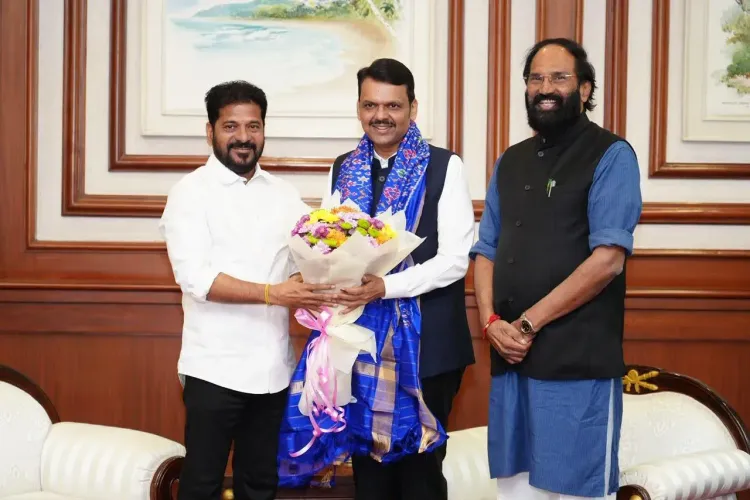
Telangana CM A. Revanth Reddy and Maharashtra CM Devendra Fadnavis agreed on 26 October 2026 to set up a joint Committee of Officials to examine raising the FRL of the Tummidihatti barrage on the Pranahita river, a move aimed at expanding irrigation for tribal communities in erstwhile Adilabad district.
Key Takeaways
Revanth Reddy held talks with Devendra Fadnavis on 26 October 2026 over raising the FRL height of the Tummidihatti barrage on the Pranahita river.
Both states agreed to form a Committee of Officials to examine technical issues, including the extent of land submergence.
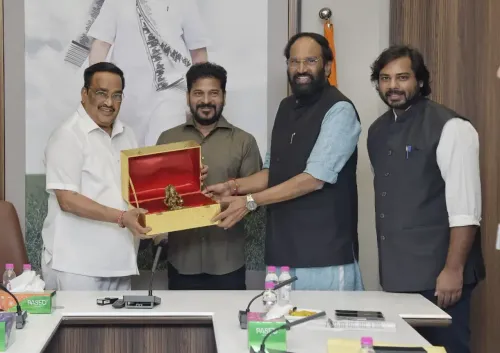
Telangana Irrigation Minister Uttam Kumar Reddy made a detailed technical presentation of Telangana's case before senior officials of both states.
Fadnavis assured he would work 'in larger national interest' to support the project while protecting Maharashtra's interests.
The project is intended to benefit tribal communities in the erstwhile Adilabad district , one of Telangana's historically under-served regions.
Inter-state coordination on Godavari-basin projects has been ongoing since Telangana's formation in 2014 , with submergence disputes being a recurring sticking point.
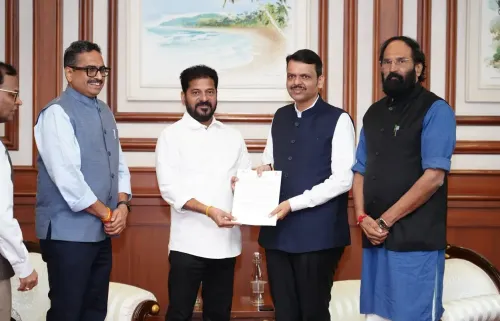
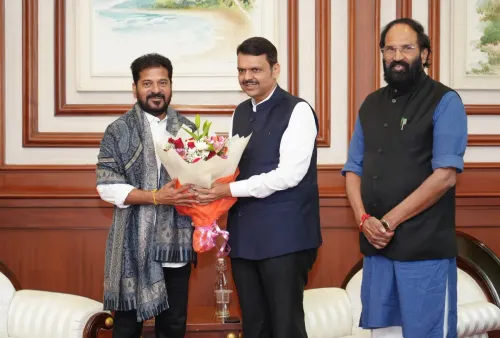
A water-sharing deadlock that has shadowed Telangana's tribal heartland for years moved closer to resolution on Monday, 26 October 2026, when Telangana Chief Minister A. Revanth Reddy held what he described as 'very productive talks' with Maharashtra Chief Minister Devendra Fadnavis in a bid to raise the Full Reservoir Level (FRL) of the Tummidihatti barrage on the Pranahita river.
What the two chief ministers decided
Both sides have agreed to constitute a Committee of Officials to examine key technical questions — foremost among them, the extent of land that would be submerged if the FRL height is increased. The committee framework is a concrete outcome: it converts a political handshake into a structured, time-bound process with engineers and bureaucrats from both states at the table.
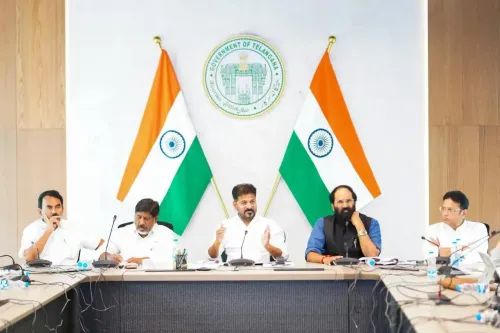
Telangana Irrigation Minister Uttam Kumar Reddy led the technical presentation, laying out the state's case in detail before senior officials from both governments. Revanth Reddy noted that Fadnavis gave the proposal 'a big heart' and assured Telangana that, even while protecting Maharashtra's interests, he would work 'in larger national interest' to help transform lives — particularly of tribal communities in the erstwhile Adilabad district.
Why Tummidihatti matters to Adilabad's tribes
The Tummidihatti barrage is a proposed storage structure designed to channel Godavari-basin water into the dry, mineral-rich plateau of what was once undivided Adilabad — a region home to significant Adivasi populations who have historically depended on erratic rainfall. Raising the FRL would increase the barrage's storage capacity and expand the irrigable command area, potentially transforming the agricultural economy of one of Telangana's more under-served districts.
The catch — and the reason this has remained unresolved since Telangana's formation in 2014 — is that higher storage means more land inundated, some of it potentially in Maharashtra. Mapping that submergence precisely, validating whose land is affected, and negotiating compensation or mitigation is exactly the mandate the new committee will carry.
Interstate water politics on the Godavari
Bilateral talks between Telangana and Maharashtra over Godavari-basin projects are neither new nor simple. The river system sustains agriculture across both states, and every proposal to augment storage upstream triggers anxieties downstream — and across borders. What distinguishes today's meeting is the explicit political agreement at the chief-ministerial level: a BJP-ruled Maharashtra and a Congress-ruled Telangana finding enough common ground to move from disagreement to a joint technical process. That cross-party cooperation, even as both states calculate their own gains, is the real headline.
The committee's work will now determine whether the FRL revision is technically and legally feasible, how much submergence Maharashtra must absorb, and what safeguards tribal landowners on both sides receive. Its recommendations will feed into any eventual reference to the Godavari River Management Board or the Union government.
What comes next for Adilabad's farmers
The agreement is a beginning, not a delivery. The Committee of Officials must still meet, commission surveys, model submergence scenarios, and table a report before either state government can commit to a revised FRL figure. Yet for Adilabad's farming and tribal communities, the political signal is significant: two rival-party chief ministers publicly acknowledged the project's merit and created a mechanism to resolve its thorniest obstacle.
If the committee's findings support a higher FRL — and if Maharashtra's government accepts the submergence trade-off — Tummidihatti could eventually become the irrigation anchor that Adilabad has long waited for. That 'if' now has a formal process behind it.
Point of View
Which gives Fadnavis political cover to agree without appearing to concede ground. The committee mechanism is savvy: it defers the hardest number — exactly how much Maharashtra land gets submerged — to technocrats, buying both chief ministers room to manage their own constituencies. Whether the committee delivers or gets bogged down will signal how seriously both governments treat cooperative water governance ahead of the next round of state elections.
NationPress
26 Oct 2026
Frequently Asked Questions
What is the Tummidihatti barrage and why is it important?
The Tummidihatti barrage is a proposed structure on the Pranahita river in the Godavari basin, designed to increase irrigation water storage for Telangana, particularly for tribal and farming communities in the erstwhile Adilabad district. Raising its Full Reservoir Level (FRL) would expand the command area but could also submerge land, some of it potentially in Maharashtra.
What did Revanth Reddy and Fadnavis agree to on 26 October 2026?
Both chief ministers agreed to set up a joint Committee of Officials from Telangana and Maharashtra to examine technical issues related to raising the FRL height of the Tummidihatti barrage, including assessing the extent of land that would be submerged.
What role did Uttam Kumar Reddy play in the Tummidihatti talks?
Telangana Irrigation Minister Uttam Kumar Reddy made a detailed technical presentation to Maharashtra CM Fadnavis and senior officials from both states, explaining Telangana's case for increasing the FRL height of the Tummidihatti barrage.
Which communities will benefit if the Tummidihatti FRL is raised?
Tribal communities and farmers in the erstwhile Adilabad district of Telangana stand to be the primary beneficiaries, as higher FRL would increase water storage available for irrigation in one of the state's historically under-served regions.
How long has the Tummidihatti inter-state issue been pending?
Inter-state discussions on Godavari-basin projects, including the Tummidihatti barrage, have continued since Telangana's formation as a separate state in 2014, with submergence of land across state borders being a persistent technical and political sticking point.