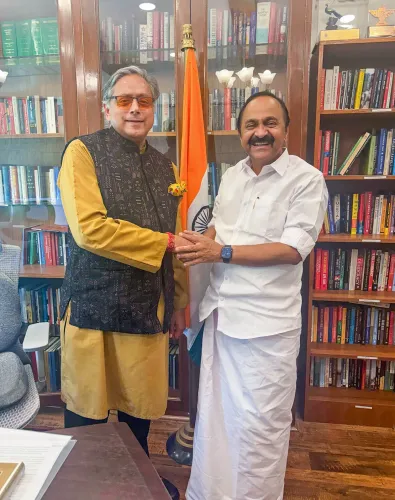
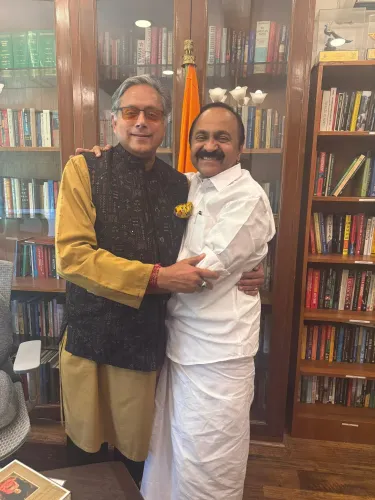
Tharoor discusses Sree Narayana Guru book with Jamia scholar
Synopsis
Congress MP Dr. Shashi Tharoor spoke with a Jamia Millia Islamia scholar about his book on Sree Narayana Guru, exploring how the 19th-century Kerala reformer's message of one caste, one religion, one God resonates with North Indian audiences and retains universal relevance.
Key Takeaways
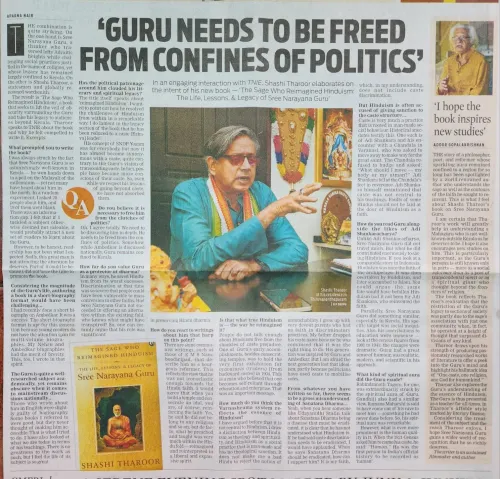
Shashi Tharoor was interviewed by an assistant professor at Jamia Millia Islamia, New Delhi about his book #TheSageWhoReimaginedHinduism on 5 July 2026 .
The discussion focused on understanding Sree Narayana Guru 's teachings from a North Indian perspective, highlighting the reformer's cross-regional appeal.
Sree Narayana Guru (1856–1928) preached 'one caste, one religion, one God' and performed the landmark Aruvippuram temple consecration in 1888 .
Jamia Millia Islamia is a central university founded in 1920 , known for its humanities and social science programmes.
Tharoor previously explored Hindu reformist thought in his 2018 book Why I Am a Hindu , making this new volume part of a continuing literary arc.
The interview signals potential academic interest in the book at central universities beyond Kerala.
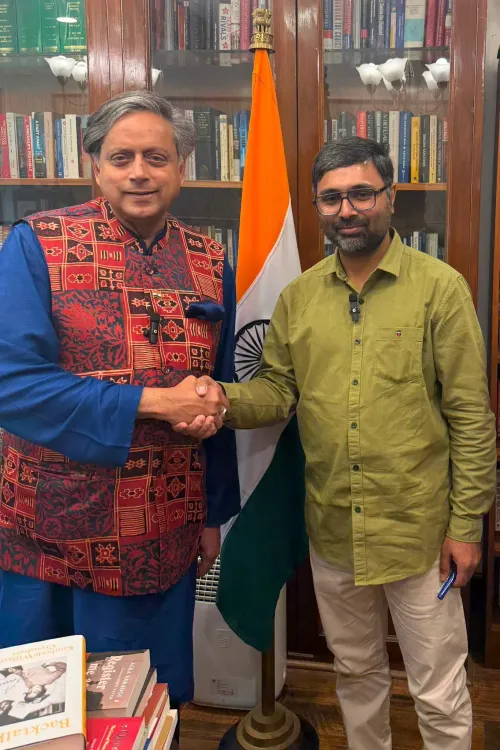
Congress MP Dr. Shashi Tharoor on Sunday, 5 July 2026, shared that he had a conversation with an assistant professor at Jamia Millia Islamia in New Delhi, who interviewed him about his book on Sree Narayana Guru — a discussion that centred on how the 19th-century Kerala reformer's teachings resonate with those raised outside the state.
Context
Tharoor noted on X that the exchange with Asst. Prof. Mohammad Farhan (handle @mohdfar123) ranged widely, with particular attention to 'how the Guru's teachings may be understood through the perspective of someone raised in North India.' He described it as 'a stimulating exchange on the enduring relevance and universal appeal of Sree Narayana Guru's message,' tagging the discussion under #TheSageWhoReimaginedHinduism — the title of his book on the subject.
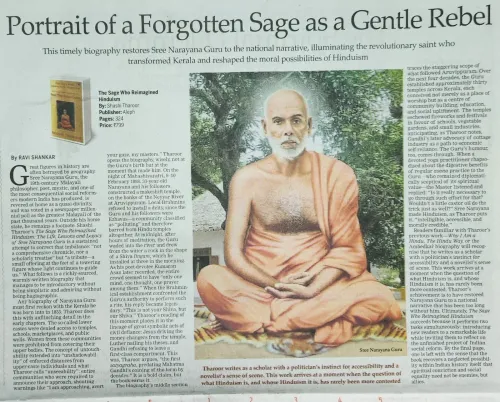
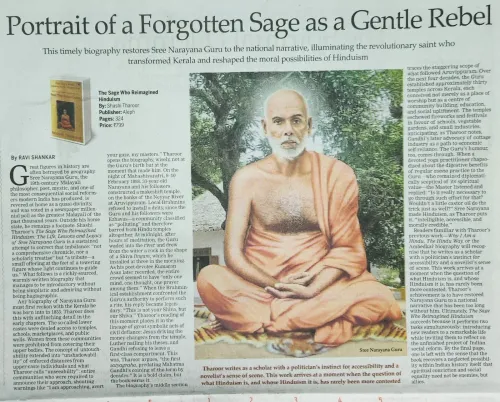
The book examines the life and philosophy of Sree Narayana Guru (1856–1928), the Kerala social reformer whose foundational teaching — 'oru jati, oru matam, oru daivam manushyanu' (one caste, one religion, one God for humanity) — challenged entrenched caste hierarchies in colonial-era Kerala.
Policy Backdrop
Sree Narayana Guru's Aruvippuram temple consecration of 1888 was a landmark act of social defiance: he consecrated a Shiva temple and opened its priesthood to all castes at a time when such access was strictly restricted by birth. That single act seeded a broader movement for caste equality and educational access across Kerala.
Tharoor has engaged with Hindu reformist thought in prior works, including his 2018 book Why I Am a Hindu, which explored the personal and political dimensions of a pluralist, reform-oriented Hinduism. #TheSageWhoReimaginedHinduism extends that inquiry by focusing on a single regional figure whose influence Tharoor argues carries national and universal weight.
Jamia Millia Islamia, the New Delhi central university founded in 1920 during the freedom movement, has strong humanities and social science departments and has hosted numerous public-intellectual exchanges bridging regional and national cultural traditions.
Stakeholders and Impact
The conversation signals growing academic interest in interpreting southern India's social-reform traditions for audiences in North India and beyond. For scholars of religion, caste, and constitutional values, Sree Narayana Guru's philosophy offers a home-grown intellectual framework that predates and parallels many post-Independence egalitarian ideals.
Indian parliamentarians from Kerala have long invoked regional reformers — from Narayana Guru to Ayyankali — to underscore messages of social equality in national discourse. Tharoor's literary engagement continues that tradition, using the platform of a sitting MP and public intellectual to bring a figure central to Kerala's identity into wider national conversation.
What's Next
The Jamia interview suggests the book is attracting academic attention at central universities, potentially setting the stage for panel discussions or lecture series at institutions outside Kerala. Any such events could amplify the book's cross-regional reach and may draw references in cultural or social-justice debates within Parliament. Readers and scholars of Hindu philosophy, caste reform, and Indian intellectual history are the primary audience Tharoor appears to be cultivating with this outreach.
Point of View
Tharoor is staking a claim that southern reform movements deserve equal standing in India's broader civilisational conversation. This fits a longer pattern where Kerala MPs use literary and academic platforms to insert regional progressive thought into mainstream political and cultural discourse. The exercise also reinforces Tharoor's positioning as a parliamentarian-intellectual who operates as comfortably in seminar rooms as in the Lok Sabha.
NationPress
5 Jul 2026
Frequently Asked Questions
What is Shashi Tharoor's book 'The Sage Who Reimagined Hinduism' about?
It is a book by Congress MP Dr. Shashi Tharoor on the life and philosophy of Sree Narayana Guru, the 19th-century Kerala social reformer who preached one caste, one religion, one God and challenged caste-based restrictions on temple access and priesthood.
Who was Sree Narayana Guru?
Sree Narayana Guru (1856–1928) was a Kerala-born spiritual leader and social reformer who consecrated temples open to all castes, most famously at Aruvippuram in 1888, and whose teachings laid the foundation for a broad egalitarian movement in Kerala.
What is Jamia Millia Islamia?
Jamia Millia Islamia is a central university in New Delhi founded in 1920 during India's freedom movement, with strong departments in humanities, social sciences, and education.
Has Shashi Tharoor written other books on Hinduism?
Yes. Tharoor published 'Why I Am a Hindu' in 2018, which explored the personal and political dimensions of a pluralist, reform-oriented Hinduism, making his book on Sree Narayana Guru part of a continuing literary focus on Hindu reformist thought.
Why is Sree Narayana Guru relevant to North India?
Tharoor's discussion with the Jamia scholar examined how the Guru's core message — one caste, one religion, one God — carries universal appeal that transcends regional boundaries, offering a home-grown Indian framework for social equality that resonates beyond Kerala.