Tharoor flies to Kathmandu amid Nepal flash flood crisis
Synopsis
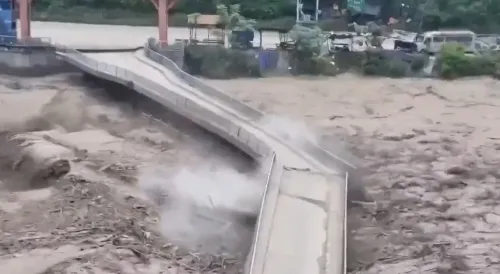
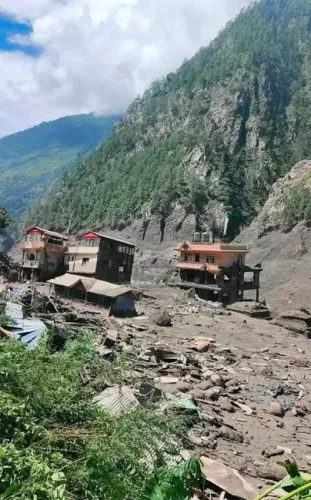
A sudden, severe flash flood struck Nepal's Rasuwa district near the Tibet border, causing catastrophic destruction along the Bhote Koshi river. Congress MP Dr. Shashi Tharoor, flying to Kathmandu at the time, disclosed he was unaware of the disaster mid-flight, drawing attention to the recurring vulnerability of Himalayan border communities.
Key Takeaways
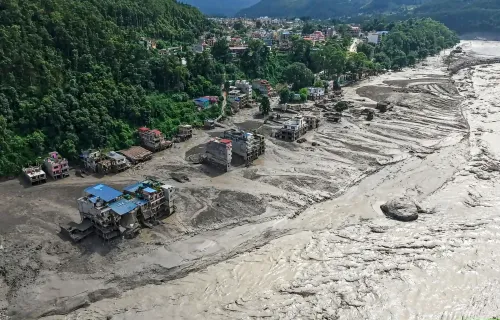
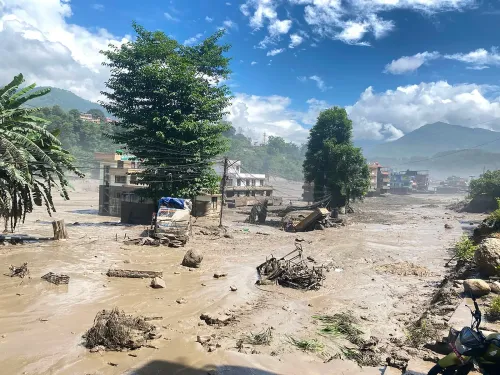
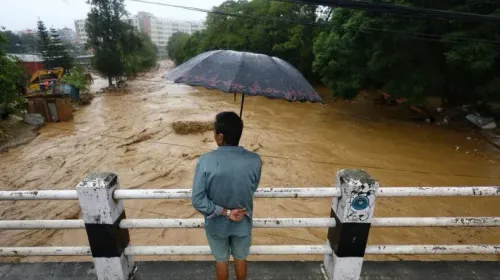
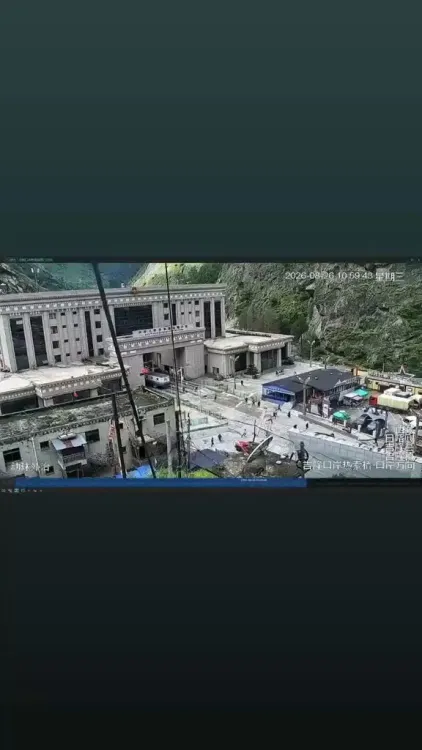
A severe flash flood struck Rasuwa district in northern Nepal near the Tibet border , causing widespread destruction.
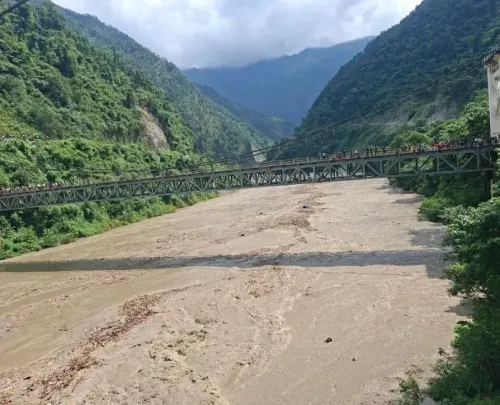
The Bhote Koshi river , a transboundary river originating near the Nepal-China frontier , was the primary flood channel.
Shashi Tharoor was en route to Kathmandu and learned of the disaster only after the fact.
Rasuwa district is one of Nepal's most hydrologically exposed zones, frequently battered by Himalayan cloudbursts and glacial events.
Cross-border early warning coordination between Nepal and neighboring countries remains an ongoing challenge in disaster management.
A wall of water tore through northern Nepal's Rasuwa district near the Tibet border, sending a severe flash flood crashing down the Bhote Koshi river and leaving a trail of widespread destruction — even as Congress MP Dr. Shashi Tharoor was mid-air, bound for Kathmandu, unaware of the catastrophe unfolding in the hills.
A flood Tharoor learned of only mid-flight
Tharoor disclosed on Thursday, August 27, 2026 that he had departed for the Nepali capital 'blissfully unaware of the drama that had taken place in the hills.' His post described the event as 'a severe, sudden flash flood' that caused 'catastrophic damage' and 'widespread destruction along the Bhote' — referring to the Bhote Koshi, the transboundary river that originates near the Nepal-China frontier and courses through steep Himalayan valleys into densely settled lower reaches.
Why Bhote Koshi floods strike without warning
The Bhote Koshi has a long and violent history. Rising in high-altitude terrain near the Tibet border, the river is acutely vulnerable to sudden cloudbursts and glacial processes that can unleash walls of water downstream with little warning. Rasuwa district, where the flood struck, sits in one of Nepal's most seismically and hydrologically exposed corridors — a zone that disaster management experts have repeatedly flagged as a high-risk flashpoint. Communities along the river have faced repeated displacement from similar events over the decades.
Cross-border early warning mechanisms between Nepal and neighboring countries have been a recurring subject in disaster management dialogues, but coordination gaps remain a persistent challenge when floodwaters move faster than alerts.
Rasuwa's vulnerability in a warming Himalaya
Flash floods in Nepal's high-altitude border zones are not anomalies — they are an accelerating pattern. Intense cloudbursts in the Himalayan region, compounded by glacial dynamics, have repeatedly battered rivers flowing from the Nepal-China frontier into lower valleys. Rasuwa district and the Bhote Koshi corridor sit at the sharp end of this exposure. Nepal's government and international partners continue to monitor relief needs and the adequacy of transboundary flood alert systems in the aftermath of such events.
For the communities of Rasuwa and the Bhote Koshi valley, the flood was not a news item — it was the sudden, total erasure of what they had built.
Point of View
While personal in tone, inadvertently spotlights a structural gap: even informed, well-connected travelers can be blindsided by Himalayan flash floods, underscoring how inadequate early warning dissemination remains across the region. The Bhote Koshi corridor's recurring disasters sit at the intersection of climate vulnerability and diplomatic complexity — a transboundary river that demands coordinated India-Nepal-China disaster protocols that are still far from operational. For Indian policymakers, Nepal's flood exposure is not a distant humanitarian concern but a shared Himalayan risk with direct implications for border communities and bilateral relations.
NationPress
27 Aug 2026
Frequently Asked Questions
What happened in Rasuwa district Nepal in 2026?
A severe, sudden flash flood struck Rasuwa district in northern Nepal near the Tibet border , causing catastrophic damage and widespread destruction along the Bhote Koshi river .
What is the Bhote Koshi river?
The Bhote Koshi is a transboundary river originating near the Nepal-Tibet border , known for sudden, destructive flooding that regularly impacts downstream settlements in Nepal.
Why did Shashi Tharoor go to Kathmandu?
Dr. Shashi Tharoor disclosed he flew to Kathmandu on August 26, 2026 , though he did not specify the purpose of the visit in his post.
Why does Rasuwa district flood so often?
Rasuwa district sits in a high-altitude Himalayan corridor near the Nepal-China frontier , making it acutely vulnerable to sudden cloudbursts and glacial processes that send floodwaters down steep river valleys with little warning.
Does India coordinate with Nepal on Himalayan flood warnings?
Cross-border early warning mechanisms between Nepal and neighboring countries, including India , have been discussed in past disaster management dialogues, but coordination gaps remain a persistent challenge.