Tharoor Meets Kerala Culture Minister on IFFK, Bharat Bhavan
Synopsis
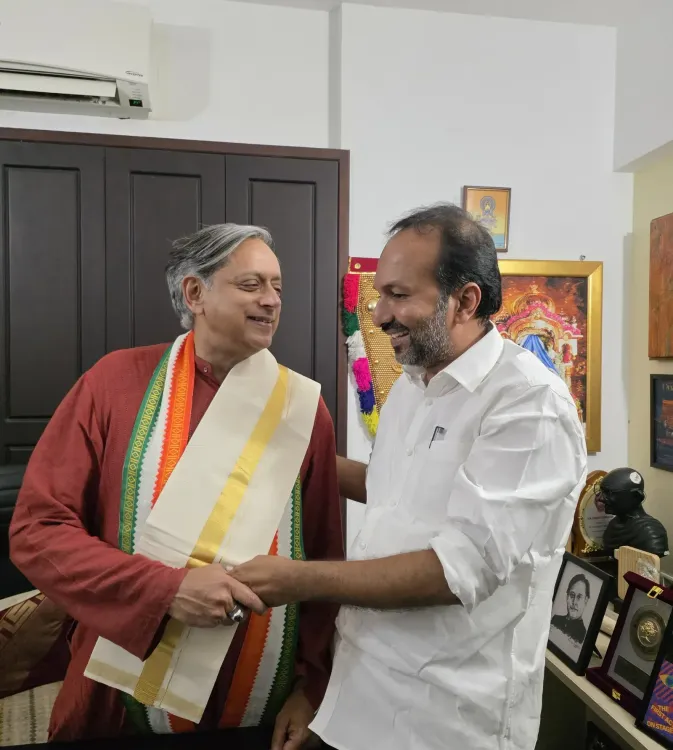
Congress MP Dr. Shashi Tharoor met Kerala Culture Minister P.C. Vishnunadh on 19 July 2026, discussing the future of the International Film Festival of Kerala, the functioning of Bharat Bhavan, the Kerala Media Academy, and the need for broader expertise on state advisory committees for Tourism and Culture.
Key Takeaways
Shashi Tharoor held a late-evening meeting with Kerala Culture Minister P.C.
Vishnunadh on 19 July 2026 in Thiruvananthapuram.
The agenda included future arrangements for the International Film Festival of Kerala (IFFK) , which Tharoor called 'a jewel in the capital city's cultural calendar.' Bharat Bhavan , a state-run cultural centre in Tharoor's constituency, was also reviewed during the meeting.
The two discussed the Kerala Media Academy and broader state cultural and tourism policy matters.
Tharoor advocated for drawing on 'a cross-section of expertise' in constituting Advisory Committees on Tourism and Culture .
No specific decisions or outcomes from the meeting have been publicly announced as yet.
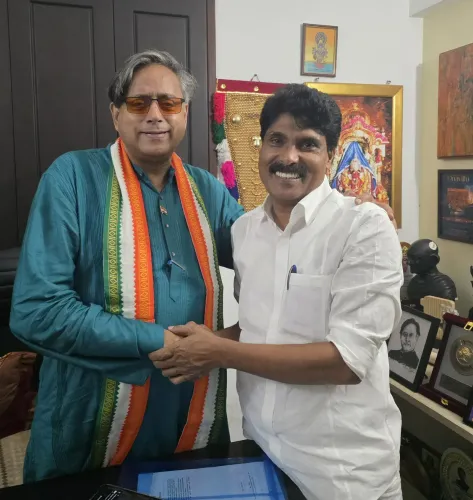
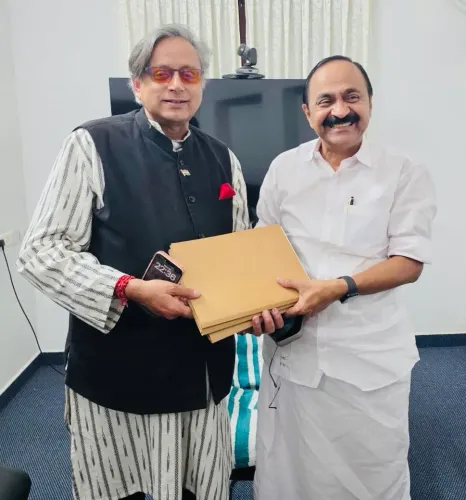
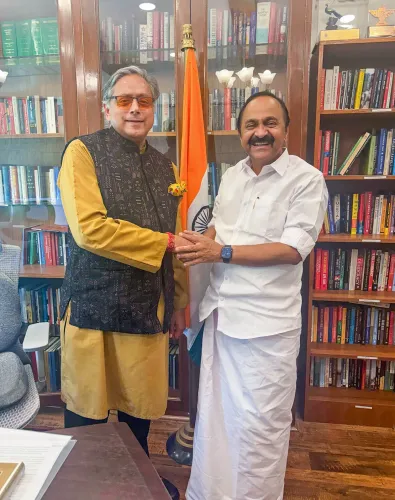
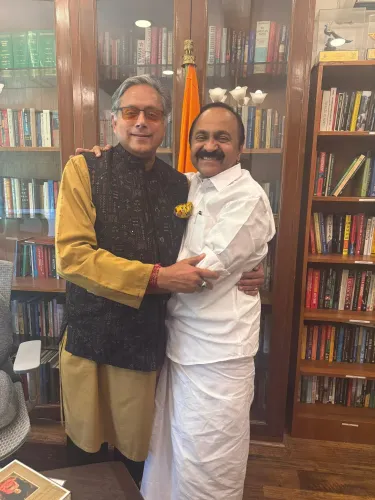
Congress MP Dr. Shashi Tharoor met Kerala Culture Minister P.C. Vishnunadh on Sunday, 19 July 2026, in what Tharoor described as an 'excellent, if delayed' meeting — delayed, he noted with characteristic wit, because he had to be rescued from a lift before the discussions could begin.
Context
The meeting, which stretched well past 9 pm, covered a range of cultural and administrative matters falling under the state government's purview and directly affecting Thiruvananthapuram, Tharoor's constituency. The minister, Tharoor said, 'graciously postponed his departure from the city' to accommodate the extended wait.
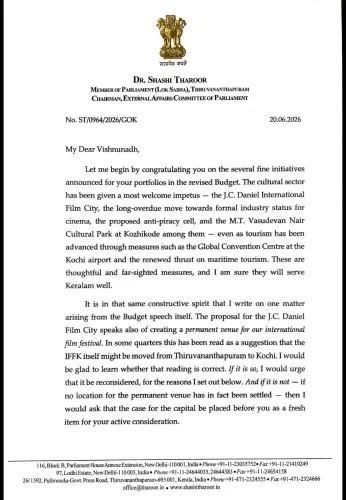
Among the subjects discussed was the future of the International Film Festival of Kerala (IFFK), which Tharoor described as 'a jewel in the capital city's cultural calendar.' The annual festival, launched in 1996, is organised by the state government and has grown into one of India's most prominent international film events, drawing filmmakers, critics, and audiences from across the country and abroad.
Policy Backdrop
The two also reviewed the work of Bharat Bhavan, a state-run cultural centre located within Tharoor's constituency and engaged in arts and heritage activities. The centre's functioning and resource needs appear to have been a specific agenda item, reflecting the MP's active interest in constituency-level cultural infrastructure.
On a broader plane, the discussion extended to the Kerala Media Academy, an autonomous institution under the state government responsible for media training and professional development. Tharoor also raised the need to draw upon 'a cross-section of expertise' when constituting advisory committees on Tourism and Culture — a point that touches on a recurring administrative debate about inclusivity and domain knowledge in state policy bodies.
Stakeholders and Impact
The meeting is significant for several communities. Film professionals and festival organisers have a direct stake in the future arrangements for IFFK, particularly around venue, funding, and programming decisions that shape the festival's international standing. Media educators and journalism practitioners look to the Kerala Media Academy for professional development pathways, making its governance a matter of professional concern.
The broader cultural ecosystem of Thiruvananthapuram — from visual artists using Bharat Bhavan's facilities to tourism stakeholders who benefit from the footfall that IFFK generates — stands to be affected by the policy directions discussed at Sunday's meeting. Kerala has long positioned its film festivals and media institutions as instruments of both cultural promotion and tourism development.
What's Next
Concrete outcomes from the meeting have not been publicly documented, and specific decisions on any of the agenda items remain to be announced. Observers will watch for the finalisation of arrangements and programming for the next edition of IFFK, as well as the publication of new advisory committee memberships for Tourism and Culture. Tharoor's public account of the meeting signals that the MP intends to remain engaged with these state-level processes, even where the subjects formally fall outside Parliament's direct jurisdiction.
Point of View
Even on matters constitutionally assigned to the state government. Tharoor's push for a 'cross-section of expertise' on advisory committees signals a broader concern about insider capture of policy bodies — a tension visible across India's arts and media institutions. His public framing of IFFK as a civic jewel also reflects the political value of cultural flagships in a constituency like Thiruvananthapuram, where identity, tourism, and soft power intersect. The meeting, though routine in form, carries implications for how Kerala balances administrative continuity with openness to fresh expertise in its cultural governance.
NationPress
20 Jul 2026
Frequently Asked Questions
What did Shashi Tharoor discuss with the Kerala Culture Minister?
Dr. Shashi Tharoor discussed future arrangements for the International Film Festival of Kerala, the functioning of Bharat Bhavan in his constituency, the Kerala Media Academy, and the need for broader expertise on state advisory committees for Tourism and Culture.
What is the International Film Festival of Kerala?
The International Film Festival of Kerala (IFFK) is an annual film event launched in 1996 and organised by the Kerala state government. It is held in Thiruvananthapuram and is considered one of India's premier international film festivals.
What is Bharat Bhavan in Thiruvananthapuram?
Bharat Bhavan is a state-run cultural centre located in Thiruvananthapuram, within Shashi Tharoor's parliamentary constituency. It is engaged in arts and heritage activities and its functioning was among the topics reviewed at the 19 July meeting.
Who is P.C. Vishnunadh?
P.C. Vishnunadh is the Kerala state minister holding the Culture portfolio. He met Congress MP Dr. Shashi Tharoor on 19 July 2026 to discuss a range of cultural and tourism policy matters.
What is the Kerala Media Academy?
The Kerala Media Academy is an autonomous institution under the Kerala state government responsible for media training and professional development. Its governance and functioning were among the subjects raised by Tharoor at the meeting.