Tharoor mourns P.H. Kurian, IAS officer behind India's landmark cancer drug order
Synopsis
Congress MP Dr. Shashi Tharoor has mourned the passing of senior IAS officer P.H. Kurian, who as Controller General of Patents authorised India's first compulsory licence in 2012, making the cancer drug Nexavar affordable for millions of ordinary Indians.
Key Takeaways
Kurian IAS has passed away; Congress MP Dr.
Shashi Tharoor paid tribute on 27 August 2026 .
As Controller General of Patents , Kurian signed India's first compulsory licence in 2012 for the cancer drug Nexavar .
The order allowed generic production of Nexavar at significantly lower cost, expanding access for Indian cancer patients.
The decision established a landmark precedent for public-health-based overrides of patent monopolies under the TRIPS Agreement .
Kurian subsequently served in senior administrative roles in Kerala , where Tharoor noted he brought the same principled clarity to governance.
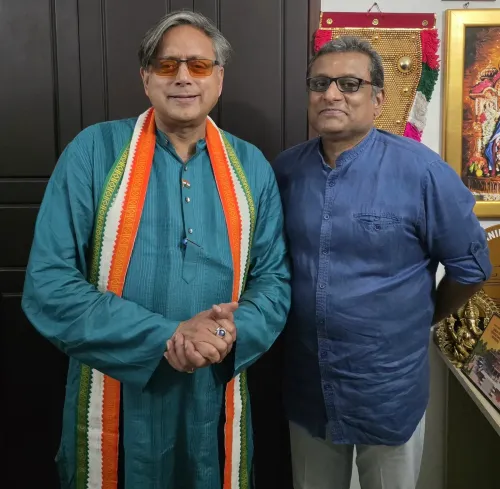
A bureaucrat who once put life-saving medicine within reach of millions of ordinary Indians has passed away. Congress MP Dr. Shashi Tharoor paid tribute on 27 August 2026 to Shri P.H. Kurian IAS, describing him as 'a bureaucrat of rare calibre and rarer courage' whose decisions left a lasting mark on public health policy in India.
Tharoor wrote that as Controller General of Patents, Kurian's compulsory licence order 'put life-saving cancer medicines within reach of ordinary Indians' — a reference to one of the most consequential administrative decisions in modern Indian patent law.
The Nexavar order that changed Indian patent law
In 2012, the Office of the Controller General of Patents issued India's first-ever compulsory licence — for Nexavar, a drug used in the treatment of kidney and liver cancer. The order forced the drug's patent holder to allow a domestic generic manufacturer to produce the medicine at a fraction of the original price, dramatically expanding access for patients who could not afford the patented version. The decision was legally grounded in India's Patents Act and consistent with the country's obligations under the TRIPS Agreement, which permits compulsory licensing on public-health grounds. It set a precedent that reverberated well beyond India's borders, drawing attention from global health advocates and pharmaceutical companies alike — and establishing that affordability could be a legitimate basis for overriding a patent monopoly. Kurian's role in that order placed him at the centre of a fierce international debate over the balance between rewarding pharmaceutical innovation and ensuring that essential medicines reach those who need them most.From patents to Kerala: a career defined by public-interest clarity
Tharoor noted that Kurian carried the same 'clarity' into his administrative work in Kerala, the state where he later served in senior governance roles. The tribute, though cut short in the original post, underscores the breadth of a career that spanned central government statutory authority and state-level administration. The Controller General of Patents functions under the Department for Promotion of Industry and Internal Trade and holds the statutory power to grant, refuse, or impose conditions on patents — a role that sits quietly at the intersection of trade, innovation, and public welfare. Kurian's tenure brought that quiet office into sharp national focus. For cancer patients and generic drug manufacturers, the compulsory licence he authorised was not a legal abstraction. It was the difference between treatment and none. That is the legacy Tharoor chose to anchor his tribute on — and it is the right one to remember.Point of View
And it held. Tharoor's tribute implicitly signals the Congress party's continued alignment with public-health-first interpretations of patent law, a position that sits in tension with pressure from multinational pharmaceutical interests and trade partners. The passing of a civil servant who exercised that discretion decisively is a reminder of how much consequential policy in India is shaped not by elected officials alone, but by the quiet authority of the permanent executive. His legacy will likely be invoked again as India navigates future compulsory licensing debates.
NationPress
27 Aug 2026
Frequently Asked Questions
Who was P.H. Kurian IAS?
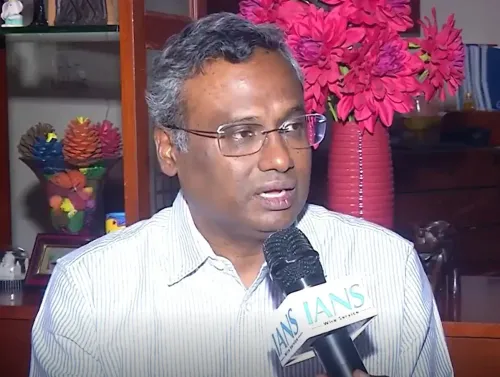
P.H. Kurian was a senior Indian Administrative Service officer who served as Controller General of Patents and later held administrative positions in Kerala . He is best known for authorising India's first compulsory licence in 2012 for the cancer drug Nexavar.
What was the Nexavar compulsory licence?
In 2012 , the Office of the Controller General of Patents granted India's first compulsory licence for Nexavar , a kidney and liver cancer drug, allowing a domestic manufacturer to produce a generic version at a fraction of the patented price and making it accessible to ordinary patients.
What is a compulsory licence under Indian patent law?
A compulsory licence is a legal instrument under India's Patents Act that allows the government to authorise a third party to manufacture a patented product — typically a medicine — without the patent holder's consent, on grounds including public health and affordability. It is permitted under the TRIPS Agreement .
Why did Shashi Tharoor pay tribute to P.H. Kurian?
Dr. Shashi Tharoor , Congress MP from Thiruvananthapuram , praised Kurian for his 'rare calibre and rarer courage' as a civil servant whose compulsory licence order on cancer medicines had a direct, measurable impact on public health access in India.
What is the significance of India's first compulsory licence?
The 2012 Nexavar compulsory licence set a precedent confirming that India would exercise its sovereign right to prioritise medicine affordability over patent monopolies. It drew global attention and shaped subsequent debates on the balance between pharmaceutical innovation incentives and public health obligations.