Thiruvananthapuram violence: Youth wings of 3 fronts clash, minister blocked
Synopsis
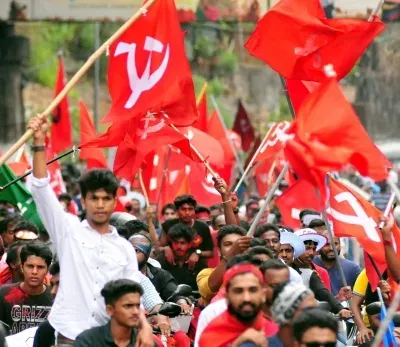
Thiruvananthapuram erupted on Wednesday night as youth wings of all three major political fronts — LDF, UDF, and NDA — clashed simultaneously. A state minister was stopped on the road by BJP workers and forced to walk away on foot, a Congress office was set ablaze, and police resorted to tear gas and lathi charges near the University hostel. The trigger: a retaliatory spiral set off by a black-flag protest against Home Minister Amit Shah in Kollam.
Key Takeaways
Youth and student wings of all three major political fronts clashed in Thiruvananthapuram on the night of 30 September .
BJP Youth Morcha workers blocked Local Self-Government Minister K.M.
Shaji at Van Rose Junction, Palayam , forcing him to walk away on foot.
SFI activists faced a police lathi charge inside the University hostel after a standoff with KSU and Youth Congress workers.
The Congress mandalam committee office at Anavoor, Neyyattinkara was set on fire and completely gutted; a BJP worker has been taken into custody.
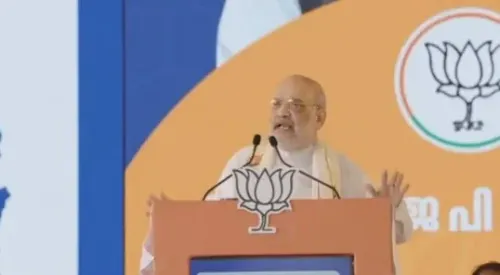
The unrest was triggered by retaliatory black-flag protests following a Youth Congress demonstration against Union Home Minister Amit Shah in Kollam .
Satheesan condemned the attacks and warned that those responsible would face the law.
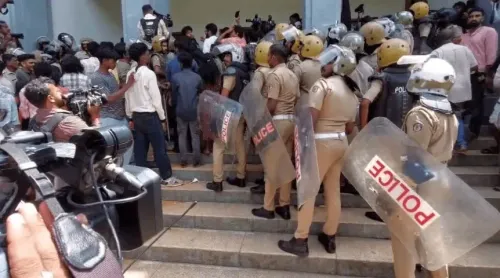
Political clashes in Thiruvananthapuram escalated sharply on the night of Wednesday, 30 September, with youth and student wings of all three major political formations — the Left Democratic Front (LDF), the United Democratic Front (UDF), and the National Democratic Alliance (NDA) — taking to the streets simultaneously. Police deployed tear gas and carried out lathi charges to contain the unrest, which spread across multiple locations in the state capital.
University Hostel Standoff
In a late-night confrontation, workers of the Youth Congress and the Kerala Students Union (KSU) came face-to-face with activists of the Students' Federation of India (SFI) — the student wing of the Communist Party of India (Marxist) — near the University hostel in the city. Police subsequently resorted to a lathi charge against SFI activists inside the hostel premises.
The confrontation deteriorated into a free-for-all, with workers of rival organisations allegedly damaging each other's posters and banners. Police deployed a large contingent near the hostel and repeatedly chased away KSU and Youth Congress workers from the hostel entrance in an effort to prevent further escalation.
Minister's Vehicle Blocked, Security Questions Raised
Bharatiya Janata Party (BJP) Youth Morcha workers stopped Local Self-Government Minister K.M. Shaji at Van Rose Junction near Palayam earlier in the evening. Protesters surrounded the minister's vehicle and forced him to step out. When Shaji attempted to leave in an autorickshaw, demonstrators stopped that vehicle as well, compelling him to ultimately walk away on foot with his security personnel.
The incident has raised serious questions over the minister's security arrangements — he was reportedly travelling without a pilot vehicle or escort convoy at the time of the confrontation.
What Triggered the Escalation
The immediate trigger, according to reports, was a black-flag protest mounted by Youth Congress workers against Union Home Minister Amit Shah during his visit to Kollam the previous week. The BJP and its affiliated organisations subsequently launched retaliatory black-flag protests against state ministers across Kerala, with the unrest eventually converging on the capital.
This is not an isolated flare-up — political violence between party workers in Kerala has followed a recurring pattern of provocation and counter-provocation, particularly around high-profile ministerial visits.
Attacks on Party Offices and Leaders
The violence extended beyond street clashes. The vehicle of senior BJP leader P.K. Krishnadas was attacked at Neyyattinkara, and BJP district leader Mukkampalamoodu Biju was also reportedly attacked. The Thiruvananthapuram District Congress Committee (DCC) office was pelted with stones, shattering its front glass panes.
In a more serious development, the Congress mandalam committee office at Anavoor in Neyyattinkara was set on fire and completely gutted. Police have taken a BJP worker into custody in connection with the arson.
Political Reactions and Police Response
Chief Minister V.D. Satheesan condemned the attacks on Congress offices and warned that those responsible would face the law. Kerala Pradesh Congress Committee (KPCC) President Sunny Joseph alleged that the attacks were part of a BJP-backed effort to divert attention from other political issues.
Police have maintained a heavy presence across the capital, particularly around political party offices, major junctions, and the University area. With the feeder organisations of all three major political fronts now effectively mobilised on the streets, authorities face a significant challenge in preventing the unrest from spreading further in the coming days.
Point of View
Retaliation, escalation. The fact that a sitting cabinet minister was stopped on a public road and forced to abandon his vehicle is a serious law-and-order failure that deserves scrutiny beyond partisan blame. The absence of a pilot or escort vehicle for a minister in a state with a documented history of political attacks is an administrative lapse that neither side has addressed. Meanwhile, the mobilisation of all three fronts' student wings simultaneously signals that the violence has moved from reactive to organised — a qualitative shift that police containment alone cannot resolve.
NationPress
1 Oct 2026
Frequently Asked Questions
What triggered the political violence in Thiruvananthapuram on 30 September?
The immediate trigger was a black-flag protest by Youth Congress workers against Union Home Minister Amit Shah during his visit to Kollam the previous week. The BJP and its affiliated organisations launched retaliatory black-flag protests against state ministers, which escalated into clashes between party workers across Thiruvananthapuram.
What happened to Minister K.M. Shaji during the protests?
Local Self-Government Minister K.M. Shaji was stopped by BJP Youth Morcha workers at Van Rose Junction near Palayam. Protesters surrounded his vehicle and forced him out; when he tried to leave in an autorickshaw, that vehicle was also blocked, and he was ultimately compelled to walk away with his security personnel. His lack of a pilot or escort vehicle at the time has raised serious security concerns.
What was the role of student organisations in the clashes?
The Students' Federation of India (SFI), the student wing of the CPI(M), clashed with Youth Congress and KSU workers near the University hostel in Thiruvananthapuram. Police resorted to a lathi charge against SFI activists inside the hostel and used tear gas to disperse crowds, as rival groups allegedly damaged each other's banners and posters.
Which party offices were attacked during the violence?
The Thiruvananthapuram District Congress Committee (DCC) office was pelted with stones, damaging its front glass panes. The Congress mandalam committee office at Anavoor in Neyyattinkara was set on fire and completely gutted. A BJP worker has been taken into custody in connection with the arson. BJP leader P.K. Krishnadas's vehicle was also attacked at Neyyattinkara.
What has the government said about the violence?
Chief Minister V.D. Satheesan condemned the attacks on Congress offices and warned that those responsible would face the law. KPCC President Sunny Joseph alleged that the attacks were part of a BJP-backed attempt to divert attention from other political issues. Police have maintained a heavy presence across the capital, particularly around party offices and the University area.