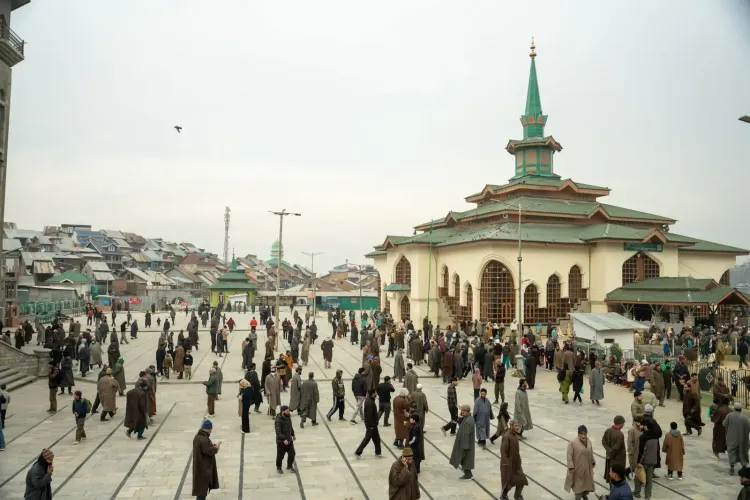
Thousands gather at Chrar-e-Sharief for Sheikh Nooruddin Wali Urs 2026
Synopsis
Every year, the Urs at Chrar-e-Sharief is Kashmir's most visible reminder of its syncretic soul. This year, thousands gathered again at the shrine of Sheikh Nooruddin Wali — a 15th-century Sufi saint who chose the Kashmiri language over Persian, coined the concept of Kashmiriyat, and whose funeral drew a king into the procession. The celebration is both a pilgrimage and a quiet act of cultural preservation.
Key Takeaways
Thousands of devotees from across the Kashmir Valley attended the annual Urs of Sheikh Nooruddin Wali at Chrar-e-Sharief on 9 October 2026 .
The J&K government declared a public holiday to mark the main day of the Urs celebrations.
Devotees began arriving on Wednesday ; ceremonies included the 'Poshak Bandi' ritual, night-long prayers, Quran recitation, and Naats.
Sheikh Nooruddin Wali , born in 1377 in Kulgam, founded the Rishi Order of Sufism and is regarded as the father of Kashmiriyat .
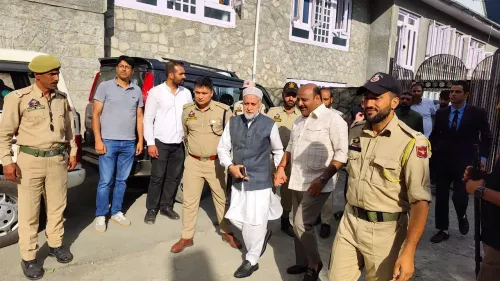
IGP Kashmir Sujit Kumar and senior officials reviewed security and logistics at the shrine on Friday.
Medical camps, transport, and uninterrupted utilities were arranged by the J&K Waqf Board and civil administration.
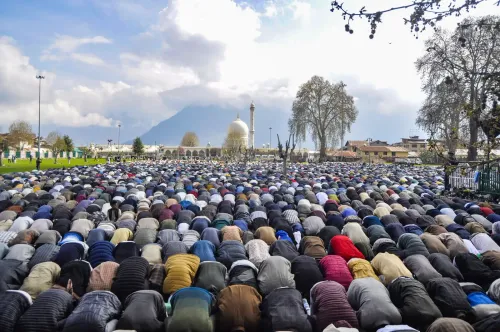
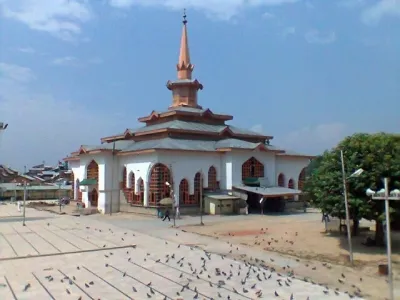
Thousands of devotees from across the Kashmir Valley converged on the Chrar-e-Sharief shrine in Budgam district on Friday, 9 October 2026, to observe the annual Urs of revered Sufi saint Sheikh Nooruddin Wali. The Jammu and Kashmir government declared a public holiday to mark the main day of the celebrations, reflecting the saint's profound importance to Kashmir's spiritual and cultural identity.
Gathering and Ceremonies
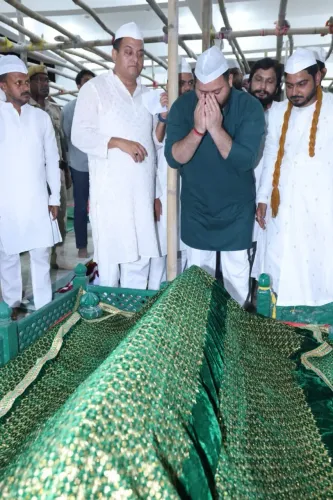
Devotees began arriving in Chrar-e-Sharief town as early as Wednesday, with the gathering swelling considerably by Friday. At the shrine, pilgrims offered special prayers, recited the Holy Quran, performed Naats (praises of Prophet Muhammad), and sought blessings for peace and communal harmony in Jammu and Kashmir.
The Urs traditionally opens with the 'Poshak Bandi' — the ceremonial changing of the holy cloth draped over the saint's grave — followed by night-long prayers. This centuries-old ritual draws participation from communities across the Valley, underlining its deeply inclusive character.
Who Was Sheikh Nooruddin Wali
Born in 1377 in Kulgam district, Sheikh Nooruddin Wali is revered as the patron saint of Kashmir and honoured by the titles 'Alamdar-e-Kashmir' (Standard-Bearer of Kashmir) and 'Sheikh-ul-Alam' (Master of the World). He founded the Rishi Order, a uniquely indigenous branch of Sufism that wove Islamic mysticism together with local spiritual traditions.
At a time when Kashmir was navigating major social and religious upheaval, the saint propagated a philosophy of peace, universal brotherhood, non-violence, and simplicity. His teachings became the philosophical cornerstone of Kashmiriyat — the ethos of communal harmony and religious tolerance that historically bound Muslims and Kashmiri Pandits together.
Crucially, he chose the Kashmiri language over the elite languages of Persian and Arabic to reach ordinary people, conveying his spiritual insights through four-line verses known as 'Shruks'. His poetry is widely credited with laying the foundation for modern Kashmiri literature and preserving the language across generations.
When he passed away in 1438, Kashmir's ruler Sultan Zain-ul-Abidin — popularly called the 'Budshah' (Great King) — walked in his funeral procession alongside thousands of followers, a testament to his immense stature.
Security and Administrative Arrangements
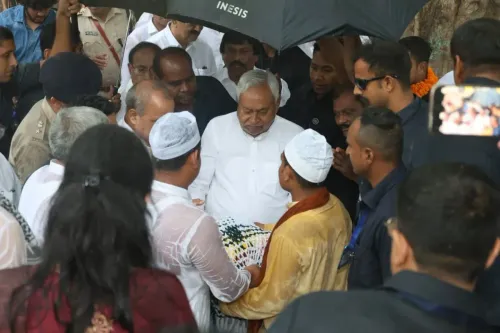
Senior civil and police officials, including Inspector General of Police (IGP) Kashmir Sujit Kumar, visited the shrine on Friday to review security, traffic, and law-and-order arrangements. The J&K Waqf Board, civil administration, and local volunteers jointly managed the large gathering.
Authorities ensured uninterrupted water and electricity supply, deployed medical camps, and arranged transport facilities for the smooth conduct of the Urs celebrations. The scale of coordination reflects how central this annual event has become to the civic calendar of Budgam district.
Significance Beyond Religion
The annual Urs at Chrar-e-Sharief is more than a religious observance — it is a living affirmation of Kashmir's syncretic heritage. Notably, the shrine itself has historically drawn pilgrims of multiple faiths, embodying the very Kashmiriyat that Sheikh Nooruddin Wali helped define. This year's gathering, drawing devotees from across the Valley, signals that the tradition of collective reverence remains intact. The event's peaceful conduct is also seen as a marker of the improving ground situation in Jammu and Kashmir.
Point of View
But its deeper significance is political and cultural: it is an annual stress-test of Kashmiriyat. Sheikh Nooruddin Wali's legacy — a Sufi who wrote in Kashmiri for ordinary people and preached harmony between faiths — is precisely the kind of indigenous identity narrative that the Valley has needed to anchor in troubled decades. The peaceful mass gathering this year, alongside visible senior police and civil presence, suggests both a commitment to maintaining the tradition and a quiet acknowledgement of its stabilising value. What mainstream coverage tends to miss is the saint's literary contribution: his 'Shruks' are not just poetry, they are the oldest significant corpus in the Kashmiri language, and their annual commemoration is as much an act of linguistic preservation as it is of religious devotion.
NationPress
9 Oct 2026
Frequently Asked Questions
What is the Urs of Sheikh Nooruddin Wali at Chrar-e-Sharief?
The Urs is the annual death anniversary commemoration of Sufi saint Sheikh Nooruddin Wali, held at his shrine in Chrar-e-Sharief town in Budgam district, Jammu and Kashmir. Thousands of devotees gather each year to offer prayers, recite the Quran, perform Naats, and seek blessings for peace and communal harmony.
Who was Sheikh Nooruddin Wali and why is he significant?
Sheikh Nooruddin Wali was a 15th-century Sufi saint born in 1377 in Kulgam, Jammu and Kashmir, revered as the patron saint of Kashmir with the titles 'Alamdar-e-Kashmir' and 'Sheikh-ul-Alam'. He founded the Rishi Order of Sufism, championed communal harmony between Muslims and Kashmiri Pandits, and is widely regarded as the father of Kashmiriyat. He also helped shape modern Kashmiri literature through his four-line verses called 'Shruks'.
What is the 'Poshak Bandi' ceremony at the Urs?
The 'Poshak Bandi' is the ceremonial changing of the holy cloth draped over the saint's grave, and it traditionally marks the start of the Urs celebrations. The ceremony is followed by night-long prayers and sets the tone for the main day's events.
What administrative arrangements were made for the Urs 2026?
The J&K government declared a public holiday on 9 October 2026 for the main day of the Urs. Senior officials including IGP Kashmir Sujit Kumar visited the shrine to review security and law-and-order arrangements, while the J&K Waqf Board, civil administration, and local volunteers managed the crowd. Uninterrupted water and electricity, medical camps, and transport facilities were also arranged.
What is Kashmiriyat and how does it connect to Sheikh Nooruddin Wali?
Kashmiriyat refers to the traditional ethos of communal harmony, religious tolerance, and shared cultural identity historically associated with Kashmir, particularly between its Muslim and Kashmiri Pandit communities. Sheikh Nooruddin Wali is regarded as its founder, having preached universal brotherhood and non-violence at a time of major social and religious transition in the region during the 14th and 15th centuries.