Kashmiriyat is soul of coexistence, says Karan Singh at Srinagar interfaith dialogue
Synopsis
At a Srinagar interfaith dialogue, former J&K Governor Karan Singh invoked Lal Ded, Nund Rishi, and Swami Vivekananda in one breath — arguing that Kashmiriyat is not nostalgia but a living framework for coexistence. His defence of Urdu as India's own and his call for a dedicated interfaith movement in Kashmir add institutional weight to a message the Valley urgently needs.
Key Takeaways
Karan Singh addressed the interfaith dialogue on 'Urdu, Kashmiriyat and Shared Cultural Traditions' at Sher-i-Kashmir International Conference Centre , Srinagar , on 27 June .
He cited the Rig Veda verse 'Ekam Sat Viprah Bahuda Vadanti' to argue all religions lead to the same truth.
Singh honoured Kashmiri saints Lal Ded , Mir Syed Ali Hamdani , and Nund Rishi as architects of the Valley's culture of tolerance.
He called for a dedicated interfaith movement in Kashmir , citing existing work by the Interfaith Harmony Foundation and Dara Shikoh Centre .
Singh defended Urdu as an Indian language and its historic role in uniting Kashmiri , Dogri , and Ladakhi communities.
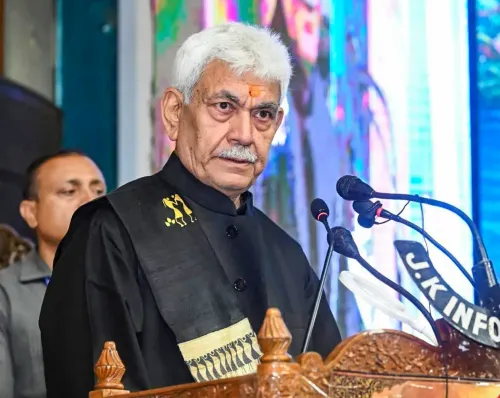
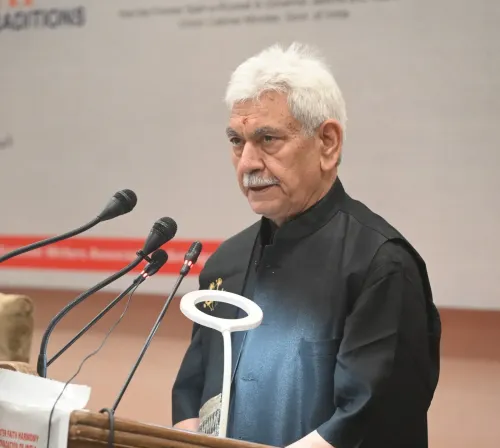
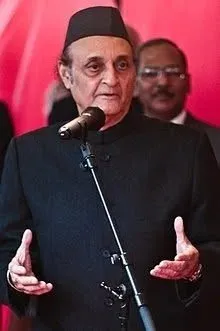
Former Jammu and Kashmir Head of State and Governor Karan Singh on Saturday, 27 June called for the preservation of Kashmiriyat — the Valley's centuries-old tradition of communal harmony rooted in Sufism and shared cultural values — through sustained interfaith dialogue, asserting that humanity must always take precedence over religious differences. Singh was speaking at the Sher-i-Kashmir International Conference Centre in Srinagar during an interfaith dialogue on the theme 'Urdu, Kashmiriyat and Shared Cultural Traditions'.
Singh's Core Message on Faith and Coexistence
Opening his address, Singh praised the organisers for uniting the themes of interfaith dialogue, Urdu, Kashmiriyat and shared cultural traditions on a single platform, describing each as a subject worthy of days of independent discussion.
He invoked the landmark Parliament of the World's Religions held in Chicago in 1893, where Swami Vivekananda presented India's philosophy of universal acceptance to a global audience. Singh drew on that legacy to argue that interfaith dialogue is not about establishing the superiority of one religion over another, but about recognising that all faiths ultimately converge on the same truth.
Quoting the Rig Veda's verse 'Ekam Sat Viprah Bahuda Vadanti' — meaning 'Truth is One, the wise describe it in different ways' — he said all religions worship the same Almighty through different paths. 'If God is one, there cannot be different Gods for different religions. Just as there are many routes to reach the top of a mountain, different religions, too, lead towards the same destination,' he said.
Kashmir's Civilisational Heritage
Singh highlighted the Valley's layered spiritual history, noting that Kashmir had witnessed the flourishing of Vedic traditions, Buddhism, Shaivism, and later Sufism. He paid tribute to saints including Lal Ded, Mir Syed Ali Hamdani, and Sheikh Noor-ud-Din Noorani (also known as Nund Rishi), crediting them with nurturing a culture of love, tolerance and coexistence across generations.
'Sufism flourished in Kashmir because it spread the message of love, not hatred. No religion can prosper through hatred; humanity must always come first,' he said.
This comes amid ongoing efforts to rebuild social fabric in the region following years of conflict, making Singh's remarks particularly resonant for those working on reconciliation and cultural preservation in the Valley.
Institutional Efforts for Interfaith Harmony
Singh noted that structured efforts are already under way through the Interfaith Harmony Foundation and the Dara Shikoh Centre to strengthen dialogue across religious communities. He expressed hope that a dedicated interfaith movement would take shape in Kashmir as well, to sustain mutual understanding and communal harmony at the grassroots level.
Defending Urdu as India's Own
Turning to the question of language, Singh firmly rejected the notion that Urdu is a foreign tongue, arguing that it was born in India and remains an integral part of the country's cultural and literary heritage. He recalled that Urdu had served as the official language of the erstwhile Jammu and Kashmir state precisely because it bridged communities speaking different mother tongues — Kashmiri, Dogri, and Ladakhi.
'Urdu must be protected, promoted and used wherever possible. Every language is a gift of Mother Saraswati, and opposing any language is like insulting the very source of knowledge,' he said, calling opposition to any language an act of disrespect towards knowledge itself.
As India navigates complex questions of identity, language, and pluralism, Singh's address at Srinagar signals a continued push by cultural voices to anchor Kashmir's future in the inclusive traditions of its past.
Point of View
And that gap matters. Kashmir's coexistence narrative has too often been invoked rhetorically while grassroots interfaith infrastructure remains thin. The real measure of Saturday's dialogue is whether it seeds a sustained movement, not just a well-attended conference.
NationPress
26 Sept 2026
Frequently Asked Questions
What did Karan Singh say about Kashmiriyat at the Srinagar interfaith dialogue?
Karan Singh said Kashmiriyat — Kashmir's centuries-old tradition of coexistence rooted in Sufism and shared cultural values — must be preserved through sustained interfaith dialogue, and that humanity should always take precedence over religious differences. He made these remarks on 27 June at the Sher-i-Kashmir International Conference Centre in Srinagar.
What is the significance of Kashmiriyat in the context of interfaith harmony?
Kashmiriyat refers to Kashmir's syncretic cultural identity, shaped by Vedic traditions, Buddhism, Shaivism, and Sufism over centuries. Singh argued it represents a living model of coexistence, sustained by saints like Lal Ded and Nund Rishi, and remains relevant to contemporary efforts at communal harmony in the region.
Why did Karan Singh defend the Urdu language?
Singh rejected the perception of Urdu as a foreign language, stating it was born in India and served as the official language of the erstwhile Jammu and Kashmir state because it connected speakers of Kashmiri, Dogri, and Ladakhi. He called for its protection and promotion, describing opposition to any language as disrespect towards knowledge.
What institutions did Karan Singh mention for promoting interfaith dialogue?
Singh cited the Interfaith Harmony Foundation and the Dara Shikoh Centre as existing platforms working to strengthen dialogue among different faiths. He expressed hope that a dedicated interfaith movement would also take shape in Kashmir to sustain mutual understanding at the local level.
What historical reference did Karan Singh invoke during his address?
Singh recalled the Parliament of the World's Religions held in Chicago in 1893, where Swami Vivekananda presented India's message of universal acceptance. He used this reference to argue that interfaith dialogue is about mutual understanding, not establishing religious superiority.