Tamil Nadu Enforces Stringent Liquor Restrictions Ahead of Elections: Tasmac Under Close Watch
Synopsis
As Tamil Nadu enters the Assembly election season, the government has enforced strict liquor regulations under the Model Code of Conduct, putting Tasmac sales under heightened scrutiny. These measures aim to maintain electoral integrity by curtailing alcohol-related voter inducements.
Key Takeaways
Strict limits on liquor purchases implemented.
Intended to prevent electoral malpractice.
All transactions monitored digitally.
Violators face legal consequences.
Focus on maintaining electoral integrity.
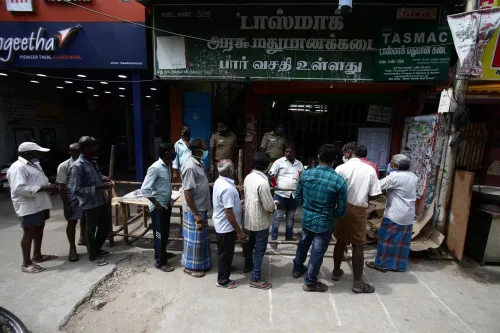
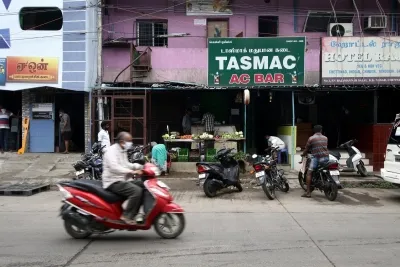
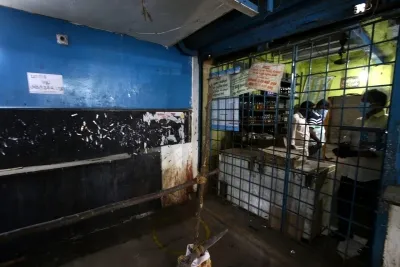
Chennai, March 25 (NationPress) As Tamil Nadu approaches the Assembly election period, government officials have implemented rigorous limitations on liquor sales following the activation of the Model Code of Conduct (MCC). Tasmac outlets are now under increased scrutiny to prevent any potential misuse.
These restrictions are in accordance with the Election Commission of India (ECI) regulations, which aim to maintain fairness during elections by limiting the use of alcohol as a means to influence voters—a practice that has historically led to intensified monitoring during election times.
According to the updated guidelines, individuals are allowed to purchase liquor only within designated thresholds, beyond which possession will be considered illegal unless justified with valid reasons, as stated by officials.
The permissible limits comprise 4.5 litres of Indian Made Foreign Spirits (IMFS) or imported liquor, 7.8 litres of beer, and up to nine litres of wine. Enforcement teams have been assigned to ensure adherence to these limits throughout the state.
“We have communicated explicit directives to all retail locations to adhere to these limits without exceptions. The quantities specified are solely for personal use, and any infringement will be dealt with legally,” remarked a senior Tasmac official.
To enhance oversight, every transaction at the 4,787 Tasmac outlets will be monitored through a centralized system based in Chennai, featuring mandatory billing and real-time data submissions as the core of monitoring activities.
This initiative is anticipated to significantly reduce the trend of bulk purchases commonly associated with election periods, particularly for private gatherings and events.
Officials have made it clear that such purchases will not be allowed under any circumstances. They have also indicated that strict punitive actions will be taken against those who violate these rules, including legal repercussions and the revocation of licenses for outlets that fail to comply, reinforcing the integrity of the electoral process.
Point of View
The enforcement of strict liquor purchase regulations in Tamil Nadu reflects a commitment to uphold electoral integrity. The measures aim to prevent the misuse of alcohol as an electoral tool while ensuring all citizens have a fair voting experience.
NationPress
22 Sept 2026
Frequently Asked Questions
What are the new liquor purchase limits in Tamil Nadu?
Individuals can purchase up to 4.5 litres of IMFS, 7.8 litres of beer, and 9 litres of wine.
Why have these restrictions been implemented?
The restrictions are part of the Model Code of Conduct to prevent the use of alcohol as an inducement to voters during elections.
How will the government monitor compliance with these limits?
All transactions at Tasmac outlets will be digitally tracked through a centralized system from Chennai.
What are the consequences of violating these regulations?
Violators may face legal action and Tasmac outlets can have their licenses revoked.
How many Tasmac outlets are there in Tamil Nadu?
There are 4,787 Tasmac outlets across the state.