Tamil Nadu sanctions ₹500 crore for 1,000 AC electric buses in Chennai
Synopsis
Tamil Nadu is deploying ₹500 crore to put 1,000 AC electric buses on Chennai's roads under the GCC model — taking the city's electric fleet from 755 to 1,755. Simultaneously, ₹17.99 crore will wire up 13,490 state buses with GPS trackers and panic buttons, making this the state's most ambitious single-round public transport upgrade in years.
Key Takeaways
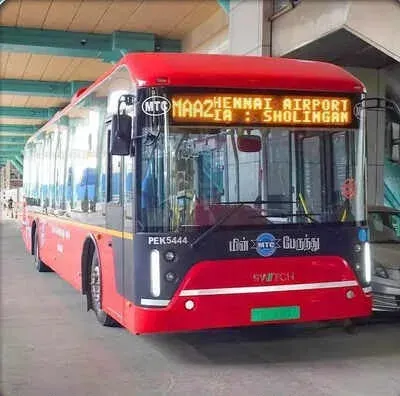
Tamil Nadu has sanctioned ₹500 crore for 1,000 AC electric buses for Chennai's MTC .
The addition will raise Chennai's electric bus fleet from 755 to 1,755 vehicles .
Buses will be deployed under the Gross Cost Contract (GCC) model during the current financial year; tender is at the bid-opening stage .
A separate ₹17.99 crore outlay will install VLTDs and panic buttons in 13,490 buses across Tamil Nadu's eight transport corporations.
Tracking devices are AIS-140 compliant and will feed into a Central Control Centre for real-time monitoring.
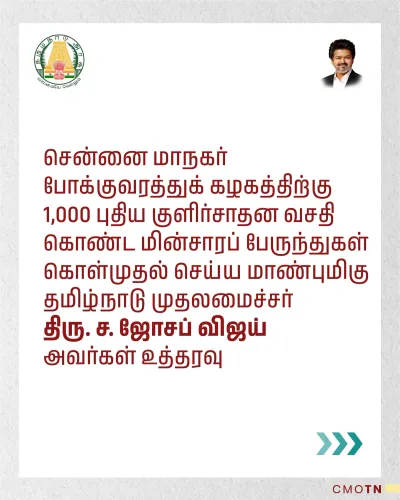
The Tamil Nadu government has sanctioned ₹500 crore for the procurement of 1,000 air-conditioned electric buses for Chennai's Metropolitan Transport Corporation (MTC), in a push to modernise public transport and cut vehicular emissions across the city. Chief Minister C. Joseph Vijay has issued formal orders for the project, which will be executed during the current financial year under the Gross Cost Contract (GCC) model.
What the Expansion Covers
Under the GCC model, private operators provide and maintain the buses while receiving payments linked to operational performance — a structure that reduces upfront capital burden on the state. The project also includes development of charging and operational infrastructure at bus depots across Chennai.
Currently, the MTC operates 755 electric buses, of which 355 are air-conditioned. The addition of 1,000 new AC electric buses would take Chennai's total electric fleet to 1,755 vehicles, making it one of the largest urban electric bus networks in South India.
Why It Matters for Chennai Commuters
Chennai's hot and humid climate has long made non-air-conditioned public buses uncomfortable, particularly for passengers on longer intra-city routes. The expanded fleet is expected to improve commuting conditions, ease congestion, and encourage a shift away from private vehicles. According to the official statement, the expansion will help reduce emissions, improve passenger comfort, and promote greater use of public transportation.
The MTC has already initiated the tender process for procurement, with the exercise currently at the bid-opening stage. This signals a relatively advanced timeline for deployment within the financial year.
Panic Buttons and Vehicle Tracking: The Safety Push
Alongside the electric bus expansion, Chief Minister Vijay has separately sanctioned ₹17.99 crore for installing Vehicle Location Tracking Devices (VLTDs) and emergency panic buttons across buses operated by the state's eight transport corporations.
The project envisages installing tracking units in 13,490 buses and panic button systems in 13,776 buses. The devices, compliant with AIS-140 standards, will be integrated with a Central Control Centre for continuous monitoring of bus movements, speed, and route adherence.
Transport Minister A. Vijay Tamilan Parthiban had first announced the initiative in the Legislative Assembly on 8 September. Passengers facing emergencies can activate panic buttons to immediately alert the control centre, enabling authorities to pinpoint the bus location and coordinate assistance with relevant agencies.
Broader Policy Signal
Taken together, the two measures — worth a combined ₹517.99 crore — represent the Tamil Nadu government's most significant single-round investment in public transport infrastructure in recent years. The state had earlier expanded its electric bus fleet under central government schemes; this round is driven primarily by state funds, signalling a stronger fiscal commitment to clean mobility.
With the tender at bid-opening stage and orders already issued, the government's execution timeline will be closely watched — both by commuters and by other state transport corporations eyeing similar transitions.
Point of View
Without leaning primarily on central schemes, signals that Tamil Nadu is willing to own the clean-mobility transition rather than wait for Delhi's next EV push. But the GCC model, while capital-light for the government, has seen delayed deployments in other states when operator payments lag. The real test is whether the tender, currently at bid-opening stage, can convert to on-road buses within the current financial year as promised. The parallel safety investment in VLTDs and panic buttons addresses a long-standing concern about women's safety on state buses — a politically resonant issue — but effectiveness will depend on the responsiveness of the Central Control Centre, which remains unstaffed in many states that have announced similar systems.
NationPress
10 Nov 2026
Frequently Asked Questions
How many AC electric buses will Chennai get under the new Tamil Nadu government order?
The Tamil Nadu government has sanctioned 1,000 air-conditioned electric buses for Chennai's MTC under a ₹500 crore allocation. This will raise the city's total electric bus fleet from 755 to 1,755 vehicles.
What is the Gross Cost Contract (GCC) model for bus procurement?
Under the GCC model, private operators supply and maintain buses while the transport corporation pays them based on kilometres operated or other performance metrics. This reduces the state's upfront capital expenditure and shifts maintenance responsibility to private partners.
When will the new electric buses be deployed in Chennai?
The government has stated the buses will be introduced during the current financial year. The MTC has already initiated tendering, with the process currently at the bid-opening stage.
What is the ₹17.99 crore safety project sanctioned alongside the bus order?
Chief Minister C. Joseph Vijay sanctioned ₹17.99 crore to install Vehicle Location Tracking Devices (VLTDs) and emergency panic buttons across 13,490 and 13,776 buses respectively, operated by Tamil Nadu's eight state transport corporations. The AIS-140 compliant devices will connect to a Central Control Centre for real-time monitoring.
Who announced the vehicle tracking initiative and when?
Transport Minister A. Vijay Tamilan Parthiban announced the VLTD and panic button initiative in the Tamil Nadu Legislative Assembly on 8 September. Chief Minister C. Joseph Vijay has since issued formal sanction orders for the project.