Can the Centre Transform 100 Districts into Global Export Champions?
Synopsis
The Indian government is launching a revolutionary initiative aimed at transforming 100 districts into Global Export Champions in textiles. This program not only targets economic growth but also seeks to empower local communities by leveraging unique regional resources. Discover how this initiative is set to reshape the textile landscape of India.
Key Takeaways
Launch of DLTT initiative aimed at textile sector growth.
Focus on transforming 100 districts into Global Export Champions .
Emphasis on sustainability and inclusivity .
Support for local artisans and cultural handicrafts.
Strategic development of northeastern districts.
New Delhi, Jan 9 (NationPress) The government has introduced the District-Led Textiles Transformation (DLTT) initiative, a pivotal program aimed at fostering inclusive and sustainable advancement throughout India's textile industry.
By adopting a district-specific, sector-focused strategy, the Ministry of Textiles aspires to turn 100 high-potential districts into Global Export Champions while empowering 100 Aspirational Districts to become self-sufficient.
During the ‘National Textile Ministers Conference’ held in Guwahati, Assam, the ministry shared that it evaluated all districts using a data-driven scoring system based on three essential parameters: Export Performance, MSME Ecosystem, and Workforce Presence.
This assessment led to a two-pronged strategy categorizing districts into Champion Districts and Aspirational Districts.
The initiative also focuses on Purvodaya convergence in the eastern and northeastern regions.
These areas are prioritized for developing tribal belts, enhancing connectivity, and implementing Geographical Indication (GI) tagging to promote unique cultural handicrafts in premium global markets, as stated by the government.
“By strategically converging resources and collaborating with industry and academia, the program aims to fortify textile clusters and systematically replicate successful models to maximize district-level impact,” the ministry noted.
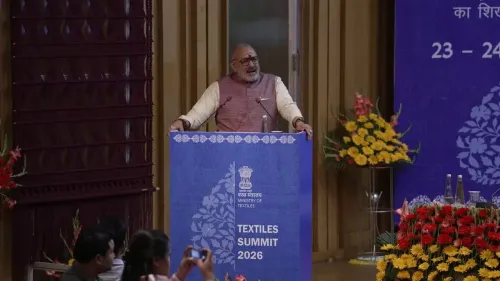
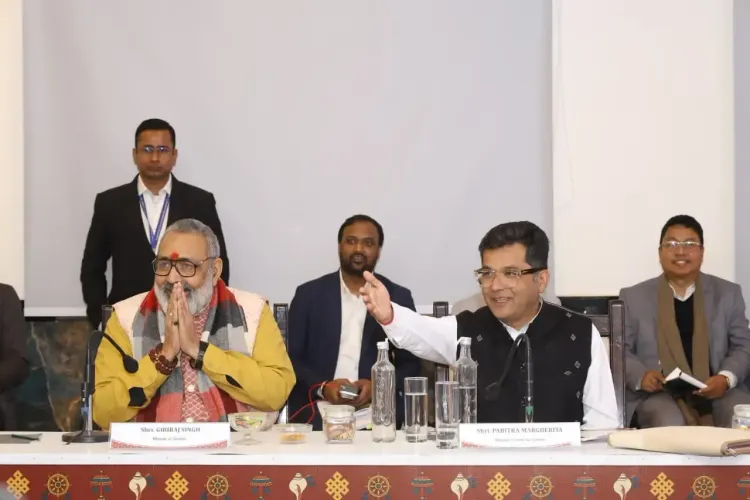
A high-level conclave was convened by the ministry, providing a dedicated platform for extensive discussions on accelerating the growth of the textile sector in northeastern states through enhanced policy coordination, investment promotion, skill development, value addition, and improved market access.
Textiles Minister Giriraj Singh emphasized that the northeastern region plays a crucial role in the nation's textile sector, and the government is dedicated to its development.
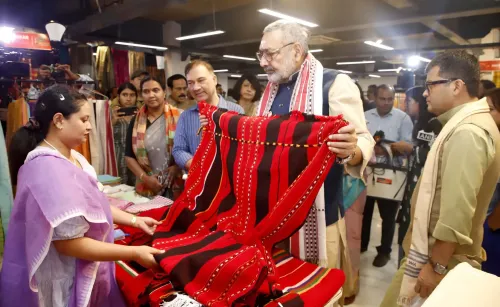
The unique strengths of the region—including its rich handloom heritage, GI-tagged products, diverse silk varieties, bamboo crafts, and active involvement of women artisans and weavers—were underscored during the discussions.
Point of View
It is imperative to recognize the government's initiative to uplift the textile sector through the District-Led Textiles Transformation (DLTT) program. This strategy not only aims for economic growth but also emphasizes sustainability and inclusivity, showcasing a comprehensive approach to empower local districts while tapping into their unique strengths.
NationPress
10 Oct 2026
Frequently Asked Questions
What is the District-Led Textiles Transformation (DLTT) initiative?
The DLTT initiative is a government program aimed at transforming 100 high-potential districts into Global Export Champions in the textile sector, promoting inclusive and sustainable growth.
Which districts are targeted under this initiative?
The initiative targets 100 high-potential districts and 100 Aspirational Districts across India, focusing on their unique strengths and potential.
What are the key focuses of the DLTT initiative?
The initiative emphasizes enhancing export performance, strengthening the MSME ecosystem, fostering workforce presence, and promoting cultural handicrafts through GI tagging.
How will the initiative impact the northeastern region?
The initiative prioritizes the northeastern region for development, focusing on improving connectivity, tribal belt development, and promoting unique local handicrafts.
What is the significance of GI tagging in this initiative?
GI tagging is essential for positioning unique cultural handicrafts in premium global markets, enhancing their visibility, and promoting local artisans.