Textiles Summit 2026: Giriraj Singh calls for action on district, state export plans
Synopsis
India's Textiles Summit 2026 closed with a clear mandate: stop deliberating, start executing. With a $100 billion export target by 2030 in sight, the Ministry of Textiles is pushing states and districts to own the delivery — backed by FTA benefits, 500 awareness workshops, and a forthcoming National Textile Export Roadmap.
Key Takeaways
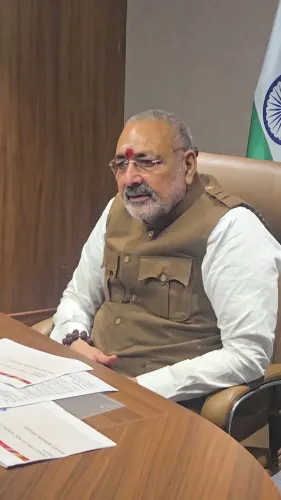
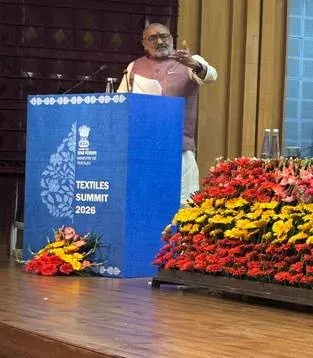
Union Textiles Minister Giriraj Singh on 24 June 2026 called for immediate execution of district- and state-level textile plans at the close of Textiles Summit 2026 .
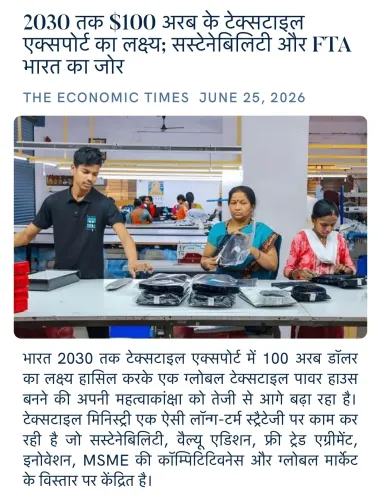
India's textile sector is targeting $100 billion in exports by 2030 .
Textiles Secretary Neelam Shami Rao announced a National Textile Export Roadmap to be built from summit recommendations.
Commerce Secretary Rajesh Agrawal urged faster utilisation of recently concluded FTAs and flagged information gaps at the district level.
The Department of Commerce has conducted approximately 500 workshops to promote FTA and export awareness.
States and Union Territories were urged to actively join the revived Districts as Export Hubs programme.
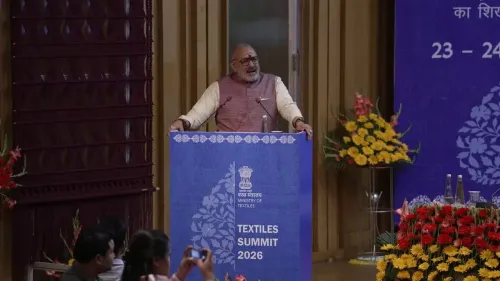
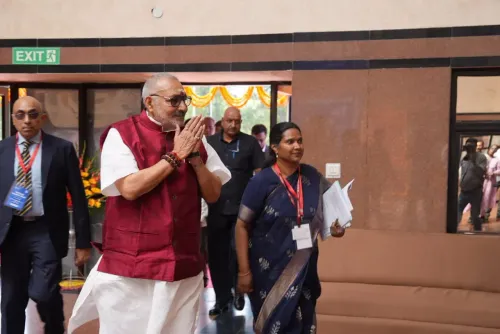
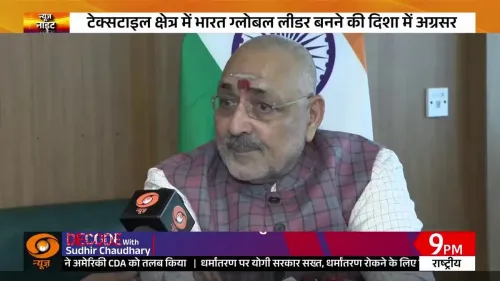
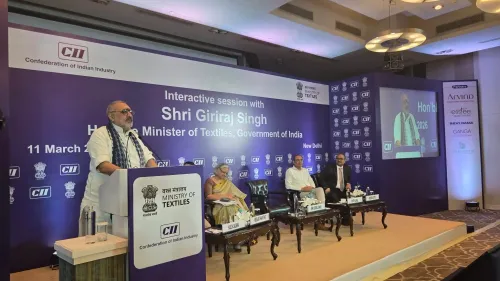
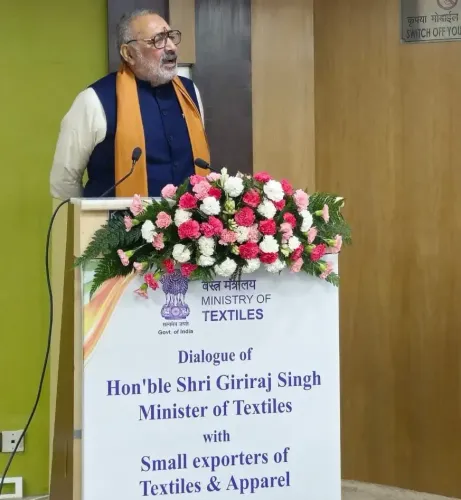
Union Textiles Minister Giriraj Singh on Wednesday, 24 June 2026 declared that the time had arrived to move beyond planning and execute district- and state-level textile strategies with a proactive mindset, emphasising value addition, sustainability, niche products, and the effective use of free trade agreements (FTAs) to meet India's textile export ambitions. His remarks came at the concluding session of the two-day Textiles Summit 2026 in New Delhi, organised by the Ministry of Textiles on 23 and 24 June.
Key Developments at the Summit
The summit brought together representatives from state governments, industry bodies, and academia to chart a growth roadmap for the textile sector. The central goal on the table: achieving $100 billion in textile exports by 2030. Singh stressed that the sector must identify the right product-market mix while ensuring full compliance with sustainability and environmental standards — increasingly non-negotiable requirements in major export destinations such as the European Union.
Notably, this summit marks a shift in the government's approach — from broad-stroke policy articulation to district-level execution, a granular pivot that reflects the growing recognition that India's textile geography is highly fragmented.
What the Government Said
Textiles Secretary Neelam Shami Rao described the summit's discussions as a transition 'from dialogue to action.' She said recommendations gathered from states, districts, industry stakeholders, and Export Promotion Councils would be consolidated into a comprehensive National Textile Export Roadmap. The roadmap will prioritise high-value segments, innovation, quality, and sustainability while strengthening institutional coordination across ministries and state governments.
Commerce Secretary Rajesh Agrawal, speaking in a special session, urged the textile industry to swiftly capitalise on benefits flowing from recently concluded FTAs to maximise export gains. He flagged persistent information gaps at the district level that are preventing exporters from fully utilising trade agreement provisions. Agrawal also highlighted that the Department of Commerce had conducted approximately 500 workshops to build awareness around trade agreements and export opportunities.
Districts as Export Hubs: A Renewed Push
Agrawal encouraged states and Union Territories to actively participate in the revived Districts as Export Hubs programme, which aims to decentralise export promotion by identifying district-specific products with global market potential. For textiles — a sector where clusters in Surat, Tiruppur, Ludhiana, and Bhilwara each have distinct competitive advantages — this district-first approach could prove decisive in closing the gap to the $100 billion target.
The second day of the summit opened with state and Union Territory presentations, where breakout session outcomes from Day 1 were shared. These presentations outlined strategic recommendations and actionable measures aimed at strengthening textile exports.
Why This Matters for India's Textile Sector
India is currently the world's second-largest textile exporter, but has faced stiff competition from Bangladesh, Vietnam, and China in recent years. The $100 billion export target by 2030 would represent a significant step-up from current levels and will require simultaneous gains in productivity, compliance, and market diversification. The emphasis on FTA utilisation is particularly timely, given India's recently concluded trade agreements that open new preferential access in key markets.
With the National Textile Export Roadmap expected to be formalised in the weeks ahead, the sector will be watching closely to see whether the summit's recommendations translate into binding policy commitments and budgetary support.
Point of View
And the gap remains substantial. The FTA utilisation push is well-directed, but 500 workshops have not yet moved the needle on district-level awareness, as Agrawal himself acknowledged. The National Textile Export Roadmap will be the real test: whether it comes with enforcement timelines, dedicated funding, and accountability metrics — or becomes another well-intentioned document filed away after a summit.
NationPress
23 Sept 2026
Frequently Asked Questions
What was the Textiles Summit 2026?
The Textiles Summit 2026 was a two-day event organised by the Ministry of Textiles on 23 and 24 June 2026 in New Delhi. It brought together state governments, industry bodies, and academia to deliberate on strategies for achieving $100 billion in textile exports by 2030.
What did Giriraj Singh say at the summit?
Union Textiles Minister Giriraj Singh said the time had come to execute district- and state-level textile plans with a proactive mindset, stressing value addition, sustainability, niche products, and effective utilisation of free trade agreements to boost India's global textile competitiveness.
What is the National Textile Export Roadmap?
The National Textile Export Roadmap is a comprehensive policy document being developed by the Ministry of Textiles, incorporating recommendations from states, districts, industry stakeholders, and Export Promotion Councils gathered at the Textiles Summit 2026. It will prioritise high-value segments, innovation, quality, and sustainability.
What is the Districts as Export Hubs programme?
The Districts as Export Hubs programme is a government initiative aimed at decentralising export promotion by identifying district-specific products with global market potential. Commerce Secretary Rajesh Agrawal urged states and Union Territories to actively participate in the revived programme at the summit.
Why is FTA utilisation important for India's textile sector?
Recently concluded free trade agreements offer Indian textile exporters preferential market access in key destinations. However, Commerce Secretary Rajesh Agrawal noted that information gaps at the district level are preventing exporters from fully capitalising on these benefits, making awareness and capacity-building critical.