Tripura blockade lifted after talks; 1,200 ex-militants demand ₹250 crore accord be honoured
Synopsis
Tripura's sole highway and railway were paralysed for hours on 12 June by former insurgents who surrendered under a ₹250 crore peace deal — yet say only 79 of 1,200 ex-militants have received any rehabilitation benefit. The blockade lifted after talks, but the core grievance is unresolved, putting the credibility of India's northeastern peace-process model under fresh scrutiny.
Key Takeaways
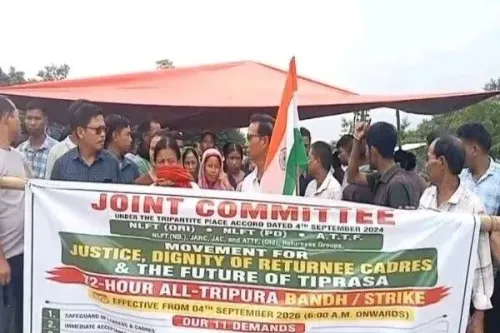
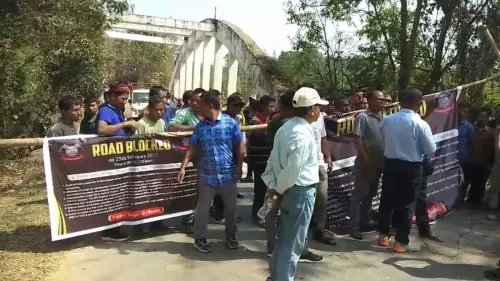
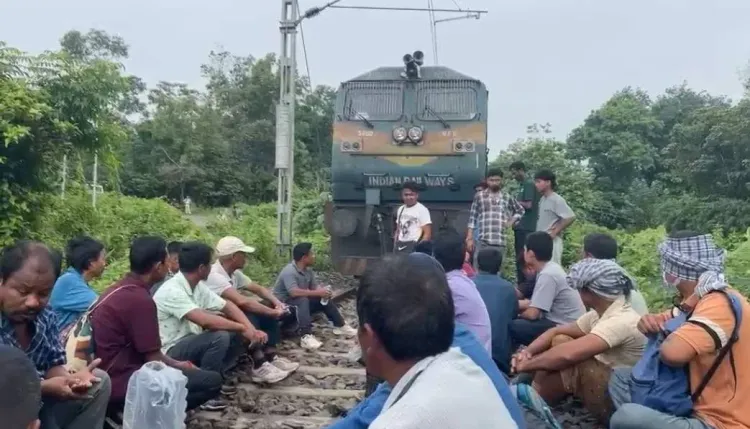
Around 450 surrendered former militants blocked National Highway-8 and Tripura's sole railway line from 6 am on 12 June , disrupting essential supplies and five passenger trains.
The 72-hour blockade by ex-cadres of NLFT and ATTF was called off Friday afternoon after talks with Tribal Welfare Minister Bikash Debbarma and senior police officials.
Approximately 1,200 former militants surrendered under a tripartite accord signed on 4 September 2024 in the presence of Home Minister Amit Shah , but only 79 have reportedly been identified as rehabilitation beneficiaries so far.
The Central government's rehabilitation package is worth ₹250 crore , covering economic assistance, livelihood support, and welfare measures.
Full details of Friday's negotiated outcome are yet to be officially disclosed by the Tripura government.
Hundreds of surrendered militants in Tripura called off a crippling road and railway blockade on Friday, 12 June, following several rounds of negotiations with senior state officials, bringing temporary relief to a state that had been cut off from essential supplies since early morning. The blockade, launched by former cadres of the now-disbanded National Liberation Front of Tripura (NLFT) and All Tripura Tiger Force (ATTF), was part of a 72-hour shutdown protesting the alleged non-implementation of a tripartite peace accord signed with the Centre in September 2024.
How the Blockade Unfolded
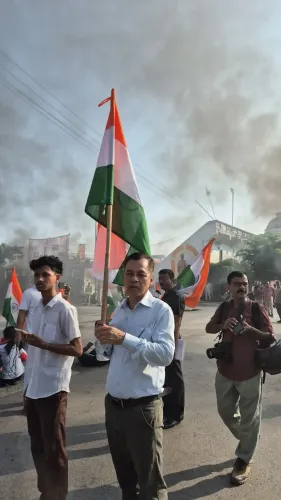
Around 450 tribal youths — all surrendered former extremists — enforced blockades at three locations in West Tripura and Khowai districts along National Highway-8 and the state's sole railway line from 6 am on Friday. NH-8 is considered the economic lifeline of the landlocked state, and the single rail corridor is its only rail link to the rest of the country. Vehicular movement, truck convoys carrying essential goods, passenger vehicles, and train services were all severely disrupted. The Northeast Frontier Railway (NFR) was forced to hold five passenger trains at various stations across Tripura.
Talks and the Outcome
Tribal Welfare Minister Bikash Debbarma, Inspector General of Police (Intelligence and Security) Krishnendu Chakraborty, and other senior officials held multiple rounds of discussions with the agitating former militants. 'Following the talks with the surrendered militants, they lifted their road and railway blockades on Friday afternoon,' a senior official confirmed, adding that the full details of what was agreed upon would be disclosed at a later stage.
What the Ex-Militants Are Demanding
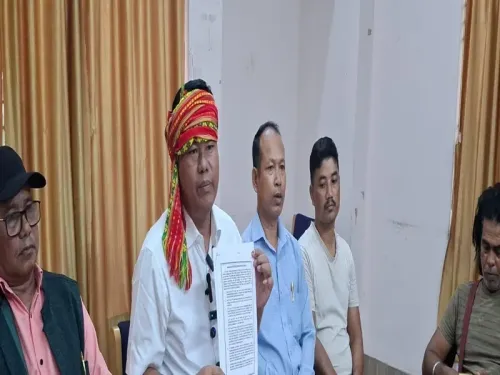
Former NLFT leader Prasanjit Debbarma said approximately 1,200 former militants had surrendered before the Government of India and the Tripura government under various peace accords, with the expectation of rehabilitation and socio-economic reintegration. He alleged that several commitments under the tripartite agreement — signed in New Delhi on 4 September 2024 in the presence of Union Home Minister Amit Shah, Tripura Chief Minister Manik Saha, and senior officials of the Ministry of Home Affairs (MHA) — remain unfulfilled despite repeated appeals. The Central government had announced a rehabilitation package worth ₹250 crore, covering economic assistance, livelihood generation, and welfare measures. However, according to Debbarma, only 79 cadres have so far been identified as beneficiaries of the package — a fraction of those who laid down arms. 'Getting no response from the government to our demands and issues, we were compelled to launch a 72-hour blockade,' Debbarma told reporters.
Background: The 2024 Peace Accord
The formal surrender took place on 24 September 2024, when NLFT and ATTF cadres laid down a substantial cache of arms and ammunition before Chief Minister Saha at the headquarters of the 7th Battalion of the Tripura State Rifles (TSR) at Jampuijala in Sepahijala district. Following the ceremony, Saha — who also holds the Home portfolio — had declared that the decades-old insurgency in Tripura had effectively come to an end. The ex-militants alleged that despite more than two years passing since many of them renounced violence, the rehabilitation pipeline has moved far slower than promised. They said memoranda had been submitted to Chief Minister Saha, Tribal Welfare Minister Debbarma, and Chief Secretary J.K. Sinha, but claimed no concrete response had been received.
What Happens Next
While the blockade has been lifted, the underlying grievances remain unresolved, with officials indicating that details of the outcome of Friday's discussions would be shared later. The episode underscores the fragility of post-insurgency rehabilitation frameworks and raises questions about the pace of implementation of the ₹250 crore package. All eyes are now on whether the Centre and the Tripura government will publish a clear timeline for disbursing benefits to the remaining former cadres.
Point of View
And it is clearly lagging. With only 79 of 1,200 ex-militants identified as beneficiaries after nearly nine months, the implementation rate is under 7%, which is not a bureaucratic delay but a structural failure. If the Centre does not publish a credible timeline and accountability mechanism, Friday's blockade will not be the last — and the next one may not lift so quickly.
NationPress
27 Sept 2026
Frequently Asked Questions
Why did surrendered militants block roads and railways in Tripura?
Former cadres of the NLFT and ATTF launched a 72-hour blockade on 12 June to protest the alleged non-implementation of a tripartite rehabilitation agreement signed with the Centre and the Tripura government on 4 September 2024. They claim that despite a ₹250 crore rehabilitation package being announced, only 79 of approximately 1,200 surrendered militants have so far been identified as beneficiaries.
What is the tripartite peace accord that Tripura's ex-militants are referring to?
The tripartite agreement was signed in New Delhi on 4 September 2024 in the presence of Union Home Minister Amit Shah, Tripura Chief Minister Manik Saha, and senior MHA officials. Under the accord, NLFT and ATTF militants formally surrendered on 24 September 2024 at Jampuijala, laying down arms in exchange for a ₹250 crore rehabilitation package covering economic assistance, livelihood support, and welfare measures.
Has the Tripura blockade been fully resolved?
The road and railway blockade was lifted on Friday afternoon, 12 June, after talks with Tribal Welfare Minister Bikash Debbarma and senior police officials. However, the government has not yet disclosed the full details of what was agreed upon, and the core demands around rehabilitation remain unaddressed publicly.
How many former militants are affected by the rehabilitation delay?
Approximately 1,200 former militants surrendered under various peace accords with the expectation of rehabilitation and socio-economic reintegration. According to former NLFT leader Prasanjit Debbarma, only 79 cadres have so far been identified as beneficiaries of the ₹250 crore rehabilitation package.
What impact did the blockade have on Tripura?
The blockade severely disrupted vehicular movement across Tripura from 6 am on 12 June, halting trucks carrying essential goods and passenger vehicles on National Highway-8 — the state's economic lifeline. The Northeast Frontier Railway was forced to hold five passenger trains at stations across the state due to the railway line blockade.