Tripura signs MoU with NDDB to power White Revolution 2.0 in dairy
Synopsis
Tripura has formalised its most structured dairy push yet — a tripartite MoU with NDDB and GCMPUL to implement a Comprehensive Cooperative Dairy Development Plan. With milk output already at 2.63 lakh metric tonnes annually and a processing plant running below capacity, the deal is designed to close the gap between raw production and organised market reach, positioning Tripura as a White Revolution 2.0 leader in the Northeast.
Key Takeaways
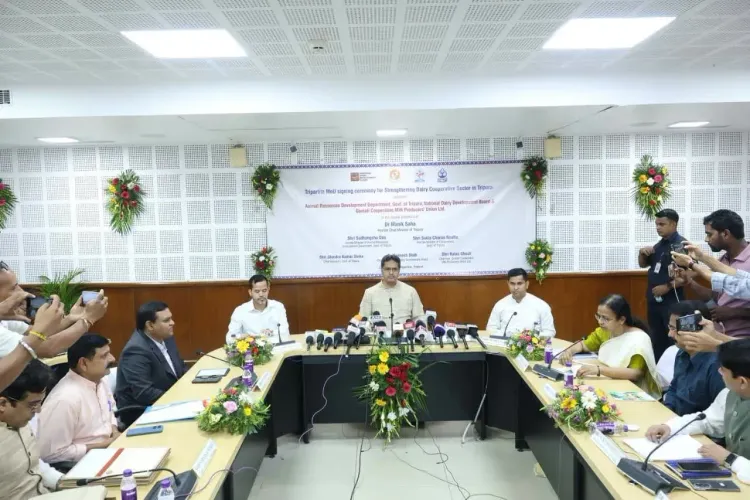
Tripura ARDD and NDDB signed a tripartite MoU on 23 June in Agartala in the presence of Chief Minister Manik Saha .
The agreement implements a Comprehensive Cooperative Dairy Development Plan (CCDDP) aligned with White Revolution 2.0 .
Tripura currently produces 2.63 lakh metric tonnes of milk annually ( 7.2 lakh litres per day ), growing at 6.5% per year.
Per capita milk availability stands at 173 grams per person per day — the highest among Northeastern states.
The state dairy plant can process 40,000 litres daily but remains underutilised; the MoU aims to boost procurement and value-added products.
GCMPUL will act as nodal agency; NDDB will provide technical and market development support.
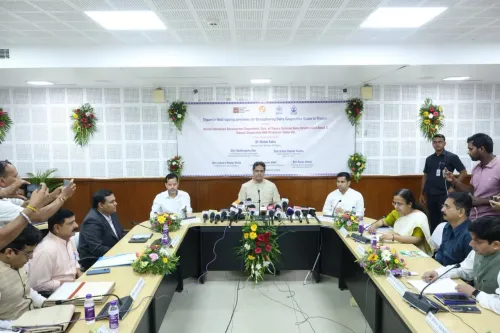
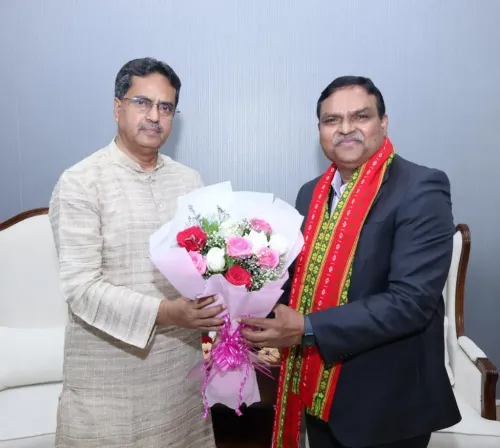
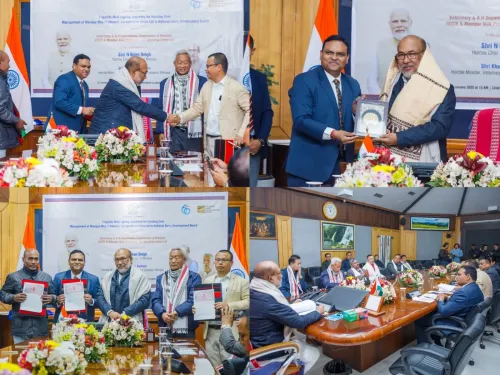
Tripura's Animal Resources Development Department (ARDD) and the National Dairy Development Board (NDDB) on Tuesday, 23 June signed a tripartite Memorandum of Understanding (MoU) in Agartala, marking a significant push toward dairy self-sufficiency in the northeastern state. The agreement was inked in the presence of Tripura Chief Minister Manik Saha, who called it transformative for the state's cooperative dairy ecosystem.
What the MoU Covers
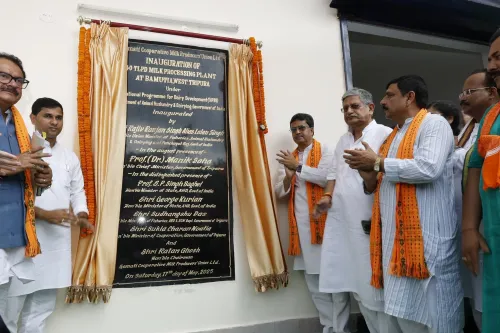
The tripartite agreement brings together the state government, NDDB, and the Gomati Cooperative Milk Producers' Union Ltd (GCMPUL) under a Comprehensive Cooperative Dairy Development Plan (CCDDP), aligned with the national vision for White Revolution 2.0. Under the arrangement, the state government will provide policy support, GCMPUL will serve as the nodal agency, and NDDB will contribute technical expertise, capacity-building, and market development assistance.
The partnership aims to strengthen cooperatives, modernise infrastructure, promote digitalisation, and expand sustainable livelihood opportunities for dairy farmers and rural households across Tripura.
Where Tripura Stands Today
Chief Minister Saha noted that Tripura currently produces approximately 2.63 lakh metric tonnes of milk annually — equivalent to nearly 7.2 lakh litres per day. Milk production has been growing at nearly 6.5 per cent annually, and per capita availability has reached 173 grams per person per day, the highest among all Northeastern states.
Despite this progress, only a limited portion of this output enters the organised processing network. The state's dairy plant has the capacity to process 40,000 litres daily but remains underutilised — a gap the MoU directly seeks to address.
The Road Ahead for Dairy Expansion
NDDB Chairman Meenesh Shah presented a development roadmap centred on productivity improvement, infrastructure upgrades, and enhanced market access. Saha stressed that increased procurement would support the expansion of value-added products including paneer, curd, ghee, lassi, ice cream, and sweets, generating additional income streams for farmers.
Notably, this comes as the Centre has been pushing White Revolution 2.0 as a rural income multiplier, and Tripura's MoU represents one of the more structured state-level commitments to that agenda in the Northeast.
Officials and Ministers Present
The signing ceremony was attended by Animal Resources Development Minister Sudhangshu Das, Cooperation Minister Shukla Charan Noatia, senior officials, and representatives of the dairy sector. Their presence signals cross-departmental political backing for the initiative, which will be critical for on-ground implementation.
With the agreement now in place, Tripura's ability to convert its dairy growth momentum into organised, market-linked output will be closely watched as a test case for White Revolution 2.0 in India's Northeast.
Point of View
Yet the state's dairy plant operates well below its 40,000-litre daily processing capacity — a structural mismatch that has kept farmers from realising full market value. The NDDB partnership addresses the right bottleneck: organised procurement and value-addition, not just raw output. The real test will be whether GCMPUL can scale collection networks fast enough to feed the plant, and whether the CCDDP's digitalisation push translates into verifiable farmer income gains rather than another well-intentioned cooperative that stalls at implementation. White Revolution 2.0 needs Northeast success stories; Tripura has the numbers to deliver one, if execution keeps pace with ambition.
NationPress
22 Sept 2026
Frequently Asked Questions
What is the MoU signed between Tripura and NDDB about?
The MoU is a tripartite agreement between Tripura's Animal Resources Development Department, the National Dairy Development Board (NDDB), and the Gomati Cooperative Milk Producers' Union Ltd (GCMPUL), signed on 23 June in Agartala. It aims to implement a Comprehensive Cooperative Dairy Development Plan to modernise cooperatives, boost milk procurement, and expand value-added dairy products under the White Revolution 2.0 framework.
How much milk does Tripura currently produce?
Tripura produces approximately 2.63 lakh metric tonnes of milk annually, equivalent to nearly 7.2 lakh litres per day, according to Chief Minister Manik Saha. Milk production has been growing at nearly 6.5 per cent annually, and per capita availability has reached 173 grams per person per day — the highest among all Northeastern states.
What is White Revolution 2.0 and why does it matter for Tripura?
White Revolution 2.0 is the national initiative to replicate and scale India's original dairy cooperative success — modelled on Operation Flood — with a focus on modernisation, digitalisation, and rural income generation. For Tripura, the MoU represents a formal entry into this framework, with NDDB providing the technical and market-development backbone to help the state convert raw milk growth into organised, higher-value output.
Why is Tripura's dairy plant underutilised despite strong milk production?
Tripura's dairy plant has the capacity to process 40,000 litres daily but currently handles only a limited portion of the state's output, as most milk does not enter the organised processing network. The MoU specifically targets increased procurement through cooperative strengthening to close this gap and enable expansion into value-added products such as paneer, ghee, curd, and lassi.
Who are the key parties and their roles under the MoU?
Under the agreement, the Tripura state government will provide policy support, GCMPUL will act as the nodal agency for on-ground implementation, and NDDB will offer technical expertise, capacity-building, and market development assistance. NDDB Chairman Meenesh Shah presented the development roadmap at the signing ceremony.