Tripura Takes a Bold Step: MoS Shripad Naik Launches Rooftop Solar Plant to Power District HQs
Synopsis
In a significant move towards renewable energy, MoS Shripad Y. Naik inaugurated a rooftop solar plant in Tripura, marking the beginning of a comprehensive solar initiative for all district headquarters. This marks a critical shift in the state’s energy policies, promoting sustainability and cost-efficiency.
Key Takeaways
The launch of a 15-kilowatt rooftop solar power plant in Gomati, Tripura.
This project initiates the solarization of all district magistrate offices in the state.
The initiative is backed by the Ministry of New and Renewable Energy.
Estimated cost for solar installations is around Rs 2.43 crore.
Rooftop solar plants can significantly reduce electricity costs for government offices.
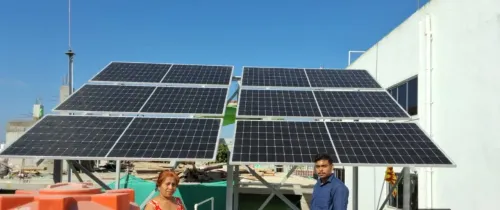
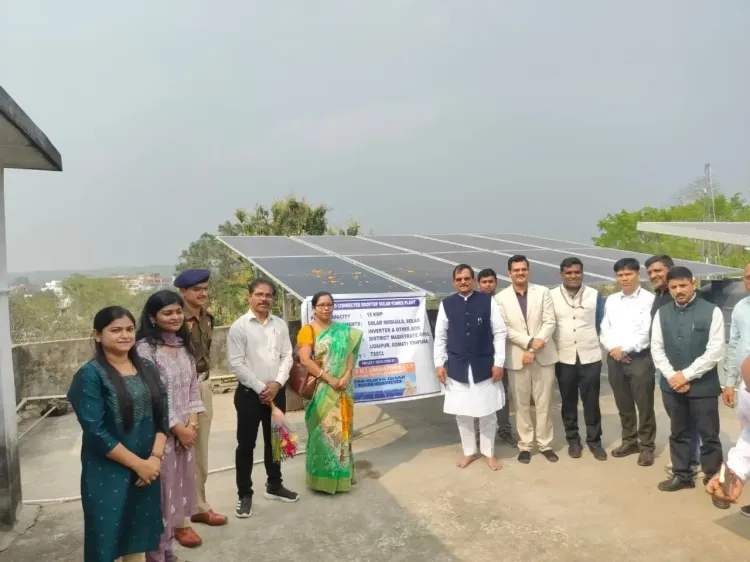
Agartala, Feb 27 (NationPress) The Minister of State (MoS) for Power and New and Renewable Energy, Shripad Y. Naik, officially launched a 15-kilowatt grid-connected rooftop solar power plant at the office of the District Magistrate in Gomati, Agartala, on Friday. This event signifies the commencement of the state's ambitious plan to solarise all district administrative headquarters.
This initiative marks a significant expansion of the Tripura government's commitment to renewable energy, extending its focus from residential rooftops to public institutions, with plans to convert all eight District Magistrate (DM) offices to solar-powered energy.
The project aligns with the directives of the Ministry of New and Renewable Energy under the “Solar Sankalp” initiative.
Implementation of this project has been assigned to the Tripura State Electricity Corporation Limited (TSECL), the state's primary power utility.
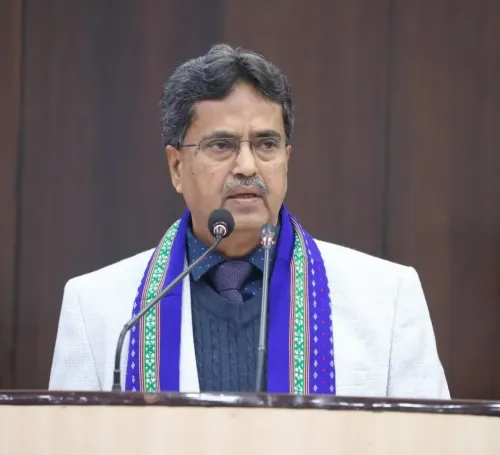
During his speech, MoS Naik emphasized that solar energy is set to become a foundational element of India's future energy framework.
He highlighted that incorporating government offices into the solar energy network goes beyond merely lowering electricity costs; it represents a shift towards environmentally sustainable governance.
According to MoS Naik, Tripura's endeavor is a pivotal move in realizing the Union government's renewable energy vision at the grassroots level.
Gomati serves as the first district in the state to have this project operational.
TSECL officials reported that rooftop solar systems with a total capacity of 304 kilowatts will be installed across eight district magistrate offices in Tripura, with an investment of approximately Rs 2.43 crore.
In addition to the 15-kilowatt setup in Gomati, solar plants with capacities of 49 kilowatts in Sepahijala, 35 kilowatts in South Tripura, 90 kilowatts in North Tripura, 15 kilowatts in Khowai, 22 kilowatts in Unakoti, 25 kilowatts in Dhalai, and 53 kilowatts in West Tripura are also planned.
Once these systems are operational, they are projected to fulfill a significant portion of each office's energy demands using clean, renewable power.
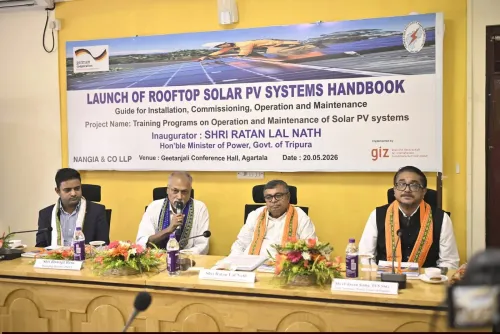
Tripura's Power Minister, Ratan Lal Nath, hailed this initiative as a progressive move in the state's energy strategy.
Expressing gratitude to MoS Shripad Naik for launching the project, Minister Nath described it as a prime example of effective collaboration between the central and state governments.
He remarked that empowering government offices to produce their own electricity would lead to substantial savings on power costs while promoting environmental conservation.
This initiative reflects the state's dedication to long-term energy sustainability and fiscal responsibility.
Encouraging public participation, Minister Nath invited citizens to take advantage of the PM Surya Ghar: Muft Bijli Yojana (PMSGMBY) by installing rooftop solar panels in their residences.
Through net metering, households can significantly lower their electricity expenses and even gain revenue by selling excess power back to the grid.
Minister Nath noted that rooftops have the potential to evolve into micro power stations within the burgeoning clean energy economy.
The grid-connected rooftop solar model allows for on-site consumption of electricity generated during the daytime, thereby lessening dependence on traditional power sources.
Any excess production will be redirected to the grid, ensuring cost savings, optimal energy utilization, and a marked decrease in carbon emissions.
Energy experts consider the solarization of government buildings as a pragmatic approach toward energy self-reliance, showcasing how public infrastructure can lead the way in adopting clean energy solutions.
By transforming unused rooftop spaces into valuable energy assets, Tripura communicates that renewable energy is not just an alternative; it is the cornerstone of the future energy economy.
The inauguration event held in Udaipur, Gomati district, was attended by Gomati District Magistrate Rinku Lather, TSECL's Additional General Manager (Gomati) Nandita Das, and Sanjeeb Nandy Majumdar, the state’s nodal officer for the PMSGMBY, along with engineers and senior officials involved in the project.
Point of View
Showcasing a commitment to renewable energy at the grassroots level. The project's alignment with national goals emphasizes the importance of integrating environmental responsibility into governance, paving the way for sustainable development in the region.
NationPress
20 Sept 2026
Frequently Asked Questions
What is the capacity of the newly launched solar plant in Tripura?
The newly inaugurated solar plant has a capacity of 15 kilowatts.
How many district magistrate offices in Tripura will be solarized?
All eight district magistrate offices in Tripura are set to be solarized.
What is the estimated cost of the solar project?
The estimated cost for installing the solar systems across the district magistrate offices is approximately Rs 2.43 crore.
What initiative is the solar project part of?
The project is part of the 'Solar Sankalp' initiative by the Ministry of New and Renewable Energy.
How can citizens benefit from solar energy in Tripura?
Citizens can benefit by installing rooftop solar panels under the PM Surya Ghar: Muft Bijli Yojana, potentially reducing their electricity bills and earning from surplus power.